
The Haredim, or ultra-Orthodox Jewish communities, of Israel are threatening to dissolve the Knesset if the prime minister does not immediately pass laws reinstating their social privileges.
The Shas and United Torah Judaism parties, both ultra-Orthodox, are willing to pull support from Prime Minister Benjamin Netanyahu’s shaky coalition unless he passes legislation that promotes Torah study as a “significant service” to the state and ceases the arrest of ultra-Orthodox Jews who refuse military service.
“Today we held a meeting with Prime Minister Netanyahu and conveyed to him, on behalf of the great men of Israel, an unequivocal demand to immediately advance the Basic Law on Torah Study and the Law to Stop the Arrests of Torah Students, by convening the Foreign Affairs and Security Committee and the Knesset Committee this week,” leaders of Shas and Degel Hatorah, a constituent part of UTJ, said Tuesday.

The leaders said Netanyahu “made it clear at the meeting that he is committed to approving the laws and will work to advance them quickly.”
The Tuesday meeting, though obviously tense, was a breakthrough after Shas and UTJ leaders previously rejected a meeting with Netanyahu planned for Monday.
“The violent arrests of Torah students must stop!” Shas chairman Aryeh Deri told lawmakers in his party on Monday afternoon. “We informed the coalition chairman that as long as the law to stop arrests and the Basic Law on Torah study are not advanced, we will not support any coalition legislation.”
By law, the next Israeli election must be held by Oct.27. The government is required to allot 90 days between the dissolution of the Knesset and the election, so the latest possible day the parliament can be dissolved is July 29. However, the body’s pre-election recess is slated to begin mid-July, meaning that the dissolution is likely to come even sooner.
Haredi withdrawal from the coalition would only expedite a foregone election, but the optics and political fallout of ending the parliament with such bad blood could prove costly for Netanyahu, who is seeking reelection.
The ultra-Orthodox believers’ role in Israeli society is a complex and long-debated source of contention in the country.
Since Israel’s founding, members of the community who devoted themselves to Torah studies have been exempt from the nation’s compulsory military service. Ultra-Orthodox learners committed to lifelong Torah studies also receive government stipends, among other benefits.
That was ended by a ruling from the High Court of Justice last year, which ruled unanimously that ultra-Orthodox men cannot be granted these privileges. The court found it illegal for Haredi communities to enjoy a religious exemption despite the rest of society sharing the burden of conscription — especially during a time of war and manpower shortage.
The Haredi campaign to reinstate the exemptions has not been limited to political maneuvers or Knesset politicking — outraged ultra-Orthodox men have taken to the streets in violent protest of the change.
Haredi protesters blocked traffic on a major highway outside of Jerusalem on Tuesday and are preparing a car convoy to protest at the Military Prison 10 on Wednesday.
Israeli police clashed with ultra-Orthodox protesters West of Jerusalem on Monday night after rioters stormed the police station in Beit Shemesh. They were attempting to free a member of the community who had been arrested on charges of draft dodging.
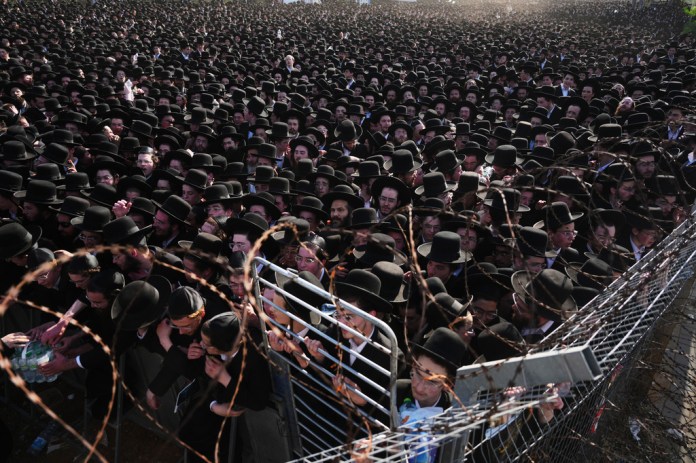
Videos from the confrontation show smashed car windows, fires burning on the sidewalks, and Haredi men tearing at police fences as officers beat them back and arrest rioters.
Protests such as these have become common across Israel, including last week, when dozens of demonstrators gathered outside the home of Supreme Court President Isaac Amit in Mevasseret Zion. Earlier this month, rioters attacked Deputy Supreme Court President Noam Sohlberg’s residence and smashed windows.
A Ynet report claims that the Haredi parties have already struck a deal behind closed doors with Netanyahu that would pass their Torah Study law and end arrests of draft dodgers. In exchange, the ultra-Orthodox would reportedly suspend their push for daycare subsidies for Haredi communities and a bill seeking to reform the kosher food authorization system.
Dan Illouz, a member of the Knesset from Netanyahu’s own Likud party, is pushing for the Israeli right-wing to break up with the Haredim — calling the religious communities a “danger to the future of the state of Israel.”
“If this continues as the haredi community grows, then we won’t be able to manage an actual economy here in Israel,” he told the Jerusalem Post this week. “I think that we’re at a point where we need to look at the situation very bluntly and understand that the partnership with the haredim does more harm than it does good right now.”
Not all Haredim refuse to participate in military service. Special programs called “Hesder” have been established that allow ultra-Orthodox believers to split their time between Torah study and military training.
AIPAC ACCUSES VAN HOLLEN OF FANNING ‘ANTISEMITIC TROPES’ IN NEW SOCIAL MEDIA CAMPAIGN
These programs also ensure Haredi soldiers are provided with kosher meals and spiritual guidance in a gender segregated environment in alignment with their faith.
If Netanyahu’s party is removed from power, it is unlikely that the Haredi parties will find any better allies in the center or left wing of the Knesset. Haredi exemptions are widely unpopular with the voting public, and other parties have expressed no desire to work with the religious Right.