
Ideologies often strain when they come into contact with reality.
The intellectual foundations of the sexual revolution are beginning to crumble after two generations of reifying autonomy, vilifying taboos and tradition, and insisting that consent was the only thing that mattered.
But the ethics of the sexual revolution persist as dogma among the elites running academia and the media, and so our culture is failing to make sense of what seven fraternity brothers and one female classmate did on a drunken, drug-fueled evening two years ago at Cornell University.
The woman involved is filing suit, saying she was raped even though plenty of evidence indicates that what went on that evening was consensual by normal understandings of that word. Her contemporaneous sworn statements to the district attorney and her texts to the boys at the time all indicate that she saw the whole thing — sex with six men, plus alcohol and ketamine — as consensual, and she didn’t regret it in the immediate aftermath.
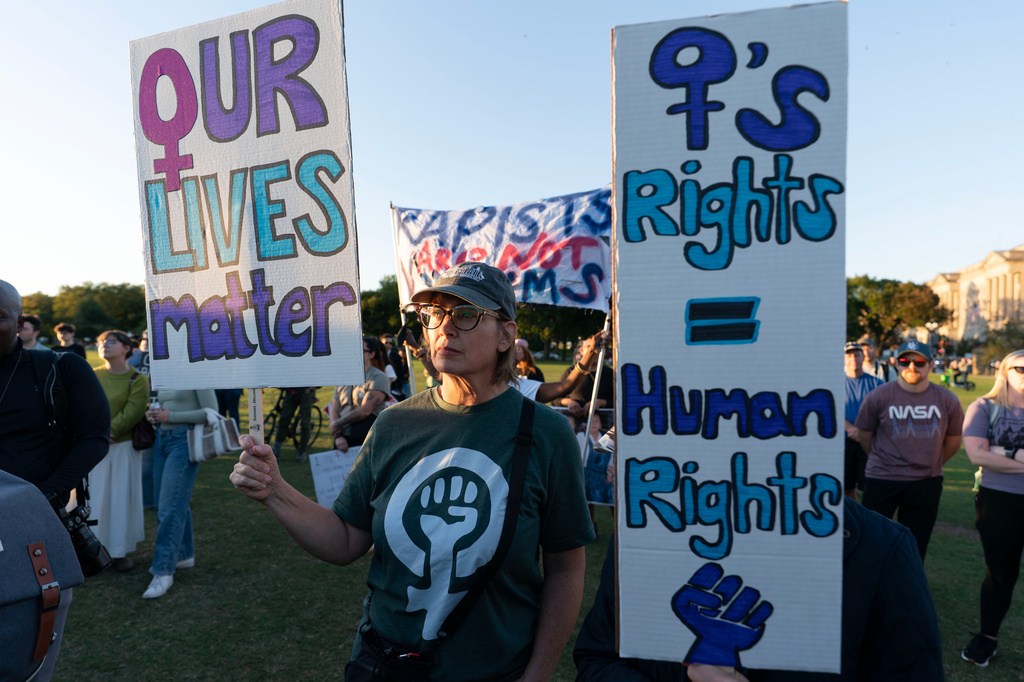
Most tellingly, Jane Doe wrote in one text message, “Our Bodies, Our Choice,” with the implied conclusion: thus nobody else’s business. She defended her orgy by chanting the mantra of the sexual revolution.
Yet some commentators find it impossible that this could have been consensual.
“Here’s one thing I’m confused about re: the Cornell rape case,” feminist commentator Jill Filipovic commented. “The DA says that the reason his office didn’t bring charges is that Jane Doe told police that what happened was ‘voluntary, conscious, and consensual.’ But like … who is going to the police station to report voluntary, conscious, and consensual group sex? Obviously that’s not what she thought it was.”
You can see the sexual revolution crumbling in this one social media post: If it was consensual, it must be good. This wasn’t good, and so it must be nonconsensual.
The logic is sound. It’s the major premise that is flawed. So to save the premise that consent means good, they need to change the definition of consent.
“The definition of non-consent has similarly expanded,” as the Manhattan Institute’s Christina Buttons put it. “Once understood in terms of force and incapacity, it began to change with the rise of ‘affirmative consent.’ … Today, nonconsent can cover silence, insufficient enthusiasm, any level of intoxication, or feeling pressured, deceived, or influenced to engage in sexual activity.”
The Obama White House claimed that 1 in 5 women is sexually assaulted in college but acknowledged that many “don’t call what happened to them rape.”
The steady shifting of the definition of consent is an attempt to bolster the crumbling foundation of the sexual revolution, which lacks the language to discuss an encounter that was consensual yet harmful.
This category doesn’t exist in the dogma of the sexual revolution, but it obviously exists in reality. It obviously happened at Cornell.
It is denigrating to be treated as an object. Also, sex makes one inherently vulnerable, especially the woman, and so sex outside the context of a loving, committed, exclusive relationship is naturally unnerving.
The pill was supposed to remove most of the vulnerability. Any feelings of regret or shame after a consensual encounter were surely just the fault of nagging old repressive taboos, right? And any connection between sex, commitment, family formation, marriage, and love — those were also mere social constructs. Tear down the social constructs, we were told for two decades, and we’d have true emancipation.
“Everyone needs to grow up cause sexuality and sex is changing, and stuff like this is going to become more common,” Jane Doe wrote in a text message to one of the men involved. “I’m also really open minded tho. I luv you king.”
She is right that the norms and beliefs around sex have always changed, but it turns out the nature of sex hasn’t really changed.
The traditional Western social constructs around sex, it turned out, weren’t mere social constructs. They weren’t structures of oppression or anything. They weren’t religious superstitions. They were reflections of human nature, and that’s not changing.
The old-fashioned ideas about sexuality were offensive to our progressive elite because they posited a fundamental difference between men and women, violating the feminist doctrine of gender symmetry — that any differences between the sexes are culturally conditioned.
Gender symmetry was always absurd, and in sex the inherent differences between men and women are most obvious. The sexual revolution, though, had to deny those differences, and so it created a lie, whereby men’s base sexual proclivities — men freed from the oppression of tradition and religion to pursue their desires — became the governing sexual norm for both sexes.
The result was disaster.
“Consensual hookup culture often feels predatory to women because it is,” conservative writer Emily Jashinsky noted. “It preys on women’s desire for monogamy and coupling and love, which many believe there’s a chance of receiving even after casual sex.”
“Hookup culture,” Jashinsky wrote, “demands that women suppress their natural instincts in order to meet the male demand for no-strings-attached sex. Some women are quite happy to do this, but most women find it unpleasant, or even distressing.”
Jashinsky is right, and this is becoming obvious to everyone whose vision is not clouded by ideology. If you shed the pieties of the sexual revolution, the Cornell situation becomes easy to understand: Ketamine-fueled drunken orgies are bad.
The students involved all treated one another as objects rather than as humans. The sex was not love-giving — it was pure self-gratification, and thus the participants were debasing not only the others, but themselves.
The problem, it turns out, is not that we were defining “consent” wrong. It’s that we tried to balance something as monumental and important as human sexuality on such an inadequate foundation.