
The Southern Poverty Law Center made a name for itself by using lawsuits to dismantle widely condemned racist groups, such as Ku Klux Klan chapters. But decades after its 1971 founding, controversies keep piling up on the charity: an employee arrested in Georgia in 2023 alongside antifa-style protesters, a growing “Hate Map” painting conservatives as extremists, and now, a criminal prosecution for fraud.
The SPLC expanded its idea of “hate” through the years to include Christians opposing homosexuality, “transphobia,” criticism of lax immigration policy, and “Radical Traditional” Catholics. It labeled numerous mainstream right-leaning organizations, such as the late Charlie Kirk’s Turning Point USA, as hateful. Donors, however, have still poured more than $100 million into the nonprofit organization each year since 2017.
Conservatives kept warning that SPLC’s leftist leaders were manufacturing hate crises, an accusation they largely brushed off until it evolved into criminal charges.
A federal trial is now set for October after the Department of Justice brought counts of wire fraud, false bank statements, money laundering, and conspiracy against the SPLC and a former employee this year. Grand jury indictments accuse the nonprofit organization of secretly using donor money to pay undercover informants inside extremist groups since at least 2014, including one who helped plan the deadly 2017 racist rally in Charlottesville, Virginia, that inspired large donations to the SPLC.
Nine years and hundreds of millions of dollars later, critics now ask what good things, if any, SPLC supporters have to show for the money they pledged toward mending social divisions.
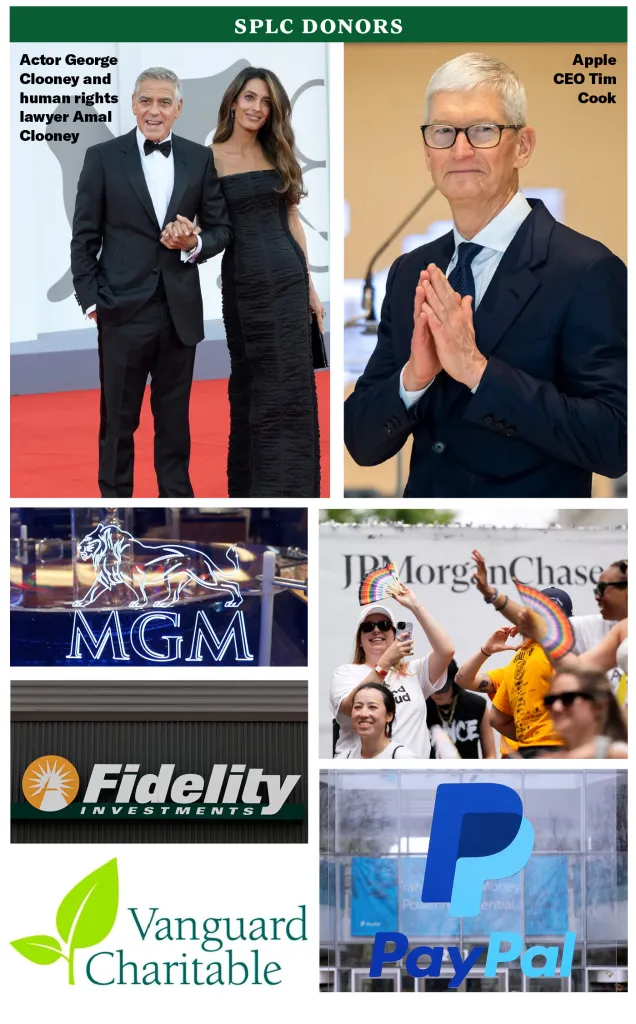
Despite the SPLC’s evolution into an openly partisan operation, its major donors over the past decade have included Apple, actor George Clooney’s foundation, and JPMorgan Chase — people and organizations that still portrayed it as a traditional civil rights group.
“Large donors have been mindlessly writing the SPLC checks for years, even though the group has transformed into an extremely far-left fundraising factory,” Parker Thayer, a nonprofit expert at the conservative Capital Research Center, told the Washington Examiner. “I would wager that many donors to the SPLC have just been donating out of habit, or based on the reputation the group might once have had, but no longer upholds.
“Anyone still making annual contributions to the SPLC should take a very hard look not only at the allegations made by the DOJ, but at the SPLC’s recent work product and consider if this is a group that is still using donor dollars effectively and uprightly,” Thayer said. “I suspect most honest donors would find that SPLC is doing neither.”
The Charlottesville crisis
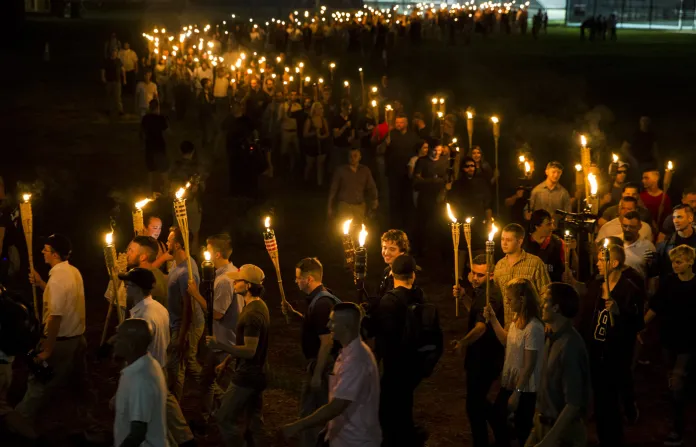
When hundreds of white nationalists paraded through Charlottesville, Virginia, flashed Nazi symbols, and killed a counter-protester with a car in 2017, a shocked nation felt the need to act. The SPLC gave wealthy people and institutions a tax-deductible way to show they were doing something about hate in America.
In the weeks following the Charlottesville rally, Apple pledged $1 million to the SPLC, JPMorgan Chase announced $500,000, and MGM Resorts said it would match employees’ donations. Each announcement took the form of memos to employees, promising that the company opposes white supremacy. PayPal Giving Fund also donated $467,788 to the SPLC that year, tax filings show.
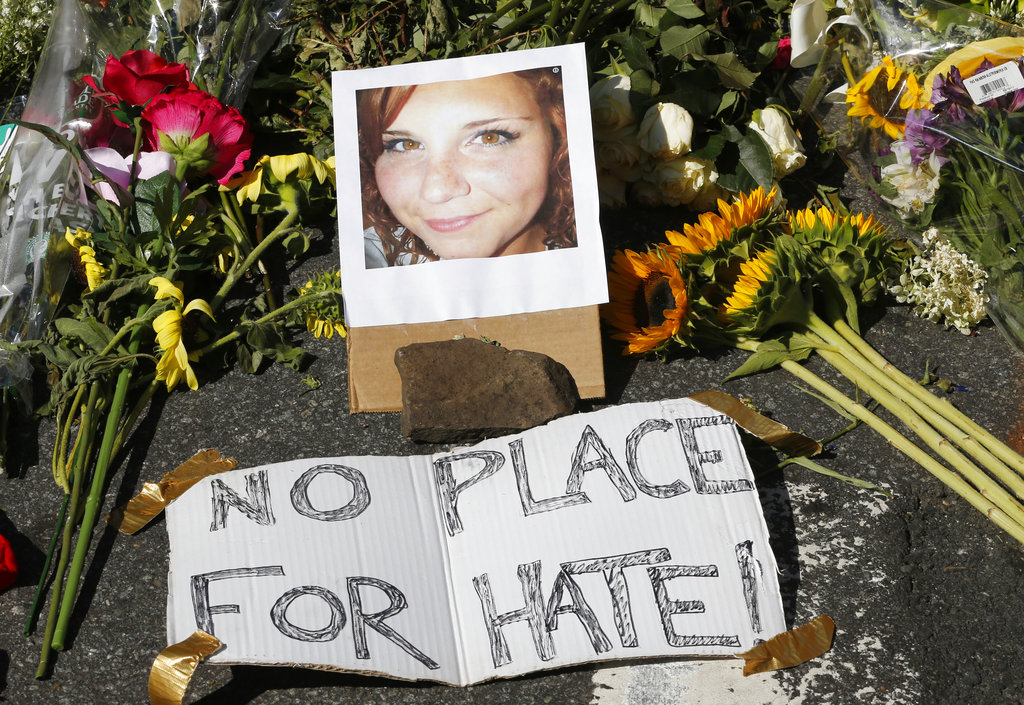
“Like so many of you, equality is at the core of my beliefs and values,” Apple CEO Tim Cook’s memo said, according to USA Today. “The events of the past several days have been deeply troubling for me, and I’ve heard from many people at Apple who are saddened, outraged or confused.”
Clooney’s foundation made headlines for its own $1 million gift to the SPLC that year. “What happened in Charlottesville, and what is happening in communities across our country, demands our collective engagement to stand up to hate,” the actor and his wife said at the time. The SPLC announced the foundation’s money would go to “increase the capacity of the SPLC to combat hate groups.”
The SPLC pressed corporate America and its affiliated nonprofit organizations for years to distance themselves from whatever it, looking through its powerful left-wing lens, deemed hateful. Those already writing checks to the nonprofit group were not exempt.
“It took Charlottesville for Silicon Valley to stand up to hate,” it declared in 2017, singling out PayPal as “the banking system for white nationalism.” A 2023 SPLC report also claimed donor-advised funds such as Fidelity, Vanguard, and PayPal Giving Fund were facilitating money for “hateful and extremist” groups. Among its examples were the conservative Federation for American Immigration Reform, Parents Defending Education, and Alliance Defending Freedom. These are all mainstream conservative policy groups that most people would regard as mainstream rather than fringe extremists.
The SPLC’s revenue rose by more than $63.7 million between November 2016 and October 2018, reaching more than $149.5 million by October 2025, according to tax filings.
Meanwhile, the public was unaware that a paid SPLC informant had participated actively in the online chat group that planned the 2017 hate rally, according to grand jurors’ April indictment. The informant “helped coordinate transportation” for several participants, attended the event, and “made racist postings” under the organization’s supervision, the DOJ wrote. Likewise, the SPLC spent years funding members of neo-Nazi and Klan affiliates while raking in donations “under the auspices that the funds would be used to ‘dismantle’” such movements, court documents allege. In other words, the indictment suggests that the SPLC raked in scores of millions of dollars and used a portion of it to perpetuate the behavior it claimed to be fighting.
“I think it’s a classic case of big philanthropy falling asleep at the wheel,” Thayer told the Washington Examiner. “Many large donors, especially corporate donors, don’t think too much about their donations, and just continue giving to the groups they’ve habitually given to in order to avoid controversy and the sometimes difficult work of grantee quality control.”
Apple, MGM Resorts, PayPal, and the Clooney Foundation did not respond to requests for comment, while JPMorgan declined to comment.
Top funders pull back
The DOJ’s case has had ripple effects. Fidelity Investments Charitable Gift Fund, Vanguard Charitable, and Donor Advised Charitable Giving halted customers’ abili
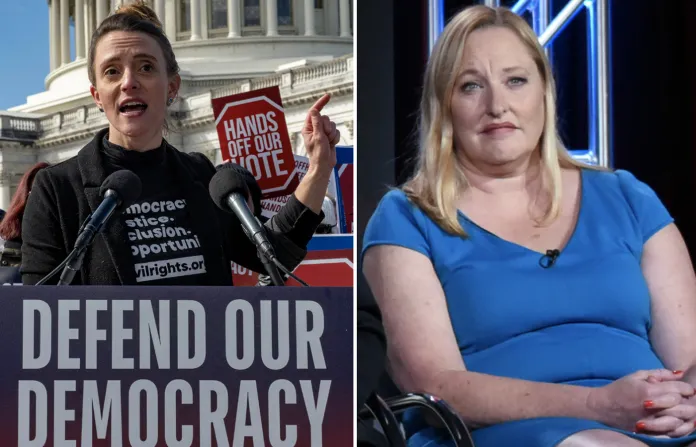
Those three donors have been among the SPLC’s top five funders over the past five years, the other two being the Lakeshore Foundation and American Online Giving Foundation, according to the nonprofit database Candid.org. Fidelity’s charity arm topped the list with more than $11.7 million within that time, though it had been pouring more millions into the SPLC since at least 2017. The fallout from federal charges thus marks a significant, and many would say a welcome, reversal of SPLC’s once munificent fortunes.
The SPLC did not respond to the Washington Examiner’s requests for comment. It is on record saying the DOJ’s case amounts to “vindictive prosecution” and that it faithfully passed information gathered by informants to law enforcement.
Vanguard, Fidelity Charitable, and Donor Advised Charitable Giving presented themselves as vehicles for their unnamed customers’ financial wishes in comments to the Washington Examiner.
“Vanguard Charitable respects the role of state attorneys general and is prepared to engage with any specific inquiry directed to the organization,” Vanguard said. “Our due diligence framework has been in place for nearly three decades, applies consistently across grantees, and reflects our fiduciary responsibility to our donors.”
Fidelity Charitable’s policies allow it to revoke funds when a nonprofit group “is being investigated for alleged illegal activities or non-charitable activities, such as terrorism, money laundering, hate crimes, or fraud,” it told the Washington Examiner. The charity is “cause-neutral,” follows donor recommendations, and decides an individual grant “based on the facts and information we have at that time.”
“As a donor-advised fund sponsor, [Donor Advised Charitable Giving] facilitates grants recommended by its donors to eligible charitable organizations in accordance with the Program Policies and applicable regulatory guidance,” Donor Advised Charitable Giving told the Washington Examiner.
The Lakeshore Foundation and American Online Giving Foundation did not respond to requests for comment.
‘Labels are weapons’
Donors are not the only people duped by the SPLC, conservatives say.
Some effects of its rhetoric have been harsh and damaging. The Biden administration’s FBI cited SPLC analysis to justify spying on “Radical Traditionalist” Catholics.
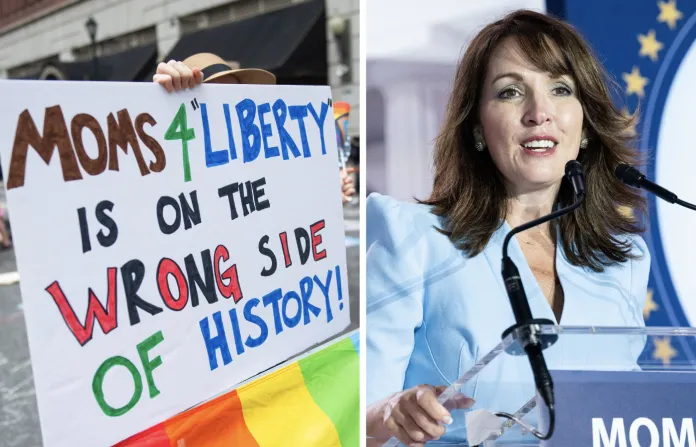
“Every institution still cutting checks to the SPLC should ask what they’re actually paying for,” said Tina Descovich, CEO of Moms for Liberty, a conservative education-focused group hit especially hard by the charity’s “hate” label. Moms for Liberty chapters make up more than 200 entries on the SPLC’s “Hate Map,” she noted.
“The SPLC’s business model is to manufacture a threat and then sell everyone the solution,” Descovich said.
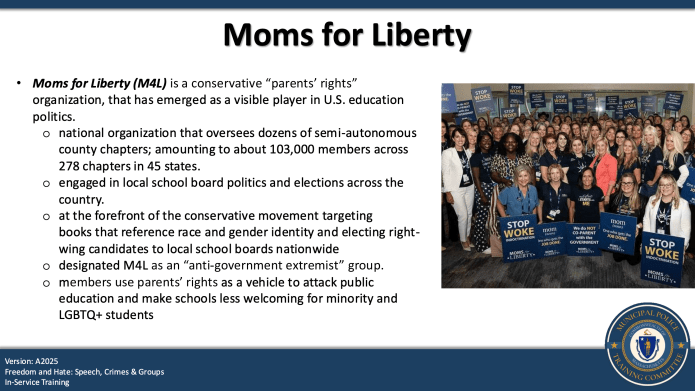
Massachusetts police training materials unearthed by the Daily Wire also revealed that the state taught officers in 2025 to view Moms for Liberty as an extremist group akin to neo-Nazis and antifa, citing the SPLC and other sources.
INSIDE THE LEFTIST NETWORK WORKING TO SABOTAGE TRUMP’S DC PROSECUTIONS
“What I know from firsthand experience is what happens downstream: labels are weapons, and these weapons have real consequences,” Descovich told the Washington Examiner. “Our members have lost jobs and careers. Court records show these labels have been used against Moms for Liberty mothers in custody battles. Mothers have had complaints filed against their professional licenses for belonging to an SPLC-designated ‘hate group.’ Chapters have been doxed, harassed, and denied meeting space.”
“That’s what corporate donors were funding, whether they knew it or not,” she said.
Hudson Crozier (@hudson_crozier) is an investigative reporter for the Washington Examiner.