
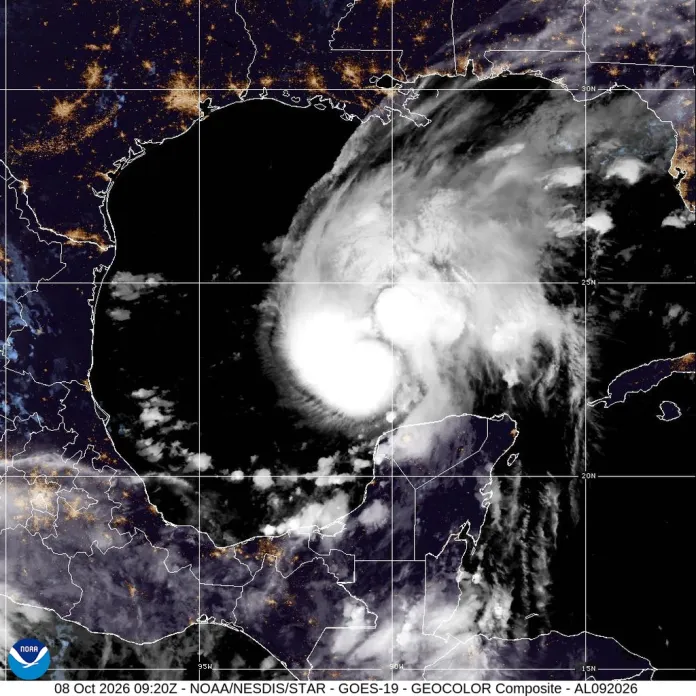
Hurricane Isaias is slated to hit the Gulf coast as a Category 2 hurricane on Friday or Saturday, marking the first hurricane of the season.
Hurricane Isaias was picking up steam in the Gulf of America and was identified by the National Hurricane Center on Thursday morning as a Category 1 hurricane with 80-mile-per hour winds. Hurricane warnings are currently in place from Ocean Springs, Mississippi, to the panhandle of Florida. Current projections have Alabama, Mississippi, and western Florida positioned to be the worst hit.
Govs. Ron DeSantis (R-FL) and Kay Ivey (R-AL) both declared a state of emergency across dozens of counties in their states on Wednesday.
“While we continue to monitor forecasts, we have to prepare now. That is why I have issued a state of emergency for 40 counties,” Ivey said in a Wednesday statement. “This will allow us to take any needed steps ahead of landfall. As we approach the weekend and any travel plans, make sure you have reliable information as conditions develop. While I hope for minimal impacts, we must take preparations seriously.”
“This order ensures communities have the time and resources necessary to prepare for potential severe weather impacts to the Panhandle and Big Bend region of Florida,” DeSantis said in a post on X.
Declarations of a state of emergency empower state and local officials to seek direct federal help and mutual-aid compacts with other states, and put state and local personnel under their command. It also allows public buildings to be used as shelters when asked, and for officials involved in the emergency response to waive red-tape regulations that could get in the way.
The NHC projected peak storm surges of up to 7 feet across all of Alabama’s coast, parts of Mississippi, and parts of western Florida. Some areas could see up to 10 inches of rain.
The hurricane will have effects deep into the U.S. interior, going through Tennessee and hitting as far north as Kentucky. The Weather Channel warned that cities including Jackson, Memphis, Nashville, Atlanta, Wilmington, Charleston, Tallahassee, and Orlando could see the worst of the conditions.
High winds could down trees and power lines, and create power outages that could last for hours or days in coastal states. Further north, areas in the Appalachians, the Ohio Valley, and the mid-Atlantic could experience flash floods.
DESANTIS DECLARES STATE OF EMERGENCY FOR TROPICAL STORM ISAIAS
Hurricane Isaias will have largely run its course by Sunday, but what’s left of the storm will affect life in the northern U.S., with heavy rainfall expected in Charlotte, Virginia Beach, Washington D.C., New York City, Philadelphia, and Baltimore.
The incoming landfall marks the end of an unusually quiet hurricane season, with no hurricanes making landfall in the United States until now. Analysts have credited this dearth of hurricanes to a strong El Niño, which has suppressed tropical activity.