
Some of the biggest stars of the “resistance” to President Donald Trump’s first term are discovering that fame in liberal circles may help them raise money, but that voters no longer have an appetite for them at the ballot box in 2026.
Alex Vindman, whose claims about a Trump call with Ukrainian President Volodymyr Zelensky led to the commander in chief’s first impeachment trial, lost the Democratic nomination for Senate in Florida on Tuesday. Vindman used his celebrity among Democratic donors to raise $16.2 million for the race. State Rep. Angie Nixon, his chief rival who was also endorsed by the Democratic Socialists of America, raised only $974,844.
Nixon trounced Vindman by 11 percentage points. She won every major metro area in Florida, except for Palm Beach County. Nixon is all but assured to lose in November to Sen. Ashley Moody (R-FL), who was appointed to the seat last year to replace Secretary of State Marco Rubio.
“The most gratifying loss last night was that of a real treasonous creep, Alexander Vindman, to a Radical Left Lunatic, who can’t speak or think properly,” Trump wrote on Truth Social.
Vindman is the latest “resistance lib,” a name given to Trump’s first-term foes, in a long list of anti-Trumpers to be rejected by voters.
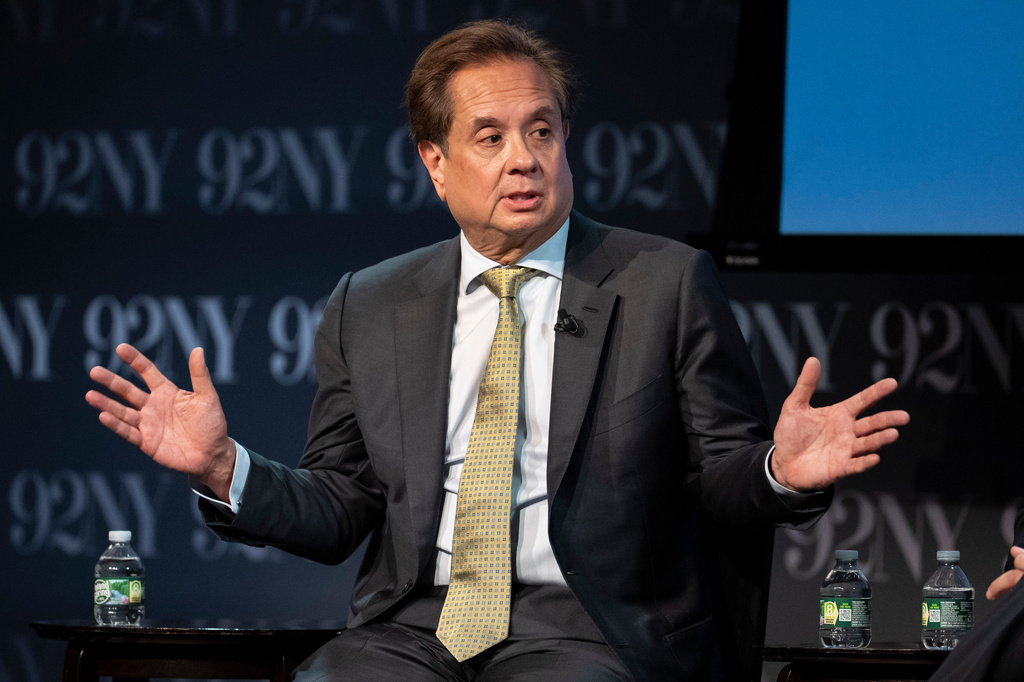
George Conway, the ex-husband of Trump adviser Kellyanne Conway, finished a dismal fifth in the June Democratic primary for New York’s 12th Congressional District. The attorney and Lincoln Project cofounder ran an avowedly resistance-coded campaign.
On the campaign trail, Conway pledged to impeach Trump and pass a “modern legal reconstruction” to erase the president’s accomplishments and punish him once out of office. The pitch fell flat with voters, even in a district where Trump only got 17% in 2024.
Conway only won 6% of the vote, despite having raised and spent the most of any other candidate. Overall, Conway pulled in $7 million for his failed campaign.
“Wow, Mr. Kellyanne Conway, a Trump Deranged Loser at the highest level, is getting absolutely CRUSHED,” Trump wrote as Conway’s race was being called. “No wonder his ‘husband’ dumped him like a dog! This is a truly unattractive person, both inside and out. Have a nice life, George!”
The same night that Conway lost, Rep. Dan Goldman (D-NY) was ousted in a primary by former New York City Comptroller Brad Lander. Goldman served as the Democrats’ lead counsel for Trump’s first impeachment before parlaying that profile into a seat in Congress.
Goldman’s anti-Trump fervor was displayed in November 2023, when he told MS Now that Trump posed a danger to the country and “had to be eliminated.” The congressman eventually apologized for the comments.
In June’s primary, Lander crushed Goldman by 31 percentage points even as the incumbent held a major fundraising advantage. FEC records indicate that Goldman raised and spent more than $8 million on the race, compared to Lander’s $2.4 million.
Even longtime Rep. Al Green (D-TX), who repeatedly introduced articles of impeachment against Trump, couldn’t stem the tide. Green lost a May runoff to fellow Democratic Rep. Christian Menefee after redistricting placed the two Houston lawmakers in the same district.
The dynamic is evident outside of federal races as well.
In Georgia, former Lt. Gov. Geoff Duncan left the GOP over his disagreement with Trump’s stand on the 2020 election. Duncan dropped out of his 2022 reelection bid before writing a book titled GOP 2.0, which outlined his vision for a post-Trump Republican Party. The push to reshape the GOP didn’t last long, however, and Duncan wound up endorsing both former President Joe Biden and ex-Vice President Kamala Harris for the White House in 2024.
Duncan formally became a Democrat last year and launched a bid for governor. While Duncan raised $1.7 million for the effort, Georgia Democrats rewarded the defection by giving him just 7% in the gubernatorial primary. That was far behind the 56% racked up by the winner, former Atlanta Mayor Keisha Lance Bottoms.
LINCOLN PROJECT STRUGGLES TO STAY RELEVANT DURING TRUMP’S SECOND TERM
On the GOP side, Georgia Secretary of State Brad Raffensperger saw his gubernatorial ambitions similarly dashed. Raffensperger, who became a national figure after resisting Trump’s efforts to challenge the state’s 2020 election results, finished a distant third in the GOP primary to succeed Gov. Brian Kemp.
Gabriel Sterling, Raffensperger’s deputy who rose to fame for forcefully rejecting Trump’s election fraud claims in a 2020 press conference and warned the president’s statements would lead to violence, sought the secretary of state office Raffensperger vacated. He garnered 12% of the vote and did not qualify for the runoff.
Taken together, the losses underscore the limits of the political celebrity created by Trump’s first term. The resistance produced plenty of stars. In 2026, voters haven’t been nearly as impressed.