
Pennsylvania‘s primary has set the table politically for a knife-fight fall campaign — and the winners could determine whether Democrats take back control of the House of Representatives.
Four Republican-held congressional districts are at the center of it: the Bucks County-centric 1st held by Rep. Brian Fitzpatrick (R-PA); the Lehigh Valley-based 7th held by Rep. Ryan Mackenzie (R-PA); the 8th, covering Scranton, Wilkes-Barre, and northeastern Pennsylvania represented by Rep. Rob Bresnahan (R-PA); and the 10th covering the Harrisburg and York areas held by Rep. Scott Perry (R-PA).
“Pennsylvania isn’t just a swing state anymore — it’s the swing state,” political analyst Mike Fahey told the Washington Examiner. “If Democrats are going to win the House, the road runs directly through those four districts. The margins are razor-thin.”
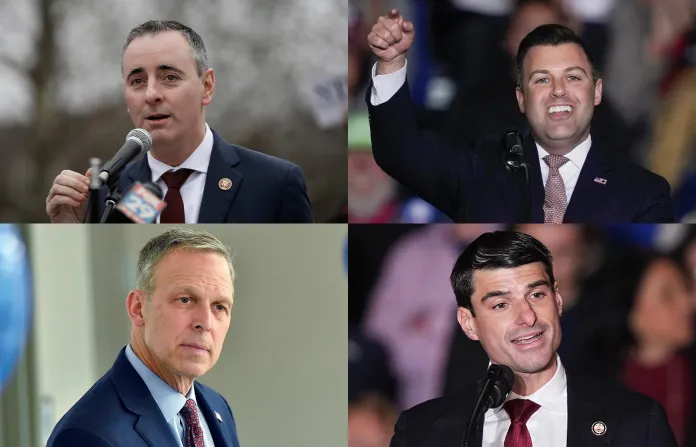
The four races are also shaping up as a high-stakes test of President Donald Trump’s staying power at the halfway mark of his second White House term. Gov. Josh Shapiro‘s (D-PA) political capital is also on the line, as he seeks a second gubernatorial term ahead of a widely expected bid for the 2028 Democratic presidential nomination.
The Trump White House has pushed for a political insurance policy through redistricting. That effort got a huge victory in late April with a Supreme Court ruling striking down Louisiana’s congressional map under the Voting Rights Act. The ruling set off a chain reaction in southern states where Republicans dominate. Yet, even a single flip from Democrats in swing states like Pennsylvania could decide control of the House.
Republicans are defending their edge amid Trump’s sagging approval ratings, persistent economic pressures, and fallout from an unpopular war in Iran. Democrats, meanwhile, have been buoyed by strong special election showings in California, Florida, New Jersey, and Virginia, though internal divisions remain a challenge.
As polarization and redistricting shrink the map of true battlegrounds, the remaining competitive districts — especially in Pennsylvania — are drawing intense national focus.
“Pennsylvania is emerging as the defining House battlefield of the 2026 cycle not just because of its outsized amount of competitive districts, but because it sits at the intersection of nearly every political force reshaping the national electorate,” political strategist James Christopher told the Washington Examiner.
“Disenchanted voters are facing the ‘perfect storm’ of hot-button issues that could swing them red or blue,” Christopher added. “There is a growing disconnect between national political branding and local voters’ needs; reflected in how parties address Pennsylvania’s suburban realignment, working-class volatility, and institutional distrust.”
Christopher said the four districts drawing the most attention are competitive for very different reasons. But together, they may offer the clearest indication of which party is better positioned to build a durable governing coalition beyond a single presidential cycle.
Here are the four Democratic candidates ready to take on a slate of Republicans as the race to November gets underway.
1st Congressional District: Bob Harvie
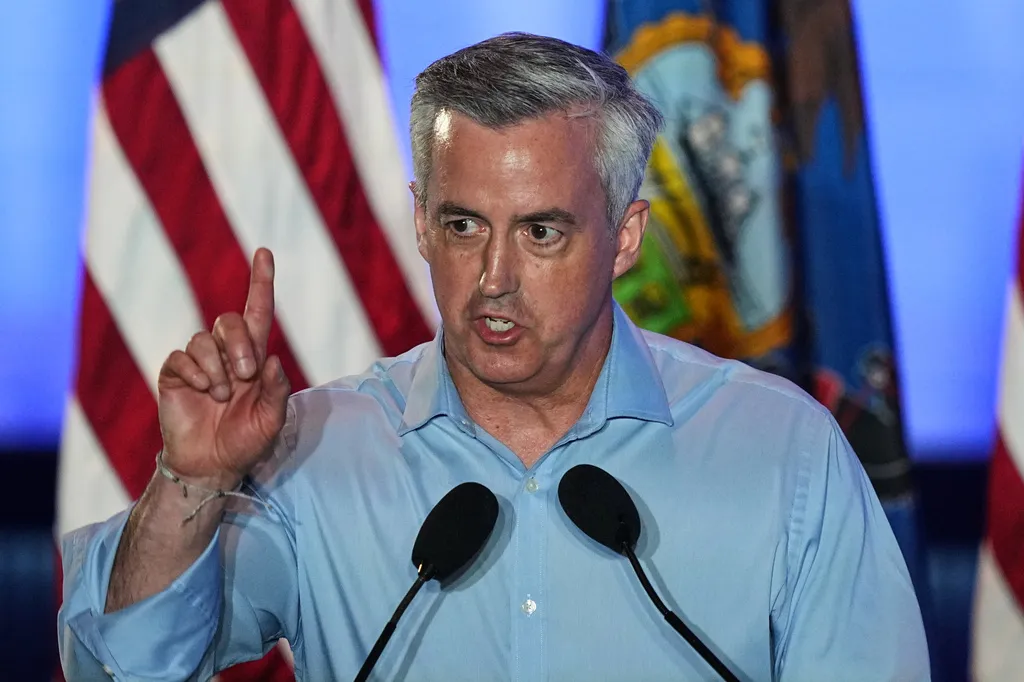
Bucks County Commissioner Bob Harvie, backed by the local Democratic Party establishment, will face off against Fitzpatrick in the fall.
For years, Democrats have circled Pennsylvania’s 1st Congressional District as a prime pickup opportunity — only to come up short each time. Fitzpatrick has managed to turn what should be a swing seat into reliably safe ground, leveraging deep roots in Bucks County, formidable fundraising, and a carefully cultivated brand that blends pragmatism with party loyalty.
But this cycle, Democrats are making another push and will use Harvie to channel outsider energy into a district that has long resisted it.
Harvie argued in the lead-up to the primary that the political environment may finally be shifting. Speaking to the Philadelphia Inquirer, he pointed to economic strain as a potential breaking point for voters.
“The pain is more real for people now,” Harvie said. “People should be asking themselves: After 10 years of Brian Fitzpatrick, are they better off than they were before?”
Harvie’s campaign centered on cost-of-living concerns, such as housing, healthcare, and everyday expenses, paired with an argument that he brings both local credibility and electoral experience. Harvie has twice won countywide in Bucks County, in 2019 and 2023, in a politically mixed electorate that mirrors the congressional district.
He is a lifelong Bucks County resident who flipped the county board of commissioners to Democratic control in 2019 for the first time in nearly 40 years.
7th Congressional District: Bob Brooks
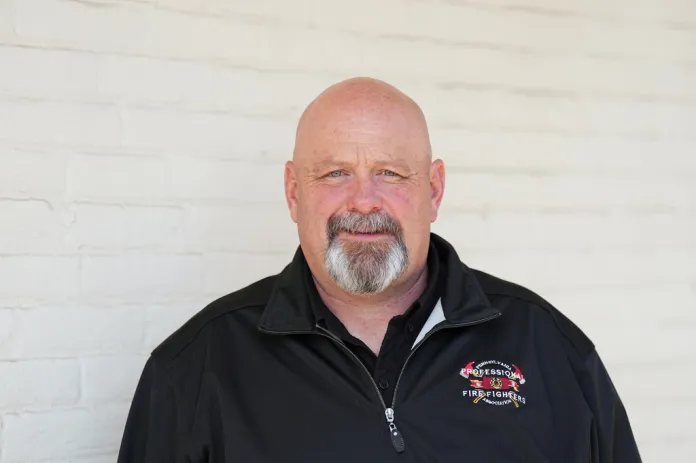
Former firefighter and union leader Bob Brooks beat out three other Democrats to challenge Mackenzie in the fall.
Brooks received the coveted blessing from the Democratic Congressional Campaign Committee, a significant boost to his campaign, as well as endorsements from Shapiro, former Transportation Secretary and one-time presidential candidate Pete Buttigieg, and Sen. Elizabeth Warren (D-MA), among others.
Brooks centered his campaign on his working-class background, arguing that Washington is dominated by elites and needs more representatives who understand everyday financial struggles. His message has been rooted in pushing back against the influence of wealthy donors and large corporations.
Without a college degree, Brooks often pointed to his own life story to make that case. He has spoken about growing up in a household that relied on food assistance, facing the threat of bankruptcy due to medical bills, and taking on a range of jobs, from tending bar to driving plows to working as a firefighter, to make ends meet.
Mackenzie, a freshman congressman, will face his first reelection bid after ousting an incumbent Democrat in 2024. In a district with constituents hit by high gas prices, broader inflation, and other economic headwinds, the area north of Philadelphia, stretching to the New Jersey state line, still has a substantial Republican base. Voters there backed Trump over Democratic nominee Kamala Harris, 51.1% to 47.9%.
8th Congressional District: Paige Cognetti
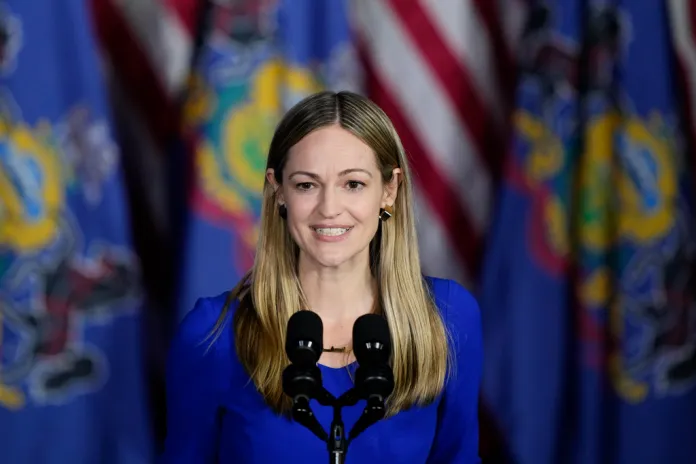
Scranton Mayor Paige Cognetti, a former independent who later joined the Democratic Party, will face Bresnahan.
Cognetti, whose campaign has focused heavily on anti-corruption measures and economic growth, cruised through Tuesday’s Democratic primary without opposition. Bresnahan also advanced uncontested on the Republican side.
The northeastern Pennsylvania showdown between Cognetti, who has led former President Joe Biden‘s hometown since 2020, and Bresnahan is expected to rank among the nation’s most competitive and costly House races.
Cognetti, Scranton’s first female mayor, has faced criticism over past remarks faulting Biden’s handling of the southern border, which she described as “really terrible” and a “huge misstep.” Critics have argued she did not publicly voice those concerns while Biden was still in office.
Bresnahan, meanwhile, has drawn scrutiny over stock trades that appeared to clash with his campaign support for banning members of Congress from trading individual stocks. The issue was central to his 2024 bid, when he unseated a Democratic incumbent in a district that also backed Trump over Harris by a 53.8%-45.4% margin.
10th Congressional District
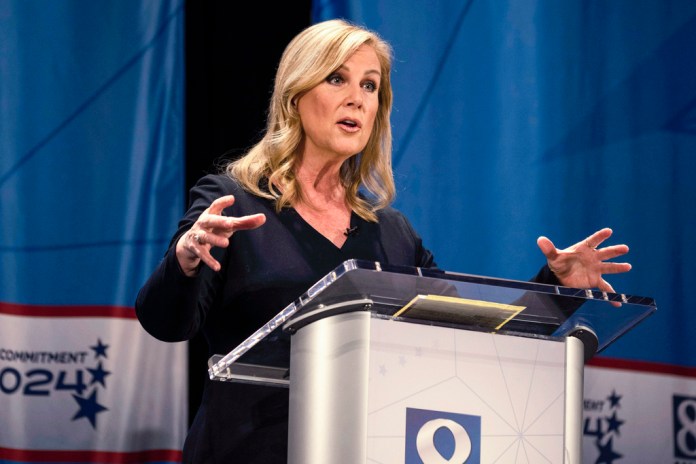
Janelle Stelson, a former TV news anchor, is headed for a second showdown with Perry in November, renewing a high-profile battle for Pennsylvania‘s 10th Congressional District. The race is one of the most closely watched and most expensive congressional battles in the country.
Stelson centered her primary campaign on healthcare, economic reform, and rising living costs. She cast herself as a centrist Democrat who could appeal to independents and Republicans uncomfortable with Perry’s loyalty to Trump.
Perry, a retired Army National Guard brigadier general, is seeking another term in a politically divided district that combines fast-changing suburbs with deeply conservative rural areas. He was first elected to Congress in 2012. Perry previously served as the House Freedom Caucus chairman for two years.
JOSH SHAPIRO AND STACY GARRITY BRACE FOR BRUISING PENNSYLVANIA GUBERNATORIAL SHOWDOWN
The district backed Trump over Democratic nominee Kamala Harris in the last presidential election by a 52%-46.8% margin.
“Democrats have made inroads in the suburbs around Harrisburg, especially with college-educated voters and independents who are worn out by hyperpolarized politics,” Christopher said. “At the same time, Republicans still benefit from consistent turnout and energized rural voters. The outcome will likely come down to whether swing voters are more motivated by economic concerns or a desire for stability.”
As of April 29, Stelson reported more than $3.3 million cash on hand, while Perry had just over $2.3 million remaining and nearly $158,000 in debt.