
Spanish Prime Minister Pedro Sanchez is calling a meeting to address the developing “emergency” on the Canary Islands, which have become the latest point of failure in the country’s immigration framework.
The Canary Islands, Spain’s southernmost territory that sits off the northwest coast of Africa, have recently experienced a massive surge in illegal immigration. Over the past week, over 50 boats reportedly carrying more than 5,500 migrants arrived at the islands— overwhelming public services and creating what officials call a “migration emergency.”
“The Canary Islands have been calling for cooperation, coordination and resources for weeks to prevent what we are seeing today on El Hierro,” Canary Islands President Fernando Clavijo said Monday ahead of the meeting with Sanchez. “We cannot allow resources to fall short or the island to end up being turned into a massive detention center. Neither one nor the other.”
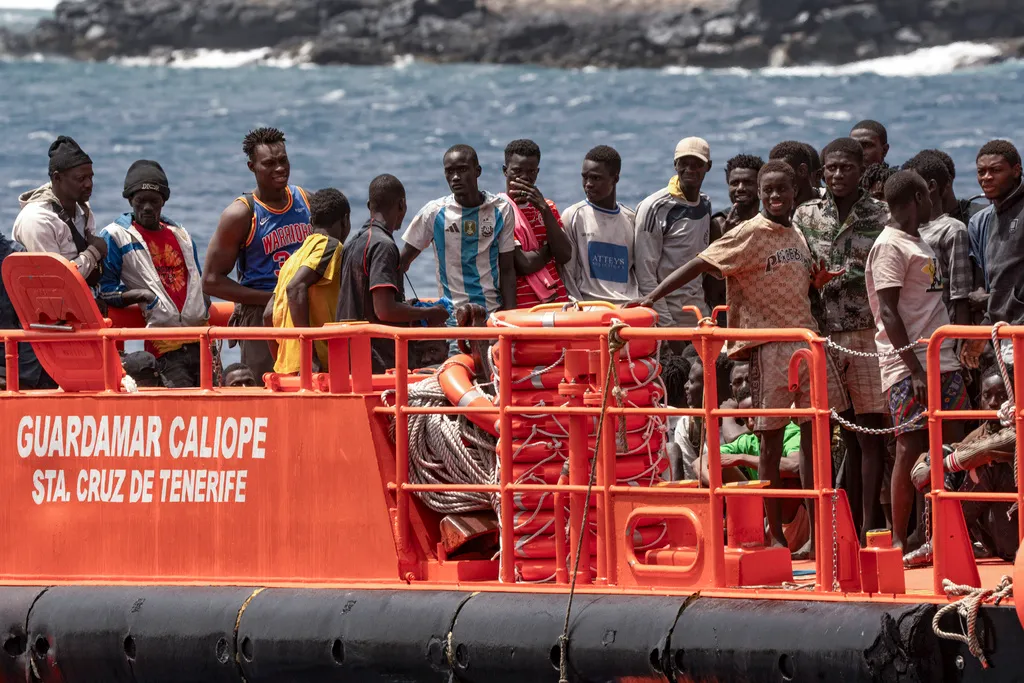
“We demand concrete commitments, resources and immediate action,” he continued. “El Hierro and the Canary Islands deserve a response from the State that matches the solidarity, dignity and responsibility this land has demonstrated.”
The Tuesday meeting will convene officials of the Interministerial Commission on Immigration. The Canary Islands will be represented by Clavijo and Alpidio Armas — the president of El Hierro, the largest island in the territory.
Over the last five weeks, approximately 8,000 migrants are believed to have entered the Canary Islands illegally. Many more have perished on the treacherous journey by boat from countries including Senegal, Gambia, Guinea, and Nigeria.
At least 39 victims were killed in a shipwreck discovered over the weekend off the coast of Senegal. The boat had been broken apart off the coast of Senegal at an unknown point, and bodies were found in an advanced state of decomposition.
Armas said his island is one of the preeminent points of entry for West African migrants to enter the European Union illegally.
“This is precisely what has led us to declare an emergency in order to ensure a framework of cooperation with higher-level institutions,” he said in a Saturday interview with Spanish media.
The Canary Islands are only the latest to suffer from illegal migrants flooding into Spanish overseas territories.
Earlier this year, the autonomous region of Ceuta experienced a total collapse of border security as thousands of Moroccans similarly surged over walls and swam across bodies of water. An estimated 72,000 migrants entered Ceuta, a city-state with only 84,000 legitimate residents.
The overload created chaos in public life as crime spiked, schools were disrupted, hospitals were overburdened, and squatters set up large encampments on beaches and in city centers. The government claimed 15,000 illegal migrants remained in Ceuta at the time of the press conference.
In late October, Ceuta Mayor-President Juan Jesus Vivas lamented at a press conference that his region “has not returned to normal almost three months later.”
“No one has yet been returned through administrative resolution, and all those who have left have done so through voluntary returns or for committing crimes — so it seems that the government’s strategy is for this to collapse under its own weight,” Vivas lamented.
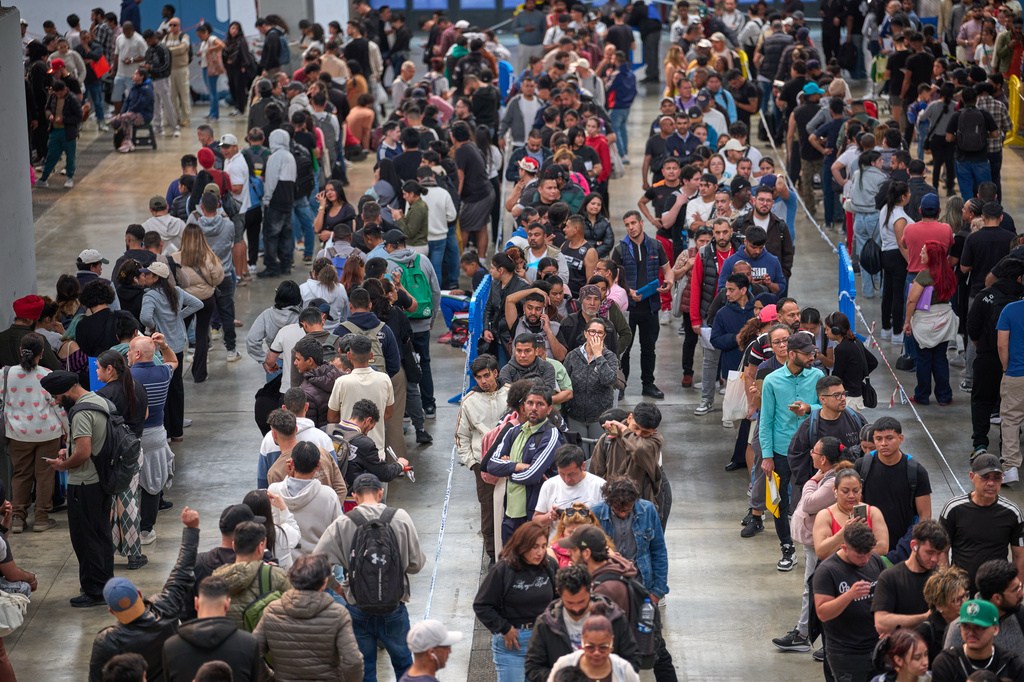
“The situation is extraordinarily far from normal, and every day that passes it gets worse because our capacity to resist is weakening, and it seems we’re at a dead end,” he continued. “No one can stand this injustice.”
Sanchez rolled out a program in April giving illegal immigrants inside Spain a pathway to legal residency.
Applicants who have lived in the country for at least five months and have no criminal record may apply for the program and renew their legal status on an annual basis.
The prime minister and his government said prior to the rollout that they expected 500,000 illegal residents to benefit from the program, but over 1 million individuals applied.