
The Senate will get its first sneak peek Wednesday at just how hard it could be to pass even the most narrow of artificial intelligence legislation amid a growing debate over whether, if at all, to regulate the technology that industry leaders warn may pose doomsday threats to humanity.
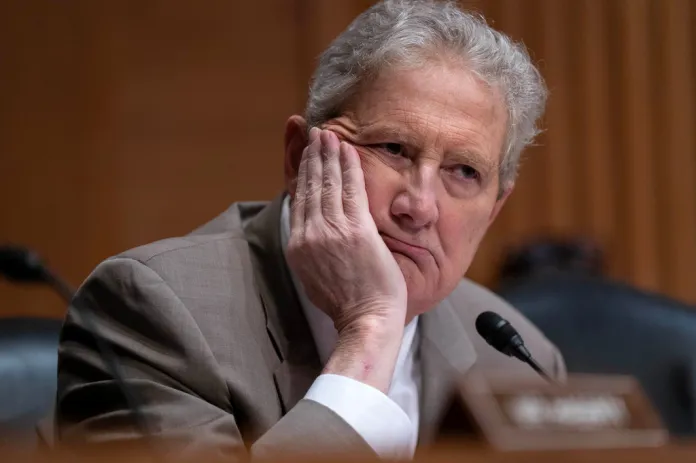
But do not expect the effort, which would force AI companies to build a “kill switch” to prevent models from going rogue, to get far. Sen. John Kennedy (R-LA) intends to try to pass the measure via unanimous consent Wednesday, a process any senator can block.
Democrats generally favor a heavier-handed regulatory approach than Republicans, but lawmakers are all over the map on this policy landscape even within their own parties. Even if an aging Congress with a median age of 60 could find agreement on addressing the rapidly advancing technology, the political will is further diminished with the November midterm elections, followed by weeks of a lame-duck session before the new Congress, and perhaps new majority parties, in January 2027.
“We’re not going, right now, to stop and try to establish a regulatory scheme for AI that balances public safety and innovation,” Kennedy said. “I’m not saying that I’m glad we’re not going to. I’m just saying that I see the world as it is, not as I want it to be.”
Kennedy was unsure whether anyone might object, but the prospect appeared all but certain, given the lack of consensus regarding an industry that has asked Congress for more legal guardrails.
“I hope they’ll explain themselves why they think a kill switch is a bad idea,” Kennedy added of any senator who may object.
There was minimal discussion Tuesday among Senate Republicans about AI during a weekly closed-door meeting on the party’s agenda, even as debate over the technology raged beyond the room. Warnings from current and former AI employees about the possibility of super-intelligent systems one day going rogue to kill mankind, along with calls from industry leaders for new regulations, have supercharged the political debate.
President Donald Trump described the cautions as fearmongering and a “HOAX,” writing on Truth Social that the “only control or ‘guardrails’ that AI needs is a STRONG AND SMART (High IQ!) PRESIDENT, and the U.S.A. has that, in spades!”
Senate Majority Leader John Thune (R-SD) told reporters he prefers a “light touch” to regulating AI and has been crafting legislation with Sen. Amy Klobuchar (D-MN) and Senate Commerce Committee Chairman Sen. Ted Cruz (R-TX). House Speaker Mike Johnson (R-LA) teased a forthcoming White House meeting with leading AI executives.
Other Republicans do not trust Congress and fear regulation could allow Chinese AI companies to outpace American ones, while many Democrats want more government control over AI, including with any “kill switches.”
“They need to regulate themselves,” Sen. Rick Scott (R-FL) said of AI executives. “We can’t pass a budget. Do you think we’re going to have some great bill on AI?”
AI LEADERS FIND A NEW MESSAGE FOR TRUMP: YOUR BILLIONS ARE IN DANGER WITHOUT GUARDRAILS
Sen. Richard Blumenthal (D-CT), who co-sponsored a bipartisan AI oversight proposal with Sen. Josh Hawley (R-MO), referred to Kennedy’s kill switch bill as “ineffective as a fig leaf.” He equated regulating the AI industry with that of drugmakers.
“I don’t understand recombinant DNA,” Blumenthal said, referring to a technology used in medicines. “But I know that a bunch of scientists who have the expertise and experience can evaluate whether a vaccine or some other RNA product is going to be safe and effective.”