
There may not be a memorandum of understanding that is so misunderstood and forgotten so quickly as the one the United States signed with Iran on June 17.
It began unraveling less than a month later. The U.S. on July 11 relaunched at full scale strikes on Iranian targets, resuming the war it began alongside Israel at the end of February against the Islamic Republic, a foe to both countries for 47 years.
Iran, meanwhile, continued to strike commercial ships traveling the Strait of Hormuz, the waterway critical to the passage of a quarter of the world’s seaborne oil trade, and a fifth of the world’s liquefied natural gas exports. On July 13, President Donald Trump said he resumed the blockade of ships entering or departing Iranian ports.
Trump said the MOU was done.
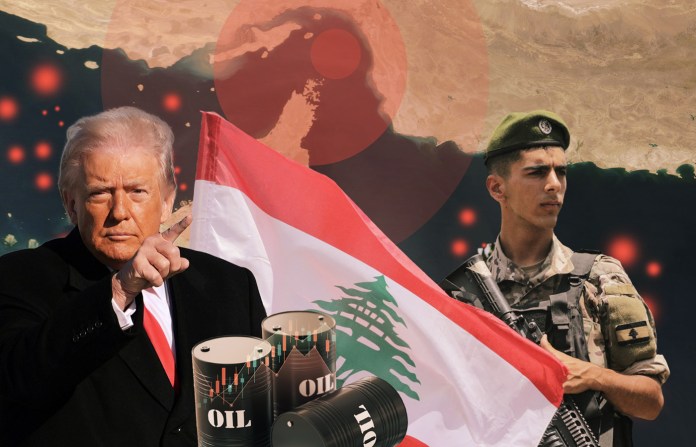
“Look, memorandum of understanding when you’re dealing with sleaze bags don’t mean much,” Trump told conservative radio host Hugh Hewitt on July 13 in the hours after he reimposed the blockade.
The paradox is that even as the memorandum of understanding takes a flier toward the wastepaper basket, its effects, coupled with the effects of the war, may be long-lasting: The entrenchment of Iran in Lebanon, the codification of Iran’s control of the Strait of Hormuz, the militarization of the Iranian regime, the diminishment of U.S. deterrence, and the damage to U.S. alliances.
“May” is the keyword: The Middle East has been in such flux since the Oct. 7, 2023, deadly Hamas raids in Israel, and more so since the United States and Israel launched the current Iran war on Feb. 28, that confident predictions may be a fool’s errand, experts say.
A lot has changed in very little time, and the “status quo” has changed so frequently, it may not make sense to speak of one, said Sanam Vakil, the director of the Middle East and North Africa program at the venerable London-based Chatham House policy institute.
“There is no status quo, there is no status quo ante,” she said. “All that has been pulverized.”
Still, there are three areas where change is already tangible:
The US recognized Iran’s stake in Lebanon
The Islamic Republic has maintained deep ties with Hezbollah, the Lebanese terrorist group, for more than four decades. Hezbollah arose after Israel’s 1982 invasion of Lebanon, which was aimed at dismantling the Palestine Liberation Organization’s presence in the country.
Iran’s ayatollahs and Hezbollah shared a Shia Islamic faith, and a stake in Lebanon was an opportunity then for the young Islamist regime to project its strength in the region and to muster a reputation as a stalwart against the West and against Israel.
The United States has historically been adamantly opposed to Hezbollah’s burgeoning strength in the region since the group bombed Marine barracks in Beirut, killing 307 people, including 241 U.S. troops. It was designated as a terrorist group in 1997.
Hezbollah’s role in adventurism in the region, particularly after the 2003 Iraq War, and its role in backing and training Shia insurgents in Iraq, intensified U.S. hostility toward the group, leading to U.S. pressure on allies to marginalize Hezbollah similarly.
So Middle East watchers were stunned to learn that the MOU last month not only enshrined Iran’s stake in Lebanon — Iran’s entrenchment appeared to be paramount, the first of 14 points in the MOU signed by Trump, Vice President JD Vance, Iranian Parliamentary Speaker Mohammad Bagher Ghalibaf, and Iranian President Masoud Pezeshkian.
Three times, the lengthy paragraph stated that the ceasefire must extend to Lebanon. In one instance, stipulating that the United States and Iran agreed to “ensuring the territorial integrity and sovereignty of Lebanon,” a reference to Israeli territorial gains during the war.
The development was profoundly unsettling to the government of Israeli Prime Minister Benjamin Netanyahu, who had seen Trump as key to transforming the region and removing threats to Israel like Hamas in Gaza and Hezbollah in Lebanon.
Just two weeks after the MOU was signed, in a speech at a military cemetery on July 1 commemorating the Israeli troops who fell in the 2006 war with Hezbollah, Netanyahu listed Israeli triumphs against Hezbollah since Oct. 8, 2023. Hezbollah that day joined Hamas in its war against Israel, a day after the Hamas attacks in the Jewish state’s southern tier killed more than 1,200 people, with another 251 taken hostage.
“Iran — which wanted to force upon us a withdrawal — that will not happen,” Netanyahu said, as close to a rebuke to Trump for negotiating the truce as he would dare to deliver to his closest ally.
The Jewish Institute for National Security of America, one of the most vocal boosters of the war at its outset, was scathing in its assessment of the first point.
“By including Lebanon, the MOU concedes Iranian influence in Lebanon to save its terror proxy Hezbollah, threatens Israeli security, trashes prospects for an Israeli-Lebanese peace, and offers Iran an additional lever to manipulate other elements of the MOU,” it said in a June 23 review of the MOU.
Some Iran experts said the MOU was simply acknowledging the reality of an Iranian entrenchment so deep that there are believed to be hundreds of Revolutionary Guard commanders in Lebanon.
“Iran has long exercised influence in Lebanon through Hezbollah,” Ali Vaez, the International Crisis Group’s Iran Project Director, said in an email interview. “Acknowledging Iran’s stake in the regional security order doesn’t change that reality.”
A bright spot for Iran hawks — and for Israel — may be the parallel negotiations the Trump administration brokered between top Israeli and Lebanese officials, which culminated on June 26 in a framework that for the first time in more than 40 years anticipates mutual Israeli-Lebanese recognition. The framework — contra the MOU — requires the dismantlement of Hezbollah’s military infrastructure.
The U.S. signing of two agreements within two weeks that seemed utterly in contradiction baffled Middle East watchers. But it also stirred optimism that the Trump administration was not yet giving away the game.
The Israel-Lebanon framework “appears purposefully chosen to present an alternative path to that MOU in terms of addressing the Lebanon question,” Robert Satloff, the executive director of the Washington Institute for Near East Policy, said in an analysis.
Indeed, the agreement suggests tensions between Vance, an isolationist who favors lowering the U.S. profile abroad and who led the MOU negotiations, and Secretary of State Marco Rubio. The former Florida Republican senator — also national security adviser in Trump’s second, nonconsecutive term — has a reputation as an interventionist who has largely ducked the MOU talks. Yet the State Department under Rubio’s leadership brokered the Israel-Lebanon framework.
Vance and Rubio are seen as the frontrunners in the stakes to succeed Trump; the success of their endeavors in the Middle East could help shape the presidential primary race, which begins in earnest next year.
Whatever the case, the Lebanon framework, should Trump favor it over a deal with Iran, could turn the deep concessions in the MOU into a victory for American influence, said Aaron David Miller, a senior fellow at the Carnegie Endowment for Peace and a Middle East negotiator for multiple presidents of both parties.
“If Trump is up to it, he could turn chickens*** into chicken salad,” Miller, who sees the MOU as caving to Iran, said. Another bright spot, he said, is the negotiations the United States is said to be brokering between Israel and the regime in Syria that, in 2024, ousted the Assad regime, a longtime ally of Iran.
The Strait of Hormuz is up for grabs
The waterway, critical to the world’s energy economy, has been open for decades. Now Iran keeps opening and closing it, and together with Oman, the Arab nation on the other side of the strait, is anticipating charging tolls. Trump, too, recently talked about — and then retreated from — plans to charge tolls for safe passage.
The closures have driven up prices for petroleum, natural gas, and their derivatives and roiled Trump’s political fortunes ahead of critical midterm elections, with his economic approval rate plunging to a low of 33%.
The war in its initial days scored impressive wins for the U.S.-Israel side, decapitating much of Iran’s leadership and burying (although not destroying) much of its enriched fissile material, key to building a nuclear weapon, the threat of which drove Trump and Netanyahu to launch the war.
Trump, however, reportedly underestimated Iran’s capacity to endure the pain that closing the strait would cause.
Now, Iran’s claim to the strait may be permanent, said Vaez of the International Crisis Group.
“The old assumption that Hormuz is simply an international waterway insulated from Iran’s security interests has been shattered,” he said. “Tehran will try to preserve that new reality as leverage, though the more others develop routes and arrangements that bypass Iranian control, the more perishable that leverage becomes.”
Yet, as with Lebanon, Middle East watchers were bowled over to discover that the MOU codified Iran’s claim to a say in administering passage through the strait. The MOU determines that Iran “will conduct dialog with the Sultanate of Oman to define the future administration and maritime services in the Strait of Hormuz.”
“I don’t see that Iran has any incentive at the moment to relinquish its de facto control over the strait,” said Allison McManus, a managing director for the National Security and International Policy department at the liberal leaning Center for American Progress. “I think that this is, unfortunately, but perhaps predictably, a major new asset that Iran has gained.”
What’s more, the MOU leaves an opening for Iran to administer tolls: “Upon the signing of this MOU, the Islamic Republic of Iran will make arrangements using its best efforts for the safe passage of commercial vessels with no charge, for 60 days only.” The “only” in that sentence opens up an avenue for Iran and Oman to consider tolls in the future.
Tolls, should the United States come to accept their existence, “would be a huge shift in the U.S.’s geopolitical approach to the world, in jettisoning its commitment to freedom of navigation,” Yvonne Chiu, a professor at the U.S. Naval War College, said.
Israelis fear Iranian control of the strait will be a nail in the coffin of keeping Iran’s ambitions for a nuclear weapon at bay.
“The Strait of Hormuz has transformed from a bargaining chip to a nuclear shield,” Eitan Shamir, a top former Israeli Ministry of Strategic Affairs official, and Col. Shay Shabtai, the deputy director of the Begin-Sadat Center for Strategic Studies at Bar-Ilan University, wrote in an analysis of the MOU for the center. “Due to American concessions, the Hormuz issue now functions as a shield protecting substantive Iranian nuclear non-compliance.”
Is the US still a superpower?
The most far-reaching implications of the American concessions could be to its reputation as a reliable ally, already eroded by Trump’s peregrinations on the degree to which he is committed to the NATO alliance.
Vaez said that the show of American strength at the war’s outset is counteracted for U.S. allies in the region by the open-ended nature of the conflict.
“The war has reinforced both sides of America’s regional image: an indispensable security actor, but also a source of instability that can drag its partners into conflicts they neither chose nor control,” he said. “For U.S. allies, the question is America’s reliability as a predictable ally.”
McManus, at CAP, said the U.S.’s sudden transition from negotiating with Iran to warring with it itself is a warning signal to the rest of the world.
“We’ve demonstrated that we are an untrustworthy negotiator,” she said. “That is a weakness, because it creates unpredictability.”
Chiu noted the depletion of weapons and how that affected the U.S. posture in the Pacific.
“We’ve moved aircraft carriers, and we’re expending a lot of munitions that we would need in a war against China,” she said. “Those munitions are, one, incredibly expensive to make, and two, they cannot be replaced quickly and easily. It is taking resources away from other theaters.”
Vakil of Chatham House said that, however much the war unsettled the United States’s Middle East allies, no other power is stepping into the breach.
“China has its own priorities, and the Middle East is certainly not in its top five, maybe not even in its top 10,” she said. “China is diversifying, investing in renewables.”
Miller noted that Russia is bogged down in Ukraine. “We are still, in my judgment, the only game in town,” he said. Still, he said, the MOU was a striking indictment of Trump’s negotiating team, including Steve Witkoff, an old friend and fellow real estate developer, and Jared Kushner, Trump’s son-in-law.
“Clearly, the Iranians had much better lawyers than the Americans,” he said.
Vakil said intermittent warfare was the likelihood in the foreseeable future.
“I don’t necessarily think a deal is easily achievable because there’s mistrust, because there’s not a persistent negotiation environment,” she said.
TWO US SERVICE MEMBERS KILLED IN JORDAN AFTER BREAKDOWN OF IRAN CEASEFIRE
Miller said that’s a function of Trump’s short attention span, likening the MOU to the ceasefire he trumpeted last year between Israel and Hamas.
“We’re now halfway into 2026, and Gaza is likely to remain divided and sporadically violent,” he said.
Ron Kampeas (@kampeas) is an Arlington, Virginia-based journalist. He was the Jewish Telegraphic Agency’s Washington bureau chief for more than 20 years, and previously reported for the Associated Press from the Jerusalem, New York, London, and Washington, D.C., bureaus.