
Senators from both parties who voted against legislation to rein in the ability of large investors to acquire rental properties have a series of financial ties to those same investors.
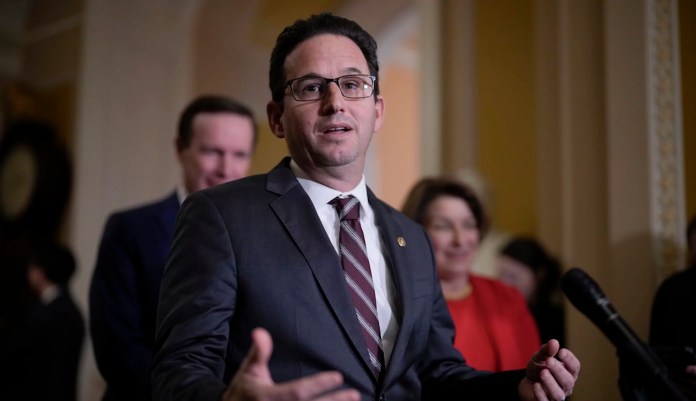
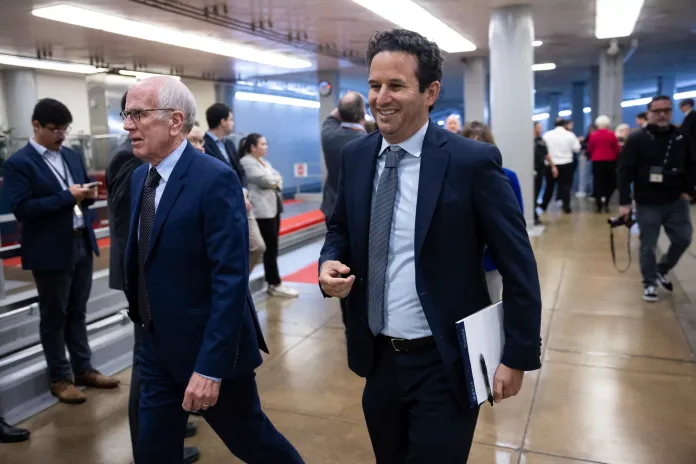
Sen. Brian Schatz (D-HI) was the lone Democrat to vote against the 21st Century ROAD to Housing Act, which would prevent investors from buying up large quantities of single-family or duplex homes to turn into rentals. Schatz’s wife runs a real estate consulting firm, Schatz Collaborative, that currently works with large property investors who could be hurt by the bill. Schatz himself, alongside some GOP opponents of the legislation, has accepted significant campaign contributions from interest groups seeking to stop the bill from becoming law.
“Senator Schatz is in favor of increasing housing supply and against constraining it, and that is why he opposed federal restrictions on build-to-rent,” a spokesman for the lawmaker told the Washington Examiner. “The overwhelming majority of housing experts agree with him. Senator Schatz doesn’t discuss pending legislation with family members where there could be a conflict.”
Schatz Collaborative’s possible clientele could be adversely affected by the legislation.
A 2017 profile of Schatz’s wife published in Pacific Edge Magazine reported that her company focuses on “servicing real estate companies outside of Hawai‘i that need local expertise,” the kinds of business targeted by the housing reform law, by “finding properties, concepts, investors, and project teams to execute real estate deals.”
Schatz doesn’t disclose precisely how much his wife earns through her real estate consultancy, simply stating in financial discourses that she earns over $1,000 a year from her work, according to his most recent financial disclosure.
The Hawaiian Democrat is a strong proponent of increasing the supply of housing through new construction in order to bring the cost of living down.
“The definition of ‘institutional investor’ says, essentially, anyone who owns and operates more than 350 units to rent,” Schatz said in a floor speech criticizing the bill’s attempt to ban homeownership among institutional investors. “That’s bananas. We are now targeting LLCs, limited partnerships, real estate investment trusts, individual owners, family companies, pension funds — anyone who wants to build housing and then provide it for rent is going to be forced to sell after seven years … We have decided, for no particular reason other than what I think is a drafting error, to demonize people who want to build rental housing for folks.”
The 21st Century ROAD to Housing Act would require investors who own more than 350 single-family or duplex homes to sell those properties after seven years.
Schatz’s wife, according to her public LinkedIn profile, is currently involved in two projects alongside large real estate investors. One such project — an apartment complex called Kaulana Mahina — is reportedly a joint venture between an AFL-CIO pension investment fund, Legacy Partners, Pacific Coast Capital Partners, Dowling Company, Pier Investments, and Schatz Collaborative.
The project, according to a local business journal, had a projected cost of over $100 million and was “entirely privately financed, with a large share coming from private equity,” according to developers.
Dowling Company and Pacific Coast Capital Partners both invest in single-family housing development projects. Schatz’s wife has a financial stake in a holding company partnered to create the Kaulana Mahina apartments valued between $50,000 and $100,000, according to Senate disclosures.
Kamakana Villages, Schatz’s wife’s other ongoing project, is in partnership with Forest City Hawaii, another large real estate investor.
The current row over the ability of institutional investors to purchase single-family homes came after President Donald Trump signed an executive order in January barring federal agencies from assisting large firms in acquiring such properties. Trump reiterated his position in February when, during his State of the Union address, he called on Congress to pass legislation to ban institutional investors from buying single-family homes.
Trump’s proposed institutional investor ban is part of an affordability message that his allies have encouraged him to focus on more frequently as the midterms approach, and as his approval ratings have sagged.
Institutional investors donated to Republicans
Schatz’s GOP colleagues who joined him in opposing the legislation have also accepted donations from opponents of the legislation, the Center Square previously reported. Sens. Thom Tillis (R-NC), Todd Young (R-IN), Mike Lee (R-UT), Ted Cruz (R-TX), Rand Paul (R-KY), Ted Budd (R-NC), Ron Johnson (R-WI), Rick Scott (R-FL), and Tommy Tuberville (R-AL) have all accepted funds from institutional investors or their political committees.
Each Republican lawmaker was reached for comment.
“Lowering housing costs for all Americans is a priority for this Republican Congress, but this bill fell far short of that goal,” Cruz told the Washington Examiner. “I agree with President Trump that large banks should not be buying single-family homes. Unfortunately, this legislation goes beyond that principle and restricts those hoping to build new rental housing for Americans by requiring build-to-rent homes to be sold within seven years. Restricting the supply of newly built rental units should not be enshrined in law.”
Young, meanwhile, told the Washington Examiner that while he is “glad the Senate is finally considering ways to address the housing affordability crisis, as I’ve worked on housing issues for years,” the bill as written “contains provisions that won’t increase the supply of housing or help lower costs.”
Both Cruz and Young told the Washington Examiner that they’d be open to voting for a housing reform bill provided certain issues are ironed out, especially relating to zoning regulations.
Schatz himself has accepted similar contributions from institutional investors, having received at least $131,500 from organizations that oppose the bill’s restrictions on institutional investors owning homes, the Center Square reported. Large private equity firms such as Blackstone, Apollo Global Management, and KKR, as well as their employees, have also cut checks to Schatz over the years, according to campaign finance records.
GOP DONORS COULD WIN BILLIONS AFTER TRUMP DISMANTLED KEY PUERTO RICO OVERSIGHT BOARD
Outside of Congress, power players in Washington with financial links to institutional investors are mounting a spirited opposition to the 21st Century ROAD to Housing Act.
Five of the American Enterprise Institute’s board members have ties to large investment ventures that seek to acquire single-family homes, Politico reported on April 10. Since President Donald Trump first announced his intent to ban such large investors from owning single-family homes in January, AEI’s scholars have published articles and reports arguing against the policy change.
“AEI does not take institutional positions, and our scholars maintain independence in all of their research,” an AEI spokesperson told Politico. “Views expressed by our scholars are drawn from their own expertise and research, and we strongly protect their ability to work independently.”