
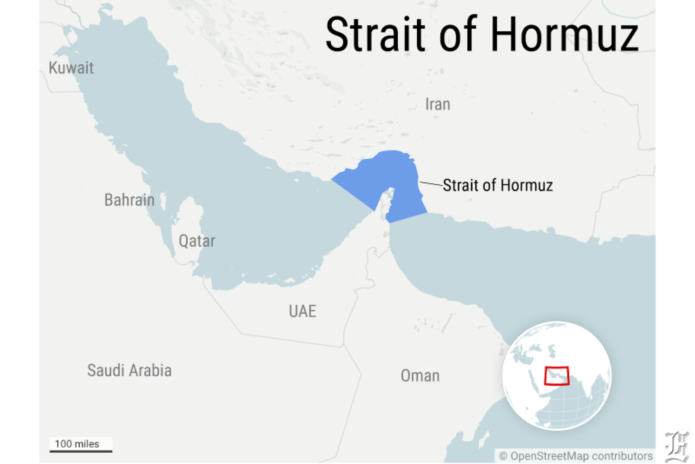
The tenous Pakistan-brokered ceasefire between Iran and the United States was quickly followed by Iran’s unwillingness to bend in any negotiations with American envoys. President Donald Trump decided he had had enough of waiting for the Shia Islamic theocracy to reopen the Strait of Hormuz, as promised to the ayatollah, the Islamic Revolutionary Guard Corps, or whoever is really running the Iranian dictatorship.
If Iran refused to lift its blockade of the waterway, through which one-fifth of global oil and gas exports traverse, then the U.S. would do it the regime’s way. Rather than try to relax Iran’s blockade and restore trade through the strait, Trump responded with a full naval blockade of his own, which began on the morning of April 13.
Iran’s initial blockade of the strait was the final and most fulsome arrow in its quiver. And there’s a good reason it waited so long to break glass in case of emergency and actually followed through on a decades-long threat.
The damage to oil supply and supply chains was real. And even the U.S., which became a net oil exporter for the first time since 1949 during Trump’s first term, was not immune from the corresponding rise in global prices.
In fact, after weeks of trading at its largest discount relative to global prices in over a decade, American oil futures began to outpace global Brent in the beginning of April. Right as Trump escalated his threats to bomb Iran “back to the Stone Ages” rather than reopen the strait.
For a moment, the markets began to interpret Trump, not Iran, as the desperate party unable to stomach short-term domestic pain for a longer-term resolution to the war. That all changed, not merely due to the ceasefire, but because of what followed in Trump’s willingness to match Iran’s blockade with his own against all Iranian ports in the region.
In the first 48 hours of the naval blockade, U.S. Central Command reported it had successfully intercepted nine vessels entering or leaving Iranian ports without needing to board a single one. Although the U.S. is allowing ships to travel freely as long as they aren’t going to or leaving from Iranian ports, CENTCOM maintains that no commercial ships entering or exiting Iranian ports have made it past the blockade.
Kpler, a maritime tracking firm, independently corroborated that while over a dozen ships without Iranian links traversed the strait in the first two days of the blockade, two Iranian-linked ships were forced to turn around, while another eight had stagnated or slowed down.
Two weeks ago, the Iranians were bragging that they would charge $2 million in tolls per ship they so benevolently allowed to traverse the strait as a form of reparations. Now, the U.S. is blocking an estimated $276 million in daily exports from leaving Iran and $159 million in daily imports from entering, for a total daily cost of nearly half a billion dollars.
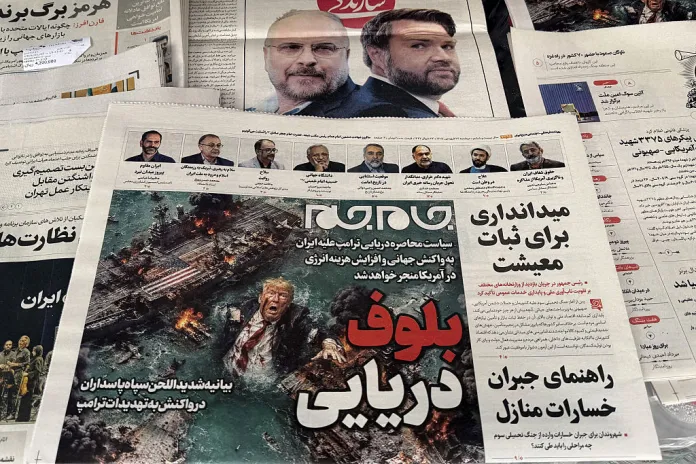
Trump’s military mission against Iran has been an unprecedented success, with Iran’s navy and ballistic missile capabilities destroyed and proxy powers and nuclear weapons capabilities markedly defanged. But finally, his economic strategy has caught up, with the U.S. now calling Iran’s bluff and banking on the fact that it needs the strait more than we do.
The damage to Iran’s economy is beyond dispute. Iran, which already saw nearly 50% inflation before the blockade and the printing of a 10-million-rial banknote worth a measly $7, relies on sea trade for 90% of its economy and oil exports for nearly half of its government revenue. With sanctions set to snap back on Russian and Iranian oil, the world is now pivoting to an unprecedented deluge of American exports, which are up to 5 million barrels of crude per day this month versus 4 million last year.
But the real target, as it always was intended to be, is China.
Beijing relies on imports for three-quarters of its gas and oil demand, of which half is sourced from the Strait of Hormuz. While it’s likely still getting some non-Iranian oil from the strait, China has lost a significant portion of one-third of the total oil imports that it bought at a massive discount in 2025 from Russia, Venezuela, and Iran.
So it’s not a coincidence that Trump is willing to double down on the pain now that China has finally entered the conversation — Communist Party spokesman Guo Jiakun derided the blockade as “dangerous and irresponsible behavior.” Dictator Xi Jinping tellingly complained to the crown prince of Abu Dhabi, as the United Arab Emirates has emerged as a key American ally in this war, that the world should not “be allowed to regress to the law of the jungle.”
The Iranian regime is not rational. Its eschatology lusts after the sort of death and destruction that nearly every other ideology has the inherent self-interest to instinctively avoid at all costs. It cannot be reasoned with on the grounds of self-preservation, let alone prosperity and peace.
HERE’S WHERE HOUSE AND SENATE RETIREMENTS STAND IN 2026
But China, for all its communist dogma and delusions of grandeur, can be. Xi doesn’t believe 72 virgins are waiting for him in martyrdom — in fact, he’s been caught on hot mics trying to figure out how he can live indefinitely.
While formal negotiations will continue with the Iranians directly, the real pressure campaign has been reoriented to China. If the client state refuses to reason, then the U.S. will try its hand at pressuring its patron. It only took one day, but it looks like the Chinese are finally ready to have a conversation.
Tiana Lowe Doescher (@TianaTheFirst) is an economics columnist for the Washington Examiner.