
At just 12 years old, Claire Abernathy began identifying as a boy and was fast-tracked by doctors to a medical transition. By 14, she was on testosterone. The summer after eighth grade, she had a double mastectomy. But now, she’s detransitioning and feeling abandoned by the healthcare professionals who did this to her and left to pick up the pieces of herself she’s lost.
“It took 15 minutes to get my breast cut off as a 14-year-old,” Abernathy told Washington Examiner. “At 17, I started looking into breast reconstruction, and none of the surgeons that I called about this would even consult with me, they said I was ‘too young.’ It’s ridiculous, it’s on its face ridiculous.”
Abernathy is one of a growing number of detransitioners, or people who say they regret the medical steps they took to transition genders as adults or teenagers. Some detransitioners have spoken out about their experiences with rushed treatment plans and mental health problems that did not resolve after taking hormones or undergoing surgeries. Conservatives have increasingly highlighted their stories as they push for a regulatory crackdown on transgender treatments for children, which are legal in 23 states, according to the Human Rights Campaign.
Abernathy, now an ambassador for Independent Women, a conservative group, initially came to Washington, D.C., to testify in front of a Senate Committee hearing on the Dangers of Gender Transition Procedures on Minors. Although the hearing was postponed, Abernathy told the Washington Examiner she hopes to come back and will never stop fighting until legislation has been passed to prevent this from happening to another child.

“We are going to see the catastrophic effects that these drugs and these surgeries have on children, and it is going to incite an even bigger wave of lawsuits,” Abernathy said. “This is just the beginning.”
By the time Abernathy told her parents about her transgender identity, she had already transitioned socially, going by a different name and using male pronouns within her friend group at school.
“There were some teachers who I was maybe a little bit inappropriately close with who were sort of going along with this behind my parents’ back as well,” Abernathy said. “A week after I turned 14, I started using boys’ restrooms, and I was in a boys’ choir class, and in athletics.”
At this point, Abernathy was in therapy. She said that instead of addressing her deeper issues, therapists convinced her parents that transitioning was the only way to save her life. Critics of pediatric transgender treatments say this is a frequent tactic deployed by pro-transgender therapists that is not well supported by evidence.
“The first [therapist] told [my mom], after like the first session I had, ‘your child is transgender,’” Abernathy said. “‘The eating disorder that she has, the suicidal ideation, the cutting behavior — it all stems from the fact that she’s transgender and that you’re not socially transitioning her or letting her go on testosterone.’”
Abernathy said, “My parents were still skeptical, they took me to a second therapist. The second therapist did the exact same thing.”
Within months of starting testosterone, Abernathy was scheduled for a double mastectomy at the American Institute for Plastic Surgery in Plano, Texas.
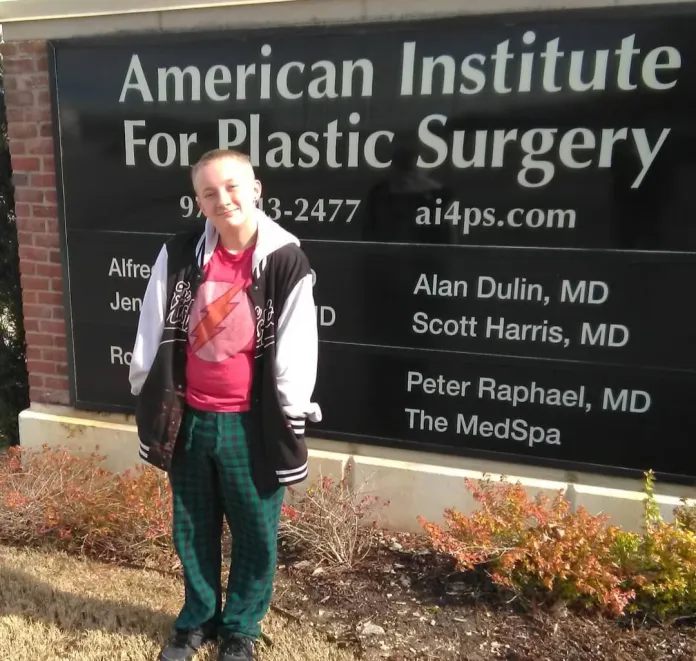
“The consultation was around 15 minutes long,” Abernathy said. “I didn’t see an actual informed consent packet until the day of the surgery. [The doctor] handed me the packet, left for 10 minutes, came back, I had signed it, and he did the markings on my chest, and then wheeled me off for surgery.”
Abernathy said that despite the promises she had received from therapists and doctors and what was taught to her in school, the surgery didn’t bring relief.
“Nothing changed,” Abernathy said. “I was essentially like an emotional zombie, I was looking down, and I was supposed to feel something, this relief, or feel like good, and normal now. But I just felt nothing, and I cried in that appointment.”
Abernathy quickly began to experience serious complications that left her with open wounds on her chest. She said she tried to reach out to doctors several times and left messages, but they never got back to her.
“I know now that this very easily could have become a serious infection,” Abernathy said. “I could have died from this.”
Abernathy decided to stop hormones two years later and began looking to detransition at 17 years old. However, she said she immediately faced roadblocks trying to get reconstruction surgery for her breasts, as doctors turned her away for being too young. The irony was not lost on her.
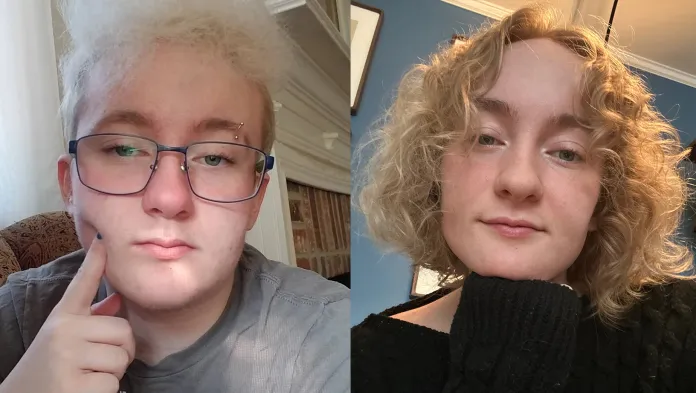
“The process to get the breast reconstruction from my initial consultation to the actual surgery was over a year,” Abernathy said. “It took 15 minutes to get my breasts cut off as a 14-year-old. It’s a much less invasive, much less extreme surgery with a much lower rate of complication, but I was ‘too young.’ I was ‘not mature enough.’”
It took years for Abernathy to tell her mom she had begun detransitioning, she said.
“I didn’t want my mom to feel the pain and the regret that I felt,” Abernathy said. “In many ways that fear has turned out to be valid. I don’t have a single friend today that I had then. I’ve lost my relationship with both of my sisters.”
Transitioning and detransitioning cost Abernathy nearly all of her old relationships and even a piece of herself, but she says she’s still in a better place now.
“This past year has been probably one of the best of my life,” Abernathy said. “I haven’t ever stopped losing things really … but I much prefer this [community] to where I was before.”