
Steve Feinberg is a modern heir to the “dollar-a-year” men: business leaders who brought their experience managing American industry into government to strengthen the nation’s defense. That tradition today is rare, with many positions filled by policy experts instead. Congress should consider what our nation stands to lose if Feinberg’s tenure ends in frustration.
Coming from private equity, Feinberg brought experience turning around distressed enterprises, allocating capital, making executive decisions, and achieving measurable results. What he brings to the Pentagon is an understanding of how to get private sector businesses to perform and deliver.
However, in addition to his management skills, he brought his reputation. To help our warfighters, Feinberg has put his relationships and credibility behind an effort to change how the Pentagon buys weapons and how industry produces them. When he asks companies to invest, expand production, and move faster, his reputation for achieving results gives those requests weight. But his personal credibility is unfortunately not a check that can be cashed without Congress. Without money and the authorization to spend the money, his deals will come to a hard stop. This is why Congress will have the final say about Feinberg’s future.
Reuters recently reported that the White House has considered possible replacements for Feinberg and consulted senators about whether they could be confirmed. No decision has been announced, and administration officials have disputed the reporting. The discussions could reflect dissatisfaction with Feinberg, disagreements within the administration, or the ordinary maneuvering of Washington. Whatever their origin, Congress should be asking whether it is giving him a reason to stay.
Feinberg is the linchpin to our warfighters getting more weapons, drones, and advanced technology. Much of this is funded within the $350 billion in reconciliation funding, along with the need to replenish the stock expended in the war with Iran. This funding is especially important for unmanned systems, where the military is still determining which technologies, designs, and operational approaches will prove most useful. Feinberg faces the challenge of expanding an industry while its products and requirements continue to evolve. Industry needs this money to build capacity, along with flexible funding to support repeated experimentation.
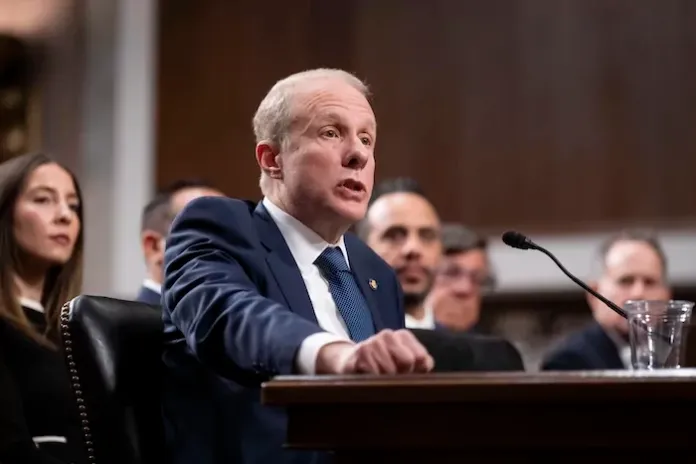
The consequences of Feinberg’s departure due to a lack of money to modernize would extend beyond his reputation to both warfighters and industrial partners alike. Companies asked to commit their own capital would probably never believe any future government assurance. The next administration will also struggle to find someone willing to occupy the position.
To be clear, this is a self-inflicted, own-goal problem created entirely by the Pentagon’s political leadership. In a shockingly completely bipartisan fashion, the Pentagon not only completely failed to make Congress a partner in this effort, but they also seemed intent on going out of their way to alienate just about every single member of Congress on any given issue. Securing congressional support is part of the job since Article 1 of the Constitution makes Congress solely responsible for both money and raising and maintaining the military.
But Congress’s frustration with that failure cannot become a reason to leave the military or nation without needed capabilities. Lawmakers can demand explanations and hold officials accountable while still funding national defense. The costs of withholding necessary resources will fall on military readiness and production capacity, whatever message Congress intends to send to Pentagon leadership. Our national security is a core constitutional function of Congress, so they will need to solve this problem.
Congress, therefore, has four tasks. It must fund wartime replenishment and readiness. It must fund the $350 billion in modernization funding with the flexibility needed to support modern technologies and experimentation. It must enact a full-year fiscal 2027 defense appropriation. Finally, it must pass the National Defense Authorization Act to provide the authorities needed to carry out the work.
This is Washington, and each measure faces political obstacles. Some view war funding as an endorsement of the war. Others see additional defense spending as competing with domestic priorities. Still others view a defense appropriation as leverage in broader negotiations. The administration has certainly compounded these difficulties by failing to build sufficient support with Congress.
WHY CHINESE DELEGATIONS ARE SO RUDE
None of that changes the position Feinberg faces. He has asked industry to move and put his credibility behind the government’s commitments. Congress must now decide whether those commitments will be funded. If it declines, it should expect him to walk. His successor then will inherit a complete mess, and most importantly, our sons and daughters, who are serving our nation, will not have the weapons and technology that they need.
Maj. Gen. Ferrari is a senior fellow at the American Enterprise Institute and previously served as the director of program analysis and evaluation and the commanding general of the White Sands Missile Range