
From Sumerian scribes to the Patriot Act, government is the management of information by institutions. A state’s reach is proportional to its institutional grasp, and that grasp is defined by its capacity for centralizing and analyzing information. Where the reach of information leads, the grasp of institutions must follow, or government will lose its grip on its subjects.
The American Revolution arose in a society with weak institutions but strong informational capacity. Governmental authority was on the wrong side of the Atlantic Ocean. The reach of the British state was irregular even in the British Isles. The bureaucracy and technologies that made the Royal Navy the largest industrial unit in the 18th-century world coexisted with a largely unregulated and untaxed domestic populace.
Meanwhile in the American colonies, a highly literate public filled the informational shortfall with local print such as Benjamin Franklin’s Pennsylvania Gazette. London’s institutional reach could not beat the informational grasp of the colonial knowledge infrastructure, so London lost its grip before the French intervened to ensure that Britain lost an empire. To see how that colonial knowledge infrastructure shaped the political settlement that followed the American Revolution, we need only read the Federalist Papers.
The American regime became a decentralized federation that protected the rights of the sovereign individual. There was nothing self-evident about this outcome. The American Revolution was a product of unique informational and technological conditions. The print revolution had translated the Bible into English and then circulated republican theorists, ancient and modern, through the presses. The Protestant Reformation had sacralized private perception against established authority, and then fused with older English customs and laws protecting private property and limiting executive authority.
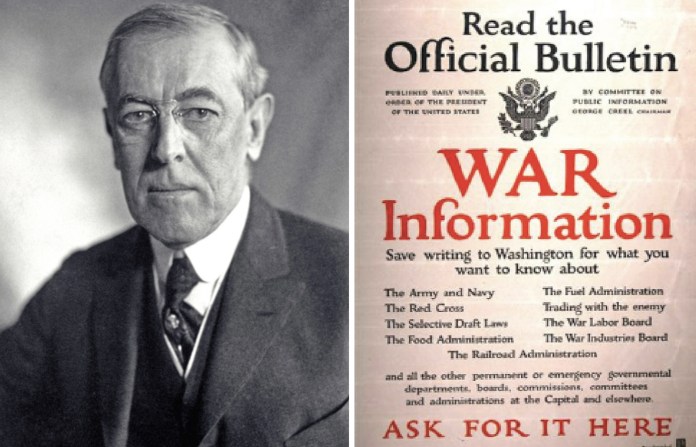
Change your technology and information systems, and individual perceptions and political systems will change too. This is why Plato forbids musical innovation in the frozen utopia of Republic. Like America’s first political cartoon, “Join, or Die,” which was first published in the Philadelphia Gazette, it is a leading indicator of political change. It follows that the Information Age, which began after 1945 as the military innovations of World War Two were applied to civilian and commercial formats, would create its political image, the Information State.
The Information State
Jacob Siegel’s The Information State: Politics in the Age of Total Control is a path-breaking exploration of how the Information Revolution rewired the American regime — and what that might mean for American democracy. Tocquevillian in reach and grasp, it might be called Technology in America. I think it is the most important political analysis of recent years.
In 2017, Siegel told me, he started to notice “a striking phenomenon which appeared under a number of different guises across our media and politics, initially in talk about ‘fake news,’ and then in talk about ‘disinformation’ and ‘misinformation.’ These presupposed a set of premises which were being taken for granted in public political discourse, but which seemed quite novel to me.”
Siegel doubted the narrative that “disinformation” had invaded the American political system and swung the 2016 elections. He doubted the Democratic and liberal media line that Donald Trump and other “foreign subversives” were an existential threat to American democracy. He doubted the orchestrated panics that followed: Black Lives Matter, the origins of COVID-19, transgender rights, the cult of the Palestinians, and the fusion of these causes into the permanent revolution of the “Omnicause.”
He also recognized these informational techniques from his service as a U.S. Army officer in Iraq and Afghanistan. Beneath the hyperbole about infiltration by “toxic memes and bots,” Siegel told me, he saw the patterning of “tropes that related to counterterrorism, counterinsurgency and information warfare, all of which had become familiar with through my experiences as a U.S. Army officer.”
The information war on domestic politics did not derive from the malfunction of constitutional government, with its checks, balances, and riotous culture of free speech. Rather, it reflected the “proper functioning of a parallel system of government” that had developed over decades “expressly for the purpose of controlling the information environment to shape public opinion.” This expanding “digital leviathan,” Siegel argues, has become “a new form of government,” covertly authoritarian and intentionally anti-democratic. Its grasp is limited only by its technological reach. By Joe Biden‘s presidency, this algorithmic empire administered “a system of globe-spanning control without any formal emperor—at times seemingly without anyone at all in charge,” while dividing and ruling at home by “ritualistically venerating marginalized identity groups excluded in traditional hierarchies.”
Siegel, a senior editor at the Jewish-interest website Tablet, is not a conspiracy theorist. His book does not raise the curtain on a deliberate digital fulfillment of President Dwight Eisenhower’s warning about the “military-industrial complex.” Rather, Siegel describes how technology, which is value-neutral, spreads by accidents of utility and value, and fuses with existing habits of mind and government.
“I don’t buy techno-determinism, but I do believe there is a deterministic element. Technologies generate environments,” he explained. “A sufficiently powerful technology generates a new sensory-perceptive-affective environment. It doesn’t dictate precisely what individuals do with their sense perceptions within that environment. The deterministic element is that technologies of a certain power, such as the printing press and now digital networks, generate new environments in the grander sweep of history.”
Since the onset of the Scientific Revolution in the 16th century, technology has developed greater and greater influence over scientific civilization. It does not determine our every decision, but it shapes decision-making frameworks and demands, Siegel said, “ultimate obedience to the march of the technology.” But this determinism coexists with a non-deterministic, random element. It was never fated that scientific civilization would develop into the “technocratic progressivism” that characterizes the modern West. After Americans invented cybernetics, the study of information systems, the Soviets created “Cybernetics in the Service of Communism.” But it was always likely that America would lead the way.
American experiments
One day in August 1783, Benjamin Franklin, America’s minister to the Court of Versailles, joined 50,000 Parisians to watch the test launch of a balloon at the Champ de Mars. The balloon was, Franklin reported to Joseph Banks of the Royal Society, a “Hollow Globe” of “Oiled Silk”, only 12 feet wide and able to carry only 25 lbs of load. But Franklin’s imagination took flight at the spectacle of this “new areostatic Experiment.”
He foresaw balloons capable of carrying “a Running Footman or a Horse,” so that they could bound light-footed across ditches and hedges as fast as the wind. Balloons that ferried game and ice to high-altitude refrigerator balloons where the air was colder. Balloons that, like SpaceX’s private space flights, could be “contrived to give People an extensive View of the Country, by running them up in an Elbow Chair a Mile high for a Guinea.”
In October, Franklin witnessed the powered fight of a sheep, a duck, and a rooster at Versailles. A month later, he reported to Banks from the first manned balloon flight, a Montgolfier brothers design launched before a “vast Concourse of the Gentry” in the garden of the Chateau de la Muette in the Bois de Boulogne. He regretted that “this Experiment is totally neglected in England where the mechanic Genius is so strong.” There could be “important Consequences that no one can foresee”. When a fellow spectator asked him what good was a balloon, Franklin replied, “What good is a newborn baby?”
Even before 1776, the newborn land of America stood for the future. From Franklin to Elon Musk, America means technological optimism. This optimism is an American strength. But if technology becomes a snare and a trap, can it also become an American weakness?
“Americans are both uniquely vulnerable and also perhaps uniquely capable of innovating ways out of it,” Siegel replied. “America is a profoundly, theologically future-oriented society in a way that European societies are not.” The “Protestant theological position,” he said, is that “technological work advance the mission.” America, the “almost-chosen nation,” advances through history through technological innovation. The “tinkering spirit, the inventor spirit, is how we conquer the frontiers: how we get to the future, how we get to the Moon.”
As technological optimists, Americans find it hard to look with “discerning criticality” at the technologies that have promoted and sustained American dominance on the world stage. Siegel advises against the “spirit of negation,” currently expressed in “AI doomerism” and panics about data centers. But he does warn that if we don’t “re-envision the American relationship to technology,” liberal society will be overwhelmed by technological society, and democratic reason by digital mobs.
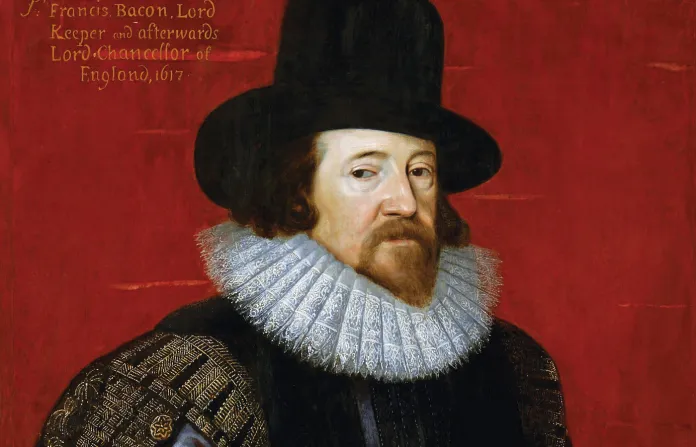
The Information Age began after 1945, with the adaptation of military innovations to civilian and commercial uses. But the roots of the Information State are older than the invention of America. Siegel’s first information statesman is Francis Bacon, the lawyer, philosopher, and theorist of the scientific method who wrote that “knowledge is power.” Bacon understood the practical applications of information technology: After starting as a legal partner to his brother Anthony’s espionage network, he partnered as the legal counsel to Elizabeth I and served as chancellor to James I.
Other prophets of technocratic control include the mystic polymath Gottfried Leibniz, who believed that the binary code was “a Beautiful Representation of Creation” and offered in 1716 to build Peter the Great “calculus ratiocinators” for modernizing Russia; Jeremy Bentham, whose design for a Panopticon, a prison in which all inmates were constantly surveilled from a central post, Michel Foucault would back-project onto 18th-century France; Henri de Saint-Simon, the Catholic mystic who dreamed of a world run by science; and Auguste Comte, who foresaw how a “technocracy” of experts could manipulate the empathy that he called “altruism.” Siegel detects 19th-century premonitions of a “distinctively American technocratic identity” in the Protestant social gospel and the patriotic admiration of scientific technique. But the modern information state was born in Progressive-era America.
A week after Woodrow Wilson took America into World War I, he issued an executive order creating America’s first state propaganda organ. The Committee on Public Information was a civilian-military hybrid modeled after the Democratic National Committee’s publicity bureau. For the first time, the competing interests of government, business, and media fused into a single bureaucracy tasked with what the journalist Walter Lippmann called “manufacturing consent.” The “mass conscription of thought,” Seigel writes, was now the state’s business.
March of progress
World War II revived the alliance between progressive technocracy and national security bureaucracies. The “knowledge class” of experts went into recruitment overdrive. The war generated primitive computers, and then peacetime theories for their use. Systems theory (cybernetics) was proposed in 1948 and drew on Norbert Weiner’s wartime work on the automatic firing of anti-aircraft guns. In the same year, the “information theory” of Claude Shannon, a wartime cryptanalyst, redefined information as “purely a measure of electronic signals” without reference to facts or meaning. In the 1950s, cybernetics became “the backbone of the “high-tech US defense strategy” of the Cold War. Acronymous Cold War projects included SAGE (Semi-Automatic Ground Environment, a computerized air defense system that cost more than the Manhattan Project), and, in 1958, ARPA (Advanced Research Projects Agency, now DARPA, for military R&D).
Robert McNamara planned the Vietnam War as an exercise in Harvard-style “systems management.” Counterinsurgency strategy became a data-driven rationalization of war aims, and vulnerable to what the military historian Martin van Creveld called “information pathologies.” The same pathologies were working their way into domestic politics through “dual-use” technologies. The Kennedy campaign of 1960 broke new ground by deploying the Simulmatics Corporation’s “big data” to analyze and predict voter behavior. Harold Lasswell, the Yale professor and a Democratic National Committee member who approved the Simulmatics plan, called digital-modeling technology the “A-bomb of the social sciences.” The fallout soon registered. The Ervin Committee of 1967-70 revealed the “growth pangs of the mass-surveillance leviathan.” The Pentagon Papers of 1971 exposed the Johnson administration’s strategies of data-driven misinformation about the Vietnam War. The Church Committee of 1975 discovered data-collection abuses by multiple agencies of government.
A 2011 paper in Science calculated that between 1986 and 2007, the world’s capacity for bidirectional communication grew at 28% per year. ARPA-E’s 1969 project to create a nuclear-proofed communications network mutated into the commercial internet. The volume of information stored globally grew by 23% per year. The majority of technological memory was digitized by the early 2000s, and by 2007, 94% of it was digitized. The Sept. 11, 2001, terrorist attacks occurred amid this transition. The second Bush administration’s emergency response hardened into a permanent architecture of legalized surveillance. The Information State now offers the “window into men’s souls” that Elizabeth I eschewed, but Francis Bacon desired.
Future tense
In July, the historian Niall Ferguson and the AI researcher John-Clark Levin published an essay called “The Death of History.” Ferguson declared that AI and social media are dissolving historical truth, notably the truth of the Holocaust. He had, he wrote, failed at the core task of his work as a historian, teaching the lessons of World War II and the Holocaust.
Siegel agrees that digital communications are “smashing the basis of print-age reason at speeds that are difficult to comprehend.” But he rejects Ferguson’s assumption that a historian’s job is to teach lessons in order to “inoculate humanity against the worst of its crimes.” Like the Victorian prophet Matthew Arnold, Siegel sees two contending conceptions of history, the Hellenic and the Hebraic.
“The Hellenic idea is that history is a set of object lessons, an accumulation of objective viewpoints which yields an objective understanding of the conditions of the world. That’s not the Hebraic view. The Hebraic understanding of history is that history is memory, shaped and guided by a sense of purpose. It’s history as memory with a mission.”
The “Gutenberg galaxy” of the print age favored the Hellenic conception. But the digital age, Seigal thinks, requires “something more like the Hebraic conception.” Print-era Americans had that sense of history as memory, shaping and guiding their collective development. They called it “Americanism.” If their descendants are to recover it, they must recover values stronger than technology’s incentives. Siegel points to Israel as an example. Israel has a hi-tech economy and a cutting-edge surveillance state, but its people’s memory and religious purpose are “not only resistant to but stronger than the informational swarms” that attack them.
Siegel admits that the prospects of reviving Americanism are not good. The obstacles include a “psycho-spiritual malaise” that makes Americans “unable to assert a force greater than the technologies which America used to master the world and which have now mastered it.” But the prospects for America have been dim before. Tied to the technology that makes them who they are, Americans must go through the storm and hope that their memory survives the turmoil.
At the Champ de Mars in August 1783, two cannon announced the last part of the experiment. The tether that tied the balloon to the earth was cut.
“It diminished in Apparent Magnitude as it rose,” Franklin told Banks, “‘til it entered the Clouds, when it seem’d to me scarce bigger than an Orange, and soon after became invisible, the Clouds concealing it.”
Dominic Green (@drdominicgreen) is a Washington Examiner columnist and a fellow of the Royal Historical Society.