
HARRISBURG, Pennsylvania — Last June, Gov. Josh Shapiro stood in Berwick and described a new economic horizon for Pennsylvania: Amazon’s plan to invest at least $20 billion in cloud-computing and artificial-intelligence campuses across the Commonwealth.
“Pennsylvania is competing again — and I’m proud to announce that, with Amazon’s commitment of at least $20 billion to build new state-of-the-art data center campuses across our Commonwealth, we have secured the largest private-sector investment in the history of Pennsylvania,” Shapiro said at the time.
Pennsylvania was “all in on AI,” he added, while casting the state as a major national hub for artificial intelligence and next-generation technology.
Shapiro also pointed to Pennsylvania’s position as a major energy-producing state and a leading net electricity exporter. These assets, he argued, could support the power-intensive computing facilities behind AI and cloud services.
DEMOCRATS’ CIVIL WAR IS HEATING UP. BYRON YORK SAYS SOCIALISTS ARE WINNING
Amazon said its investment would create at least 1,250 permanent, high-paying technology jobs, along with thousands of construction and supply-chain jobs.
The announcement carried a larger promise. Pennsylvania intended to compete — for construction work, permanent jobs, local tax base, and a stake in an economy increasingly built around data.
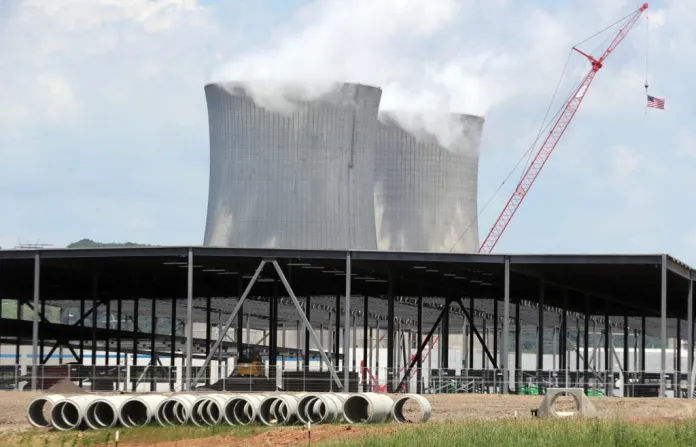
The Commonwealth had already created a mechanism to help make that pitch. Shapiro’s PA Permit Fast Track Program, launched in late 2024, was intended to coordinate and speed state reviews for major infrastructure and economic-development projects.
This week, however, the governor reversed course and redefined the terms for data-center development.
Shapiro signed Executive Order 2026-05, immediately removing data-center projects from the PA Permit Fast Track Program and making future data-center proposals ineligible for expedited review. The order does not prohibit developers from building in Pennsylvania. But it does establish a more demanding framework for projects seeking state permits.
“Starting today,” Shapiro said, “AI data center developers who want to do business in our Commonwealth must respect our communities and abide by these stringent requirements.”
The order centers on four items: energy affordability; transparency and community engagement; workforce and economic development; and environmental protection.
Developers that elect to participate in the Commonwealth’s GRID framework must make legally binding commitments intended to address each of those concerns. Those commitments include paying the full cost of the additional generation, transmission, distribution, and related infrastructure their projects require, rather than shifting those costs to households and other electric customers.
They also include outreach to local residents, commitments to hire and train Pennsylvania workers, negotiations over community-benefit agreements, and environmental provisions addressing water conservation, air quality, and site impacts.
Projects participating in GRID must obtain the necessary local approvals before the Department of Environmental Protection can issue state permits. Developers that decline GRID face a more restrictive sequence: DEP will not begin its permit review until required local approvals are secured, and the agency has reviewed the needed construction-permit applications.
SALENA ZITO: A CENTURY ON, SAN ROCCO TRADITION CONTINUES
The order also bars nondisclosure agreements connected to data-center proposals and requires operators to report specified energy- and water-use information to DEP.
The contrast with Berwick is both striking and a reversal of evolution in the state’s approach.
A year ago, Shapiro was making the case that Pennsylvania could move quickly enough to land a transformational investment. But on Tuesday, he hit the brakes.
In towns and townships across the Commonwealth, data centers are not principally an argument about artificial intelligence. Rather, they are arguments about substations, water demand, land-use authority, construction jobs, expanded tax bases for townships and school districts, and the possible revival of small towns that have spent decades looking for major investment.
Data centers are not a fringe industry. They are part of the physical backbone of the modern economy, supporting cloud computing, banking, healthcare, manufacturing, universities, national security, small businesses, streaming services, and the AI tools being adopted across nearly every sector.
Like rail lines, power plants, warehouses, and steel mills before them, data centers are large infrastructure projects that require careful local planning. But their scale should not be confused with inherent harm.
Too often, the public debate treats “data centers” as though they describe a single, uniform kind of development. Yet projects differ in size, cooling technology, water source, power arrangements, workforce plans, tax structure, site conditions, and the agreements they make with their host communities.
Pennsylvania was competing for an industry capable of bringing substantial construction investment, skilled-trades work, local tax revenue, and the sort of long-term capital commitment many smaller communities have pursued for decades.
The economic value of a data center cannot be measured only by the size of its permanent employee parking lot. These are capital-intensive facilities.
Their value includes the union and nonunion trades that build them, the local suppliers and service businesses that support them, the tax base they establish, and the businesses and institutions that depend on reliable digital capacity.
Data power centers are increasingly shaping everyday American life; most people rarely think about it but data centers are quietly running in the background of nearly every digital moment of our day. Just swipe a credit card, use Apple Pay, check your bank balance; all of those are processed through servers housed in a data center. Ditto for streaming a show, trolling social media, sending a text, or using Siri. Even errands such as checking out at a grocery store, using GPS, weather forecasts, medical creeds and 911 dispatches go through a system. And that doesn’t even begin to touch our national security capabilities.
That does not mean communities should surrender local authority or overlook legitimate concerns about electric rates, water, noise, traffic, or land use.
It means the standard should be neither fear of the industry nor unconditional approval of every proposal. But the politics of the industry are undeniable. Data power centers have become the boogeyman in the wings of both parties. Sen. Bernie Sanders (I-VT) sponsored a bill that calls for a moratorium on building data centers.
SALENA ZITO: META PARTNERS WITH TRADE UNIONS TO BUILD AI DATA CENTERS
Dan Diorio, the Executive Vice President of State Policy & Government Affairs at the Data Center Coalition, said that they share the governor’s goals of ensuring that Pennsylvania can capture the significant economic opportunities presented by data center development while protecting the interests of residents and communities across the Commonwealth in distinguishing speculative proposals from real projects. But it’s important that rules are not changed midstream, thereby impacting ongoing investment in verified and responsible data center projects.
“Companies have made plans, communities have prepared for economic opportunities, and workers are ready to build the next generation of digital infrastructure right here in Pennsylvania,” he said, adding, “Data centers provide significant benefits where they operate. In Pennsylvania in 2024, the data center industry supported 129,600 jobs, contributed $19.6 billion in GDP, and generated $1.9 billion in state and local taxes, supporting tax relief, education, public safety, and helping make life more affordable for residents across the Commonwealth.”