
Have you seen The Odyssey, Christopher Nolan’s adaptation of Homer’s Iron Age blockbuster? I haven’t. Have you read it in the Greek original? Me neither. Petty details like that shouldn’t stop us from joining the culture-war combat about the movie. This is a democracy, not Odysseus’s Greece. Not that Odysseus called it Greece. But enough with the nitpicking.
Even before the film’s release, conservatives were picking Nolan’s nits. They complained about the “woke casting” of non-whites, especially Lupita Nyong’o as Helen of Troy. They complained about the historical accuracy of Odysseus’s boat. They complained about Nolan’s fealty to Homer’s original script. They complained that Matt Damon plays Odysseus with a Boston accent: “Have you come faah?” After the movie’s launch on July 17, conservatives shifted from attacking Hollywood to attacking each other.
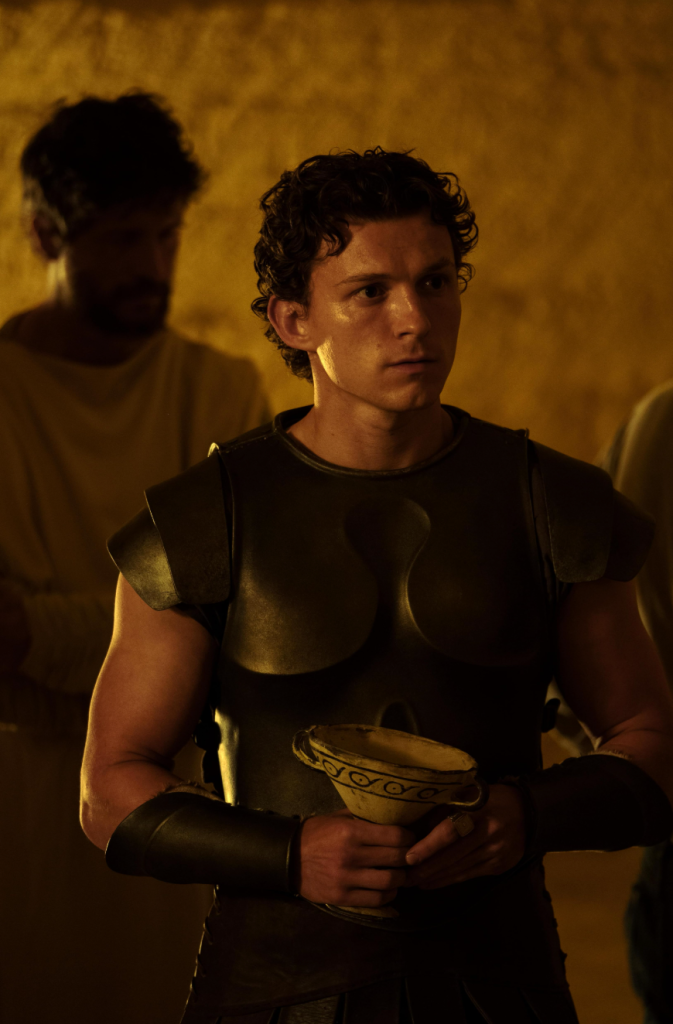
The grift is as strong as the wind that, when Odysseus and his band of Bronze Age thugs are within sight of Ithaca, sends them back for a decadelong tour of the Eastern Med. The movie cost a quarter of a billion dollars to make. It’s a popular entertainment. It’s got people talking about literature and translation, myth and manhood, the origins of the West and the future of America. It’s even got them buying new translations and studying Homeric Greek. Conservatives are so used to being in opposition that they’ve forgotten what winning looks like. Most of their objections don’t stand up.
“It’s fake because they don’t speak in Greek.” Odysseus and his contemporaries didn’t speak Homeric Greek, either. The Iliad and Odyssey began as oral traditions. They couldn’t have been written down until after around 700 BC; the Greeks, or the Achaeans as Homer called them, didn’t have an alphabet until then. The oldest surviving manuscript fragment dates to around 300 AD, 1,000 years later. If Odysseus were from Ithaca, he might have spoken a precursor dialect, Doric Greek. A descendant dialect, Tsakonian, is still spoken in villages near Sparta. Modern Greeks struggle to follow it.
“Nolan makes the Mediterranean look like the Baltic and Matt Damon sails forth in a Viking warship.” True, Nolan uses his habitual moody gray palette. But the Med has winter too. We tend not to vacation there when it’s cold and rainy. There are thick forests and mountains on the Greek mainland. As for the ship, Odysseus probably sailed to Troy in a penteconter, a “50-oar” open transport that also had a big sail. Snake’s head optional.
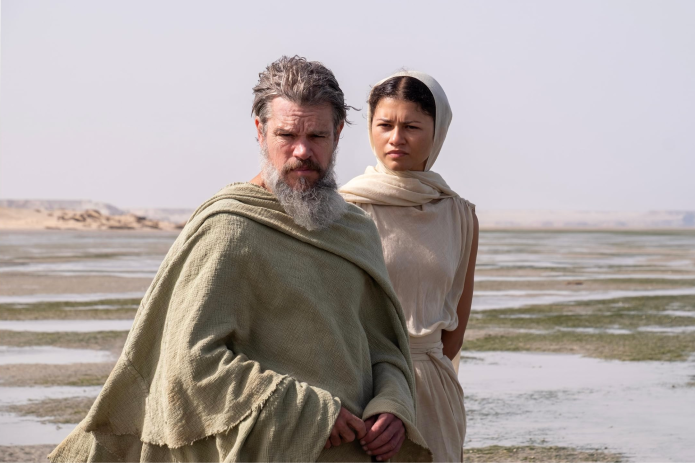
“It’s too much like our times.” The Romans probably said this when Virgil rewrote the Odyssey in Latin as the Aeneid. The Odyssey has always been remade. It’s likely that multiple oral versions, some of them possibly containing material that predated the late Bronze Age, were compiled hundreds of years after the siege of Troy and Odysseus’s subsequent transport problems. That story was retold by the Romans, retold again in the Byzantine court, revived in the courts of the Renaissance, and mass-marketed in the 19th century. As the context changed, the meaning of the story changed. The greatest testimony to this is John Keats’s poem about an Elizabethan translation, “On First Looking into Chapman’s Homer.” Keats’s title suggests he skimmed it.
“It’s woke casting.” This relates to the topicality question. Believe it or not, the Romans didn’t speak with cut-glass English accents. Odysseus and Moses didn’t speak mid-century American, either, such as Kirk Douglas in Ulysses (a 1954 adaptation of the Odyssey) and Charlton Heston in The Ten Commandments (1956). Those castings reflected mid-century America’s self-image (its mythology, even). They dramatized the primal revolt of the U.S.’s colonial past and marshaled ancient models into liberalism’s Cold War arsenal. As the U.S.’s demography, politics, and self-image change, so does its casting. PTSD Odysseus is an anti-hero for a modern United States, just as Afro-Helen is its image of a martyr.
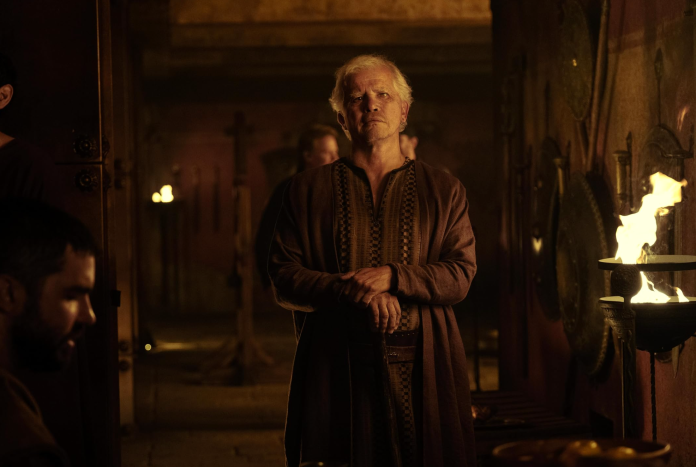
There is more to this question, though. My local movie house screened Nolan’s Dunkirk as part of its Odysseyprolegomena. Dunkirk is doggedly British in sensibility, down to its regional accents and class dynamics. Though several hundred Indian Muslim soldiers were saved at Dunkirk, all Nolan’s protagonists are white. Nolan’s dedication of the movie to all those affected by what happened at Dunkirk might exclude most of the descendants of Britain’s post-imperial immigration. That was in 2017, before the academy put diversity preconditions on Oscar nominations. As the gods toy with Odysseus, so the academy messes with the mortals and the movie business. The screen is a mirror.
“It’s a Christian Odyssey. Or is it too post-Christian?” These responses are similarly interesting. Some commentators praised Nolan for substituting Odysseus’s amoral brutality with a Christian or humanist conscience. Others are alarmed by the spectacle of a man whose conscience is adrift in a cruel sea of forces he cannot control. Both reactions reflect deep truths about where we are.
Dominic Green (@drdominicgreen) is a Washington Examiner columnist and a fellow of the Royal Historical Society.