
In November 2019, a London teenager named Zac Brettler plunged from the fifth-floor balcony of Riverwalk, an expensive luxury apartment building along the north bank of the Thames River. After weeks of speculation and mystery surrounding his death, closed-circuit television footage from the nearby headquarters of MI6, Britain’s foreign intelligence service, would reveal that he had jumped. But why? This question preoccupies London Falling, a masterly if eccentric and at times frustrating work of investigative journalism by the New Yorker’s Patrick Radden Keefe.
London Falling captures a particular moment in Britain that amounts to a nervous holding pattern. In an epoch wedged between the collapse of the Soviet Union and the COVID-19 pandemic, a seemingly endless stream of money flows into London’s real estate market, sports industry, and hospitality scene. Meanwhile, manufacturing and industry fade into irrelevance.
This is a beautiful portrait of a rather sad era. Deprived of its old manufacturing and maritime industries, the island nation had reinvented itself as a service economy. Britain’s competitive advantage in absorbing vast quantities of new money from the world’s less stable regions, such as the former USSR, Africa, and the Middle East, is doing so while asking few, if any, questions.
Born in 2000, Zac Brettler is a restless kid whose upper-middle-class life is not enough for him. Surrounded by rich Russians at a succession of private schools, he begins to develop a taste for their flashy lifestyle. The Brettlers are not poor. They reside in Maida Vale, a respectably affluent area, and the family has a second apartment in New York, although they drive a Mazda. They are Jewish. Both grandfathers relocated to Britain from continental Europe, one before World War II, and the other after, having survived the Holocaust. Growing up, Zac was particularly impressed with movies such as War Dogs, The Wolf of Wall Street, and Eastern Promises, the last of which depicts a network of Russian criminals in London. As he grows older, Zac develops into a pathological liar, obsessed with money and status, and constantly trying to manipulate those around him.
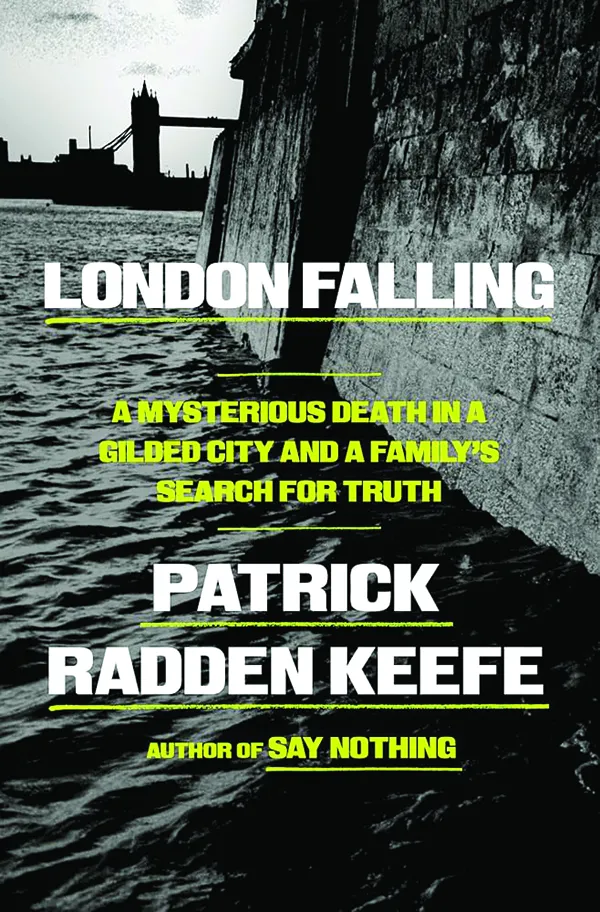
Why Keefe chose this exact story to represent the zeitgeist is something to ponder. He is not the first author to run with the “Londongrad” storyline, and there are countless examples of intrigue involving the London underworld, Russians, and the British state that symbolize the slow erosion of Britain. Keefe’s skill as a writer keeps the reader invested in his narrative, but he mentions numerous stories in passing that sound more compelling than this one.
Nonetheless, the tale intrigues, even while Keefe fails to make his reader fall in love with this cast of characters, who regularly come off as boring, vaguely annoying, and often quite foolish. Zac, who posed as an oligarch’s son, could not even speak Russian. Not to mention his parents, Matthew and Rachelle, who Keefe depicts very charitably. Their true family dynamics do not seem adequately explained, perhaps due to Keefe’s apparent closeness with the Brettlers. He more or less absolves them of any responsibility for allowing their deluded child to sink ever deeper into the company of dangerous men. These men are Akbar Shamji, an alleged con man and serial entrepreneur who arrived in Britain after Idi Amin’s 1972 expulsion of Uganda’s Indian population, and Verinder Sharma, known as “Indian Dave,” a gangster and suspected murderer who had his heyday in the violent underworld of the 1990s and early 2000s. These are definitely not the A-team, as far as murky Londoners are concerned.
Zac’s relationship with Sharma was based around an elaborate lie that had Zac as an outcast son of a Russian billionaire and Sharma as a mentor-like father figure. In fact, Sharma’s intentions were to extract a significant fortune from Zac, which had never existed. Apparently, Zac was able to convey the illusion of enormous wealth by burning through his £20,000 savings account. Zac’s fatal plunge from Sharma’s Riverwalk balcony may have been an attempt to flee the criminal’s vengeance. As we learn in one passage, a former underworld associate of Sharma’s relayed to Keefe (after menacingly name-dropping all of Keefe’s immediate family members) that, knowing Indian Dave, “it would have been logical for the boy to assume that he was not going to make it out of that flat alive.”
What irritates most about this book is Keefe’s choice of this particular story to reveal the unfortunate truths of London’s decline. The simple fact is, Zac Brettler was not even a particularly good conman. He never actually delivered on his grandiosity. He was never reined in or disciplined by an authority figure and was allowed to get himself into serious trouble. But smarter people would have never fallen for his schemes. Anyone could have called his bluff with a number of relatively simple tests, such as requesting to see a form of legal identification, asking him to make a purchase worthy of a billionaire, or pairing him up with an actual Russian speaker. That an amateur like Zac, an aging thug (Sharma), and a flaky con man (Shamji) found each other’s company speaks to the low quality of their respective operations. London Falling doesn’t quite make it clear why one should take such great interest in any of them.
The thing that readers should care about is the declining state capacity of Britain, a place long synonymous with the highest standards of civil administration and an unwavering rule of law. The police who investigate Zac’s death are laughably incompetent. For one, they fail to take a sample of the dried blood found in Sharma’s apartment. They also fail to hold Shamji accountable for an astonishing and deeply suspicious series of lies that he told them throughout the investigation. Ultimately, the smoking gun of this story remains elusive.
In this account, the surveillance state looms very large. But an investigative body that is able to download the entire contents of suspects’ phones, geolocate their vehicles, produce vast quantities of footage, and uncover Zac’s old search history is unable to actually do anything with that material. Lying to the police is not a crime in England, we are told. Apparently, it is not even a cause for further investigation. Some of the scant closure that emerges from the case is delivered via public inquest, a bureaucratic procedure in which unknown or suspicious deaths are discussed in an open hearing. At the inquest for Zac’s death, Shamji is pressed to explain the inconsistencies in his narrative. A woman presiding over the inquest repeatedly obstructs the Brettlers’ attorney from asking further questions about the death of their teenage son.
In this tale of arrivistes, thugs, and nasty, incompetent bureaucrats, Keefe seems to be dancing around a larger revelation about why Western, and particularly Anglosphere, societies are in such steep cultural decline. This is a mere glimpse into the soul of London and the lives of the true oligarchs who reside there. But whatever the merits of the book, one lesson is clear: A story like this would not be possible in a healthy city, a healthy nation, a healthy civilization.
Carson Becker is an American writer.