
On July 7, a Paris appeal court allowed French nationalist Marine Le Pen to run in the 2027 presidential elections. In March 2025, Le Pen, whose National Rally party leads French polls, was convicted of embezzling European Union funds and banned from running for office for five years. The appellate court upheld her conviction but lifted the ban. It also ruled that Le Pen, who is not violent or a flight risk, must wear an electronic ankle bracelet.
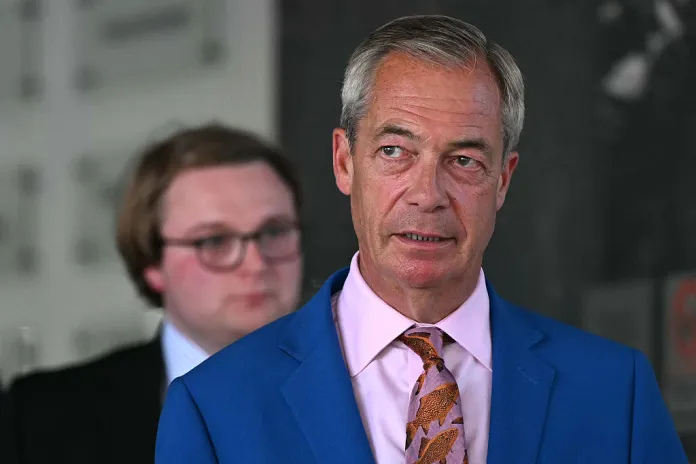
Later that day, the British nationalist Nigel Farage, whose Reform U.K. led British polls, resigned his parliamentary seat and announced his intention to regain it in a by-election. Britain’s parliamentary standards commissioner suspects that Farage failed to declare a £5m ($6.64 million) gift from Christopher Harborne, a British cryptocurrency billionaire. Farage also did not declare that he funded staff, accommodation, and private security expenses with donations from another crypto investor, George Cottrell, who was jailed for wire fraud in the United States in 2017.
Farage says he is the “victim of an establishment hit job.” Le Pen and National Rally call it “political discrimination.” President Donald Trump, who has received similar treatment, calls it the “deep state.”
The technical term is lawfare: the use of the law as a political weapon. The term originated in foreign conflict, where international law and institutions are used as asymmetric levers against military force. It advanced in the 1990s under the cover of the American order, and was deployed against American interests in NATO’s 1999 Kosovo campaign, the United Nations-sponsored Durban Conference of 2001 (which initiated the current wave of anti-Israel lawfare), and manifold attempts to hobble the War on Terror.
Every weapon has two edges. In 2003, the CCP and the PLA adopted the “three warfares” doctrine. China, the idea goes, can defeat America without using kinetic force, but through psychological warfare, international law, and manipulating public opinion via the media. But America does all this without foreign interference. Back in the U.S., the Lawfare blog tracks how the high-tech ends of American warfare are reshaping the means of legal frameworks and eroding domestic liberty. The blowback into civilian life is happening as one political order, the post-1945 liberal system, is cracking internationally and domestically.
Like George III’s ministers, the aristos of France’s ancien regime and St. Barack of Obama, the leaders of the old order talk of paternalist responsibility but act with the naked selfishness of class. As military strategists talk of “shaping the battlefield” before shots are fired, the habitues of Westminster, Versailles, and the Swamp launch pre-strikes of lawfare. Trump, Farage, and Le Pen, we are told, are Russian stooges and fascists, simultaneously incapable of government but also so dangerous that our democracies will die the day they win an election. It is not enough to use state power to entangle the counter-elites in the legal net of tax audits and ankle bracelets. Allied non-state institutions volunteer or are used to deny the insurgents access to the resources enjoyed by the older parties.
Both Le Pen and Farage have undergone “debanking.” Le Pen’s party and its predecessor, National Front, struggled for years to secure loans from French banks. Like her father, the fascist Jean-Marie, she was forced to fundraise private donations and foreign loans. To fund her 2015 presidential run, National Rally borrowed $12.2 million from a Russian bank. Two years later, as the bank shed assets amid fraud claims, the loan was bought by Aviazapchast, a Russian aviation company with ties to Russia’s military and FSB security service.
In 2023, the BBC claimed that NatWest Group closed Farage’s account with the private bank Coutts because he wasn’t wealthy enough. It later emerged that Farage’s politics played a part in NatWest’s decision. The BBC’s source, NatWest chief executive Alison Rose, was forced to resign and apologize. Farage’s finances are unusual, to say the least. But it is unusual for a government to deny security protection to a country’s most popular and controversial politician, despite death threats, physical assaults, and a constant barrage of demonization from politicians and media. Unusual, that is, outside a banana republic. But this is what the Labour Party has done. Like Le Pen’s convict jewelry, the humiliation is the point. It validates the counter-elites’ most appealing claim, that they are victims of systemic conspiracy.
They are also victims of their own weakness. It was reckless of Le Pen to accept a Russian loan. But could National Rally have run its 2015 campaign without going outside domestic sources? It was sloppy of Farage to entangle private income with party expenses when he intended to enter Parliament, which means public scrutiny. But could Farage, who is shadowed by an ex-Royal Marine, walk down the street without private security? It is sordid of the Trump family and its hangers-on to enrich themselves with crypto scams. The failure of the old order summons impassioned amateurs, outsiders, oddballs, and outright crooks, producing parties that function as vehicles for one man or one family. The old order then discredits itself by exploiting the institutions to protect its private wealth. This licenses the under-institutionalized populists to further privatize the spoils of public life.
In the late Roman Republic, lawfare was the price of taking part in politics. Tom Holland writes in Rubicon: The Triumph and Tragedy of the Roman Republic that a senator who lost office, or a popular general expected to be sued by his rivals, responded accordingly. In 49 BC, Julius Caesar knew that the Senate planned to try him for tyranny and embezzlement. Instead of facing a kangaroo court alone, he entered Rome with an army, precipitating the civil war that broke the republic. The logic of lawfare pushes us all across the Rubicon.
Dominic Green (@drdominicgreen) is a Washington Examiner columnist and a fellow of the Royal Historical Society.