
I used to roll my eyes when my college professors barred us from citing Wikipedia. Now, I couldn’t agree more.
Teachers often argue that because anyone can edit a Wikipedia entry, the platform is an unreliable source. That’s actually not the problem I have with the free online encyclopedia, as changes typically undergo a rigorous editing process that few unwanted edits make it through. The problem with Wikipedia isn’t the unwanted information that falls through the cracks, but the bias pushed by the website under the guise of neutrality.
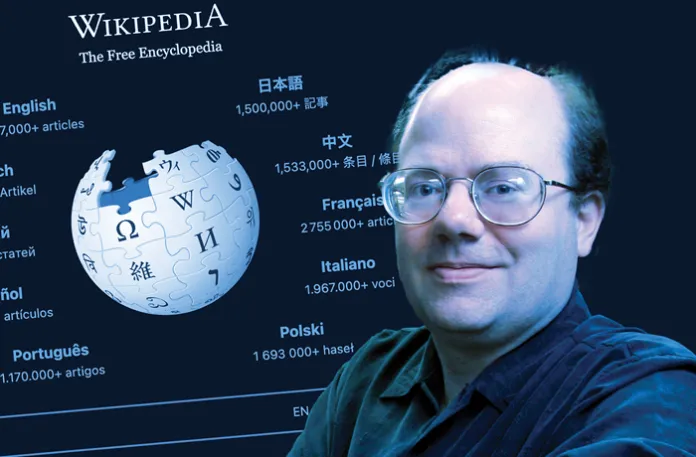
This problem is not lost on Wikipedia co-founder Larry Sanger, who has long criticized the website for its lack of “editorial balance and intellectual integrity.” Sanger recently took to social media to voice his frustration with the media for refusing to hold Wikipedia accountable after Nature magazine agreed to publish his criticism, then ghosted him and refused to post the article.
WIKIPEDIA DONATIONS GO TOWARD PAYING LIBERAL ACTIVISTS TO REWRITE ARTICLES
Sanger called for reform at Wikipedia for straying from the neutrality policies he helped formulate. While “neutrality [at Wikipedia] once meant not picking sides on controversial issues,” he argues that it now means “expressing the views of Establishment sources” while dismissing sources such as the Heritage Foundation or Anti-Defamation League “in the name of ‘reliability.’”
I exposed this bias in a 2024 report on Wikipedia’s entry on Zionism, the idea that Jews have a right to self-determination and statehood in their ancestral homeland of Israel. The website changed its page to characterize Zionists as colonizers and ethnocultural nationalists who decided to establish a Jewish state “in Palestine with as much land, as many Jews, and as few Palestinian Arabs as possible.”
The entry also promoted the debunked Khazar theory, claiming “the origins of Ashkenazi Jews were not known” and cited sources casting doubt on the Jewishness of Ashkenazi Jews, even though genetic studies link them to the Middle East. Shocker: Those studies were not cited.
We see this same bias in newsrooms all the time — a source is discounted because he’s too “Trumpy,” or information from the Right is taken with a grain of salt while information from the Left is accepted with less resistance. Why is it that allegedly “neutral” news editors’ level of skepticism often depends on which side the information comes from or benefits? It’s because Wikipedia isn’t the only one that has strayed from neutrality. Sanger is right to call out the “media establishment” for ignoring this issue. Not only do legacy media ignore it, but they perpetuate the problem.
According to Sanger, Nature cited “insufficient evidence” when it reneged on its agreement to publish his article, despite the fact that he had recently put out a “book-length” argument on the subject “with 76 footnotes to fine-grained evidence.” To the outside observer, such behavior from a media outlet is shocking. But when you consider what the legacy media counts as evidence, it makes perfect sense.
CRUZ PRESSES WIKIPEDIA TO ADDRESS CONCERNS ‘SYSTEMIC BIAS’ IS PROMOTING LEFT-WING IDEOLOGY
Sanger’s op-ed criticized Wikipedia for declaring “consensus” to “silence dissent.” Ironically, it is also by silencing dissent that the Left is able to achieve a false consensus. Whether on COVID-19 “misinformation” or global warming, the “experts” tend to agree, in part, because anyone who disagrees can no longer be considered an expert.
Wikipedia and the legacy media have this in common: The pursuit of truth is no longer their goal, but rather the reshaping of public opinion. At a time when distinguishing between journalism and activism has never been more difficult, educators should discourage blind trust in the media as much as they warn against citing Wikipedia.