
A city’s true character is revealed in how it handles juvenile offenders. In Washington, D.C., recent years have shown a significant change in the prosecution of youth crime. Data from the D.C. Sentencing Commission, acquired through a Freedom of Information Act request, highlights these shifts.
Let’s start with the statistics. In the last year of the Biden administration, the Washington, D.C. U.S. Attorney’s Office charged 40 juveniles as adults for violent crimes. Contrast this with the first year of the second Trump term, wherein 66 juveniles were so charged — a staggering increase of 65%. One might ask, was this an aberration, a quirk of prosecutorial zeal? The answer, it appears, is both statistical and philosophical.
Consider the breakdown of the charges themselves. Trump prosecutors brought seven cases of murder in the first degree while armed, compared to five under Biden — a 40% increase. Murder in the second degree while armed saw three cases under Trump, a tripling from the solitary case under Biden, marking a 200% escalation. Robbery while armed charges, those harbingers of urban anxiety, numbered 30 in the Trump year and 17 in the Biden year — a 76% increase.
These figures are not mere abstractions. They represent a deliberate shift in the prosecutorial weather, a barometric rise in the willingness to confront, and ultimately to deter, the most serious juvenile crimes.
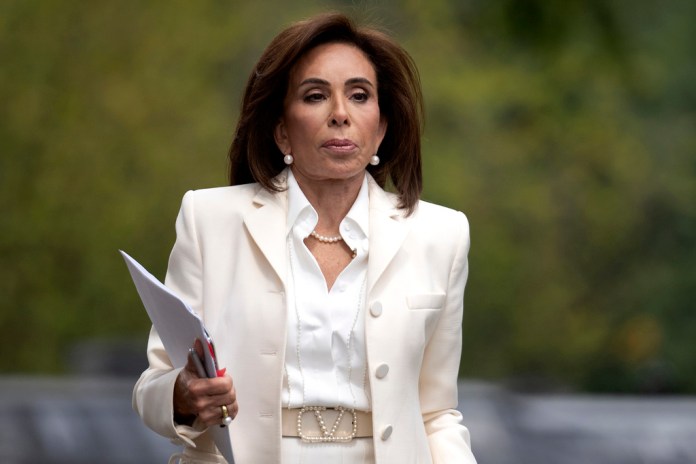
Jeanine Pirro, U.S. attorney for the District of Columbia, inheriting the office with the rhetorical flourish and iron resolve for which she is renowned, promised to charge more “young punks” — her term, not mine — as adults. The promise was not only made but fulfilled with mathematical precision. Her office brought 150 charges against these offenders, compared to 108 in the Biden era, a 39% increase.
But Pirro’s hands are tied by local laws that only allow select 16-and 17-year-olds to be tried as adults. As Pirro herself articulated at a community meeting on March 24, “I want them …they’ve got to be made accountable, but the D.C. Council has not allowed us to prosecute individuals 16 and 17 unless they commit serious crimes.” She added that her “mission has been to change the law to make some of the young punks criminally responsible for what they’re doing.”
To the policy analyst and the general reader alike, the implications are profound. Was Pirro’s approach merely punitive, or did it serve as a deterrent, a bulwark against the tide of juvenile violence that threatens to erode the civic compact? The evidence suggests that the spike in prosecutions was not a mindless exercise in severity but a calculated effort to restore a sense of consequence to the city’s youth. One might say that the administration recognized that leniency is not always the highest form of compassion. Sometimes, justice requires the stern countenance of the law.
Of course, we must acknowledge the provenance of these numbers. The statistics cited herein were obtained via a FOIA request to the D.C. Sentencing Commission, an act of transparency for which the commission deserves the gratitude of all who believe that sunlight is the best disinfectant.
What, then, are we to make of this contrast between Biden and Trump, between a prosecutorial philosophy that emphasizes rehabilitation only and one that privileges deterrence? The answer can’t be found in numbers alone, but in the ethos that animates the law.
The Trump administration, through Pirro’s stewardship, declared that the boundaries of acceptable conduct are not infinitely elastic — that there are acts which, though committed by the young, demand adult consequences. The Biden administration, for its part, favored a “kids will be kids” approach, perhaps mindful of the risks of stigmatizing youth and foreclosing the possibility of redemption.
As the city contemplates its future, the lesson is clear: The prosecution of juvenile offenders is not merely a legal matter but a moral one. It is a test of our capacity to balance justice and mercy, to discern whether the city’s heart beats in rhythm with the demands of public safety or the imperatives of rehabilitation.
In the end, the numbers tell a story, but it is the philosophy behind them that will shape the destiny of Washington and, indeed, the nation.
RURAL VIRGINIANS GET FAIRFAXED
For in the realm of justice, as in politics, the challenge is to find the equilibrium between the stern admonition and the gentle hand. Washington, it seems, is still searching for that balance.
Cully Stimson is the acting director of the Institute for Constitutional Government and a senior legal fellow at The Heritage Foundation. He was a former assistant United States attorney in the D.C. U.S. Attorney’s Office.