
I recently visited my friend, retired Marine Col. Rick Brown. He was burning parts of a fallen pine tree. I asked him about difficult leadership choices he’d made.
Brown doesn’t crave recognition or brag about himself to prove his toughness. Accordingly, he began his story by talking up someone else.
With the Marines in Iraq in 2004, Brown was a major, the executive officer of Marine Expeditionary Unit Service Support Group 31 under the command of Lt. Col. James “Alex” Vohr.
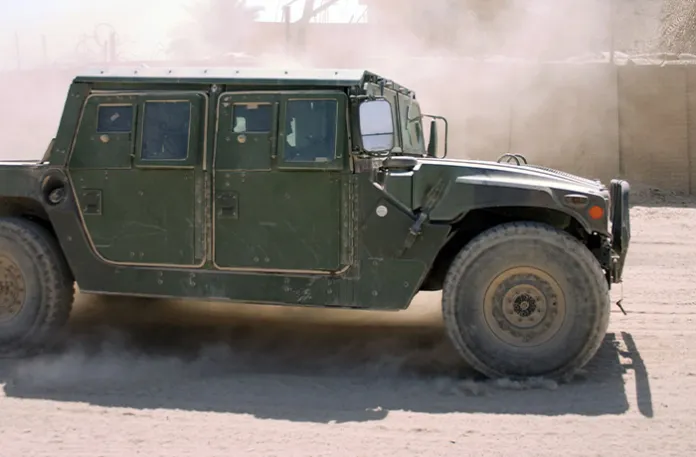
“Vohr was a great officer,” Brown said. “I’ll never forget what he taught me. Vohr said, ‘Look at yourself as the enemy sees you.… Always look like a badass’.”
This might not seem like revolutionary advice among Marines or the American military at large. Of course, the military should look and be tough. But Vohr’s words would soon be profoundly important to Brown and other Marines.
Brown was busy as a logistics officer, arranging troop movements, food, water, ammunition, and a host of other supplies to prepare for the second battle of Fallujah. All of this rolled out on Marine Medium Tactical Vehicle Replacement trucks.
When I was a child, I received for Christmas a toy G.I. Joe Desert Fox, an extended jeep with a machine gun turret, and no doors or roof. I remembered thinking it was unrealistic. Who would want to go into combat with so little protection? When I was older and in the Afghanistan War, I discovered that many special operations units loved to roll in open vehicles remarkably similar to my old toy.
In the military, everybody wants to be like the hardcore operators. Civvy clothes, beards, and exposed vehicles are synonymous with All-American badassery.
But when a squad of Marines rode through heavy Iraqi traffic in the uncovered back of an MTVR, an Iraqi suicide vehicle bomber took advantage of the opportunity, driving close and exploding, killing nine good Marines.
As he told me about it, Brown stared into the fire, as though looking back across all those years. Although they weren’t his Marines, the loss of those men still bothers him.
He had been back in the HQ tent, powerless to help. But he was not powerless to reduce future losses. He remembered what his CO, Lt. Col. Vohr, had told him. “Look at yourself the way the enemy sees you.”
That Iraqi terrorist saw those Marines in the back of the truck and recognized an easy way to kill people. Maj. Brown figured it out. What if the enemy couldn’t recognize people at all? If all the trucks were covered, the enemy wouldn’t know if the trucks were hauling Marines or supplies. Would he risk wasting his explosives, and incidentally his life, to blow up what might be just a truck full of meals ready to eat?
Brown discussed it with Vohr, and the order was issued. All trucks would be covered. Many Marines were furious.
Brown always admired Vohr. “He did the right thing, for the right reasons, no matter how unpopular.”
It was hot under that tarp, and the Marines wanted to run exposed, like operators. They were looking at themselves, not as the enemy did, but through the lens of their own ideas about what was hardcore, ideas they developed from seeing special forces, or movies, or silly old G.I. Joe toys.
The order stood. The enemy was robbed of their ability to target troop transports deliberately. In any given suicide bombing attack, the enemy would be just as likely to explode bottled water as Marines.
Brown looked up from the fire and smiled at me. “Our unit transported thousands of U.S. and Iraqi troops, and didn’t lose one more.”
Retired Marine Col. Rick Brown wasn’t interested in looking tough for his own vanity. Seeing through the eyes of his enemy, he deployed a simple logic trick that saved the lives of his Marines. That’s what it was all about for him. He’s a great American.
Trent Reedy, author of several books including Enduring Freedom, served as a combat engineer in the Iowa Army National Guard from 1999 to 2005, including a tour of duty in Afghanistan.
*Some names and call signs in this story may have been changed due to operational security or privacy concerns.