
Peter Robb’s superb book Midnight in Sicily is a sensuous tour of Sicilian food, art, and urban life. Organized crime, its ostensible subject, lurks in the background — the dark alleyway behind the piazza of the setting. Yet, at least in 1996, when the book was published, Robb could mention the Mafia. For much of the 20th century, few people acknowledged that Cosa Nostra even existed. One of the exceptions was the crime novelist Leonardo Sciascia.
Sciascia, the tireless literary critic Frank Kermode wrote in his admiring afterword to Sciascia’s The Day of the Owl, was “a very unusual crime story writer.” Most authors of crime fiction write about criminals who are not real for the sake of an audience that pretends that they are real. Sciascia, on the other hand, wrote about real criminals for an audience that was liable to pretend that they had been made up.
The Day of the Owl opens with a murder. Somehow, though, it seems that there were no witnesses, despite the victim being shot in the town square in broad daylight. Passengers melt from a bus. A nearby vendor seems to be suffering from memory loss. “It all seems a dream,” muses the bus driver.
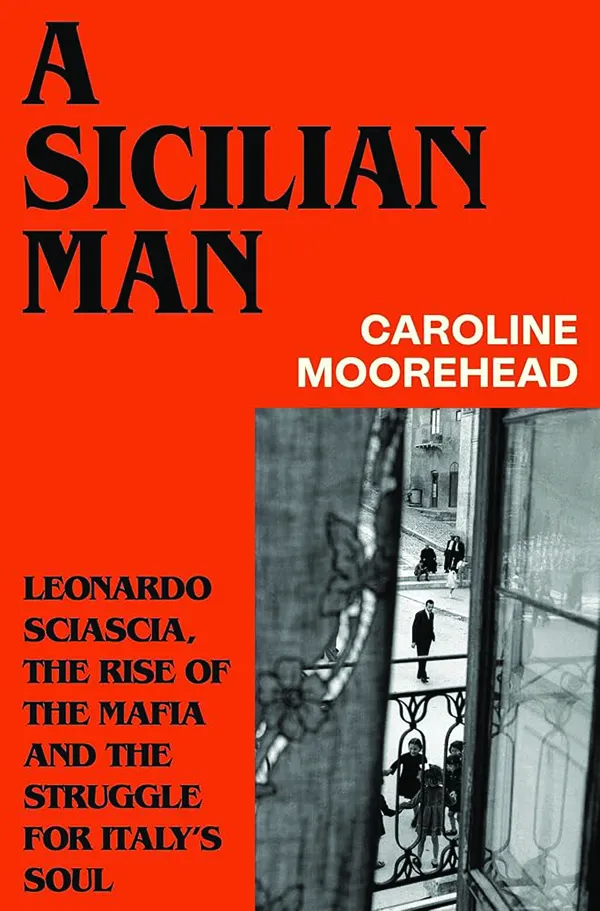
Sciascia’s subject was not just the Mafia but Sicilians at large, in their fear, and their denial, and their cynicism. Cosa Nostra exacerbated this problem, but the problem could not be reduced to Cosa Nostra. “I hate Sicily,” Caroline Moorehead quotes Sciascia as saying in her new book A Sicilian Man, “I detest her to the same degree that I love her. … I was born here and am condemned to love her.”
Sciascia, writes Moorehead — whose previous books include biographies of figures as eclectic as Bertrand Russell and Edda Mussolini — was raised surrounded by nature, speaking a Sicilian dialect “rich in metaphor and proverb.” His family was middle-class, but living amid the highs and lows of agricultural and industrial labor, “they understood precariousness.” The Mafia was an elusive presence. Some observers bluntly understood that there were killers “riding around the hills and valleys like lords.” Others had a romantic sense of the Mafia being “nothing but Sicilian rebellion against the abuse of power.”
“Many writers make their homelands the heartbeat of their work,” writes Moorehead, “but none more deeply than Sciascia.” He grew up to be literate and sensitive, and was repulsed by the brutal absurdities of Mussolini’s fascism. Hearing a police beating echo through the walls of a carabinieri barracks, as a student, Sciascia developed his “intolerance towards all violence carried out in the name of the law.”
Still, a lot of violence was being carried out in the name of lawlessness. Sciascia would recall seeing a mafioso intimidating a shopkeeper by stroking the hair of his young daughter and saying, “She seems almost alive.”
The fascists tried to crush the Mafia, jealous of its power, but it went underground and waited out Mussolini’s rule. An even more oppressive silence clouded the subject. The young Sciascia took inspiration from the Enlightenment — from the search for truth and the search for justice. He became a leftist in his politics and cosmopolitan in his cultural life, reading French novels and watching American films.
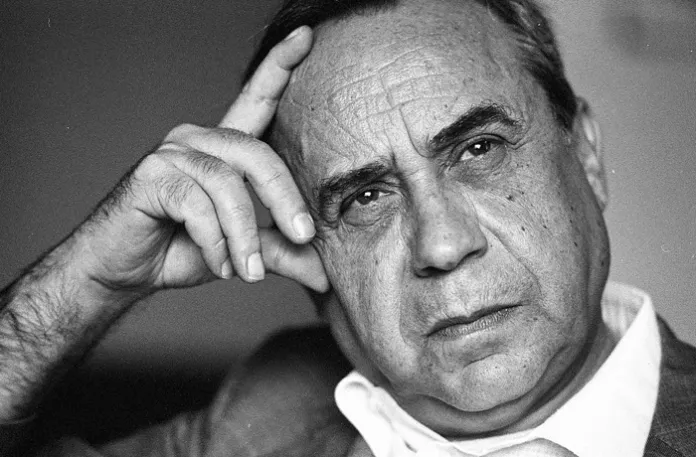
The end of World War II brought hope, but only briefly. Sicily was battered and impoverished. The Mafia was back in business. As mainland politicians attempted to consolidate power, mafiosi were useful allies to have. Sciascia, who had become a teacher, was haunted by a sense of injustice and ashamed of his privileges. He began to write — first poetry and then prose. His readers were “invited to contemplate a world in which the strong win, the weak go under and society, unconstrained by ethical considerations, is ruled by cruelty”.
The young Pasolini was a friend and, later, a collaborator. Sciascia did not share Pasolini’s artistic and behavioral extravagance, but they shared a sense of fiery indignation toward the social order. Moorehead is very good on how the material and cultural impoverishment of Sicily inspired Sciascia to decide that the “pen … would be his sword”. Like her subject, she is eloquent on the suffering of Sicilians, and the malignance of their politics — but she is also eloquent on the natural and cultural richness of their land, which must have done at least something to inspire Sciascia to care.
Sciascia’s early novels about poverty and corruption were modestly popular. It was when he targeted the Mafia that he made his name. Sciascia was a pioneer, Moorehead ably explains, in emphasising that the Mafia was “neither folklore nor a state of mind” but a “criminal association” — powerful, parasitic and violent. Still, in novels such as The Day of the Owl and Equal Danger, he explored how it was enabled by institutional and spiritual obscurity. Crucially, his prose was evocative and elegant enough to be artistic as well as insightful.
Sciascia had warned that the Mafia would move, cancer-like, from the countryside to the cities. The “Sack of Palermo”, in which corruption fuelled pervasive architectural obscenities and Mafia wars, in which bodies fell like flies, affirmed his writings. Other critics of the Mafia, like his acquaintances the journalist Mauro De Mauro and the police chief Boris Giuliano, disappeared or were killed. It is curious to me that Sciascia himself was never targeted by the Mafia, and it was disappointing that Moorehead did not address this.
Nothing if not critical, Sciascia prolifically attacked politicians, the Catholic Church, the scientific establishment (for its role in creating the tools of mass murder), and feminists (“women rule here in oblique and negative ways”). It seems that he was never more than a page away from his next controversy. But he was no thoughtless and inflexible provocateur. His book The Moro Affair savaged the state’s response to the far-left kidnapping and murder of the former prime minister Aldo Moro. Sciascia had disliked Moro, “regarding him as synonymous with all that was worst about Italian politics,” but he was outraged by his unjust treatment.
It is unfortunate that late in his life Sciascia succumbed to an excess of cynicism. When the “Maxi Trial” of hundreds of mafiosi was taking place in the 1980s, Sciascia was wrongly pessimistic about how much impact legal efforts could have on organized crime and even implied that antimafia magistrates were afflicted by careerism. As the most significant of those magistrates, Giovanni Falcone and Paolo Borsellino, would be killed by the Mafia, this was very much unjust. (He made up with Borsellino before their deaths.)
WERNER HERZOG’S TYPES OF TRUTH
Sciascia had seen enough to excuse an excess of cynicism. If he were alive, I am sure he would point out that while the power of Cosa Nostra was diminished, it still very much exists. Cowardice and opportunism continue to enable other evils, too. Reading Moorehead’s powerful and superbly researched biography, as well as Sciascia’s own elegant and clear-eyed prose, should inspire us to seek truth and justice in our times.
“No other writer, perhaps, has had such a profound influence on creating a consciousness of doubt,” writes Moorehead. Poor Sciascia even doubted that his doctors would make sure that he was dead before his burial. Alas, death is one thing about life that is unquestionably real.
Ben Sixsmith is the online editor of The Critic. He tweets @BDSixsmith.