
“Now is the winter of our discontent made an inglorious bummer by this Duke of York.”
My mangled version of the words that open Shakespeare’s tragedy, Richard III, might forgivably have been muttered crossly this week by King Charles III following the arrest of his younger brother, Andrew Mountbatten-Windsor, formerly Prince Andrew and Duke of York.
Andrew was taken into custody by British police, an unprecedented occurrence, because he appears as a special U.K. trade envoy to have leaked confidential government documents in 2010 to sex criminal Jeffrey Epstein.
The king issued a statement saying, “The law must take its course,” and the monarchy would cooperate. He is trying to keep his distance, but it is impossible to dissociate himself and the monarchy completely from his brother’s low story because the heart of the case is that Andrew cashed in on his royal family ties. The king already stripped him of his royal titles, dukedom, and residence, so there is not much more he can do.
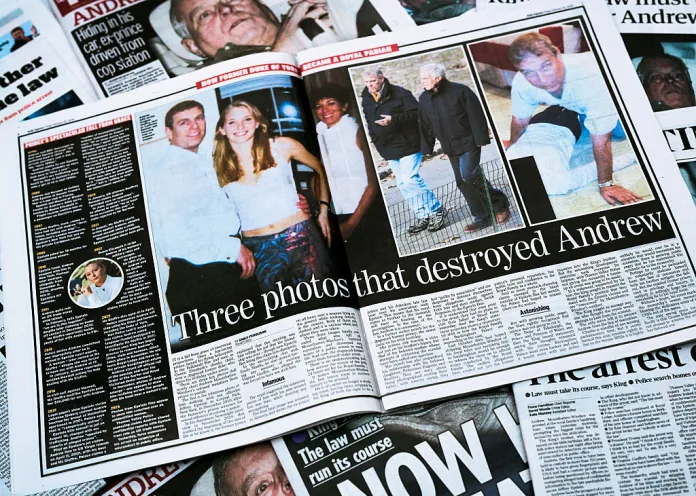
Between 2001 and 2011, Andrew was sent around the world to drum up overseas business for Britain. In this job, he was, for example, the main attraction at an event I attended at the British Embassy in Washington in 2006, where he touted the glories of Scotch whisky. But he also journeyed to China, and Justice Department files reveal a plan to enrich himself, with Epstein’s help, by setting up a fund to attract wealthy Chinese donors. Mixing public and private work opened opportunities for royal corruption. His official job made him privy to confidential papers, and he seems to have forwarded these to Epstein within minutes of receiving them.
Epstein also seems clearly to have procured girls for sex with Andrew, although that is not, or not yet, the subject of any criminal charge. Andrew denies all wrongdoing, but the two men continued to have close confidential relations after Epstein spent time in prison for sex with a minor, and right up to 2018, the year before he was found dead in a second prison cell where he was being held on sex trafficking charges.
Andrew’s spectacular case echoes loudly down the centuries. English literature and British history are replete with stories and examples — Richard III is just one of many — involving younger brothers driven to crime and venality because birth order meant they were denied the wealth, titles, and honors inherited by their elder brothers.
Reading the details of Andrew’s case puts the sheer antiquity of the monarchy into sharp focus. It will lend weight to those who argue that it is hopelessly anachronistic in the modern world of jets to private islands and nefarious international finance.
THE POINT REP. RANDY FINE MADE SO BADLY
Despite the affection and loyalty for the monarchy generated by Charles’s mother, Queen Elizabeth II, who reigned for longer than any of her predecessors, a robust anti-monarchist movement has existed in Britain for generations. This scandal will not bring that movement the final victory it craves, but it will take heart.
It will also point out that the current generation of royal personages, the king’s brother, his sister-in-law, son, and daughter-in-law, not to mention Charles himself years ago, have let far too much of the glaring and corrosive light of bad publicity shine on a majesty that cannot bear much more of it.