
If there was one hard agreement to emerge out of President Donald Trump’s trilateral summit this week with the presidents of China and Russia, it was getting the United Nations’s nose out of their business.
Trump signed a resolution with Russian President Vladimir Putin and Chinese paramount leader Xi Jinping on Thursday that offered four vague points of agreement between the world powers. These agreements included renouncing the use of nuclear weapons, a commitment to freeing up global energy supply lines, and a plan to reconfigure international institutions.
That last point has troubled some institutionalists in Europe and elsewhere, who see the summit as an affirmation of “great power” politics that could replace the rules-based international order.
“As permanent members of the United Nations Security Council, the United States, Russia, and China committed to reform the UN so that the UN can respond more effectively to global challenges and conform to its fundamental mission of international peace and security,” the three nations said in the resolution.
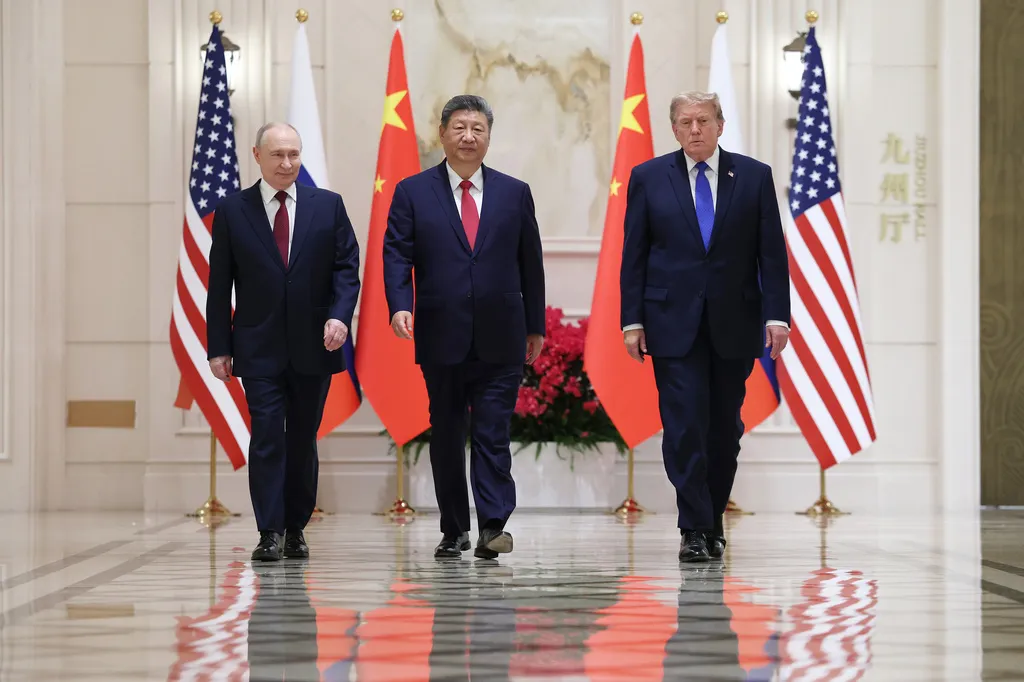
Xi boasted ahead of the meeting that the three “leading world powers” must “set a worthy example” for the international body. Putin said their countries “bear a special responsibility for preserving and strengthening the system of international law” as founding members of the U.N.
Hillel Neuer, the director of watchdog group UN Watch, told the Washington Examiner that “on a practical level” the “joint statement changes nothing.” But on an ideological level, it does indicate one important “point of convergence.”
“Washington, Moscow and Beijing all want to keep the UN out of decisions they consider their own to make,” Neuer said. “For Trump, that means preserving America’s freedom of action. For Putin and Xi, it also means shielding their own gross violations of human rights from scrutiny.”
Putin’s statement about protecting international law — made while his country continues an unprovoked invasion of Ukraine that began in 2022 — raised eyebrows around the world. China, meanwhile, continues to flaunt its violation of international human rights agreements with forced labor camps, omnipresent censorship of public media, religious repression, and more.
“They want the U.N. to have a voice when it serves their allies, and to lose it the moment it starts asking questions about Moscow or Beijing,” Neuer complained.
Regardless, Trump was gushing with affection for his counterparts after arriving in China. His interactions produced several moments that went viral on social media, including a joke about not recognizing Putin and offering to hold Xi’s hand on an escalator.
“The trilateral summit produced little of substance. The so-called joint statement left out the most important questions, such as Ukraine and Iran,” Rush Doshi, director of the China Strategy Initiative at the Council on Foreign Relations, said. “For U.S. allies in particular, it was unsettling because it suggested that Washington will prioritize engagement with the other great powers over that with its own partners.”
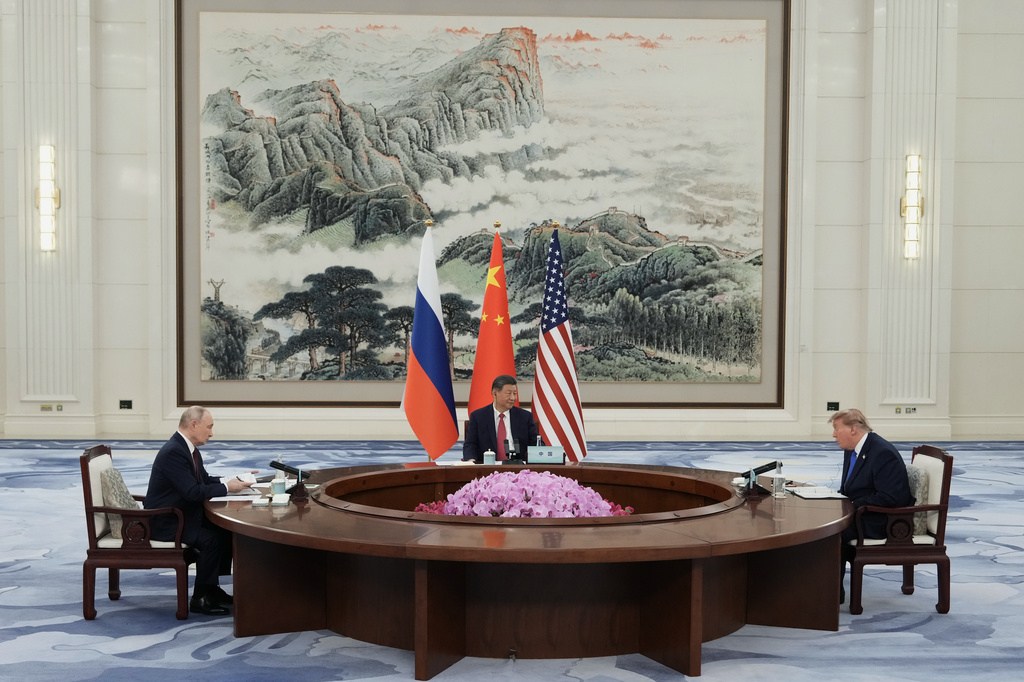
Another international institution that caught flak from the three leaders was the International Criminal Court. The resolution included a point demanding that the “International Criminal Court and other similar bodies must not abuse their jurisdiction,” emphasizing that “principle of state consent and respect for immunities of State officials are of paramount importance.”
Gissou Nia, director of the Strategic Litigation Project at the Atlantic Council, said this demand “threatens the ICC’s very raison d’être,” and “represents the starkest departure yet from the United States’ long-standing support for the protection and promotion of human rights and accountability.”
But the State Department has been bombarding the ICC with sanctions since Trump returned to the Oval Office. Restrictions were placed on American companies doing business with individual justices at the ICC, ultimately leading to Secretary of State Marco Rubio announcing a blanket sanction on the institution on Oct. 9.
Trump was hoping to meet up with a third dictator during the trip, North Korean supreme leader Kim Jong Un, but told reporters that ultimately it had to be abandoned.
UN POSTPONES US HUMAN RIGHTS REVIEW AFTER BOYCOTT
“The relationship is there, but we didn’t meet,” Trump told NBC News on Thursday. “There was too many meetings. It wouldn’t have worked out.”
North Korea is among the most widely sanctioned member states of the United Nations. Pyongyang has been hit by Security Council-backed embargoes, trade caps, travel restrictions, and economic sanctions due to its abysmal human rights record and refusal to abandon nuclear weapon development.