
Yemen’s Southern Transitional Council has a simple message for Washington: cut your losses in the war with the Houthis and help establish an anti-Houthi breakaway state.
When Riyadh and its Yemeni allies launched airstrikes on Sanaa airport on July 13, reigniting the Yemeni civil war, the anti-Houthi coalition could hardly have envisioned the conflict going worse than it did. Supporters had hoped the freezing of the conflict since 2022 had allowed anti-Houthi forces to regroup, rearm, and emerge as a different fighting force than that which struggled to combat the group during the civil war from 2014-22. Instead, the Houthis resumed fighting stronger than ever, launching a blistering offensive that seized the entire Red Sea coast, encircled Yemen’s third city of Taiz, and positioned themselves to threaten the anti-Houthi capital of Aden. Ambitious counteroffensives with heavy Saudi air support have all failed.
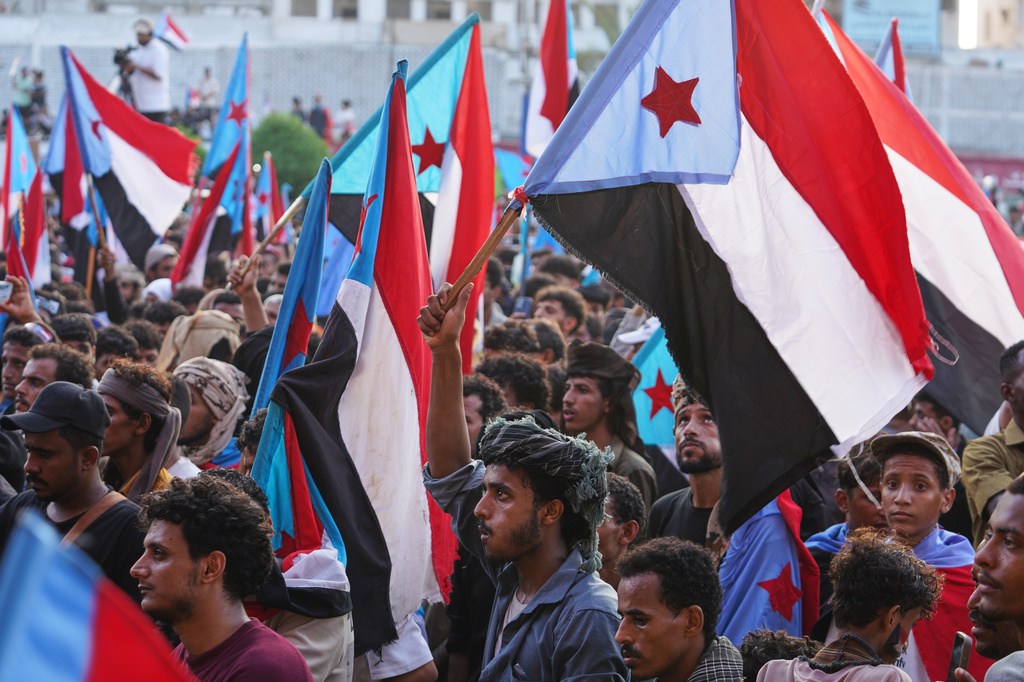
In a Monday interview in Washington, D.C., with the Washington Examiner, STC foreign affairs representative Amr al Bidh argued that the struggle against the Houthis was effectively a lost one, and the best strategy going forward was to simply cut their losses and establish a South Yemeni state, outside of Houthi control.
“In the end, you can’t fight with people who don’t want to fight,” Bidh said. “Political parties in the north, unfortunately, are not willing to fight, and that’s one of the main reasons why we are here right now.”
JOINT OPERATION WITH US OPENS SAUDI ARABIA TO BARRAGE FROM IRAN AND ITS PROXIES
The only politically active son of Ali Salem al Beidh, the final leader of the independent state of South Yemen which merged with North Yemen to create the modern Republic of Yemen in May 1990, Bidh has inherited the family prestige to become a leading figure in the STC and the Southern Cause — the movement that advocates the independence of South Yemen. He arrived in Washington, D.C., on Sunday to speak with U.S. officials in the National Security Council and other figures in the capital.
Despite its continued support and prioritization of the PLC, Bidh said the STC has continued to “engage” with Washington since it entered open conflict against the government. He said it has found receptive voices in Congress and among officials, and recent developments have signaled that the time is right to push for independence.
The STC is also at the height of its power since January, proving its influence through a mobilization order that has bolstered the anti-Houthis’ defenses.
The tables turn
The dramatic events in Yemen since July have completely upended the balance of power among anti-Houthi forces. In January, the STC, and affiliated Southern Cause, was at its lowest point since the Yemeni civil war began. Its patron, the United Arab Emirates, had been expelled from the country, and its armed forces crumbled away as Saudi-backed PLC forces blitzed through to the capital, Aden. The STC’s leadership either fled or was taken to Riyadh, Saudi Arabia, where they announced the dissolution of the group. The conflict between the PLC and STC seemed to have concluded, decisively in the former’s favor.
Just five months later, the PLC has been heavily discredited through catastrophic battlefield losses to the Houthis, while southern forces have repeatedly proven their mettle. The Southern Giants Brigades, a former STC unit now under PLC control but sympathetic to the Southern Cause, has confirmed its status as one of, if not the most effective unit of the anti-Houthi forces. With the loss of the Red Sea coast and encirclement of Taiz, the current front line lies almost 1-to-1 where the border of the former North Yemen and South Yemen lay, with the only major difference being Marib lying under anti-Houthi control.
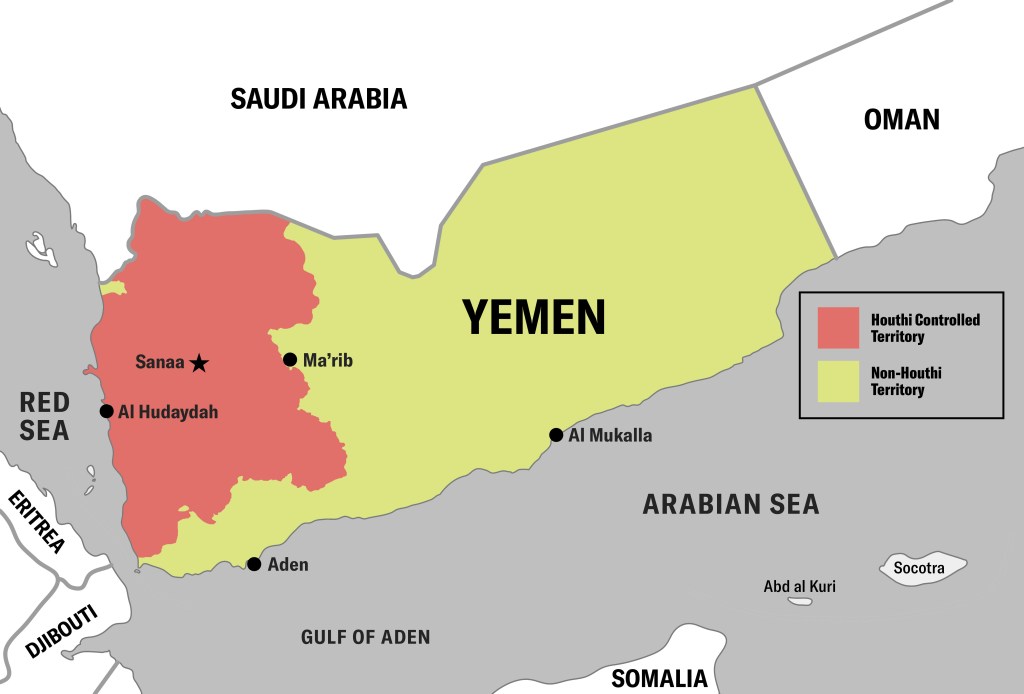
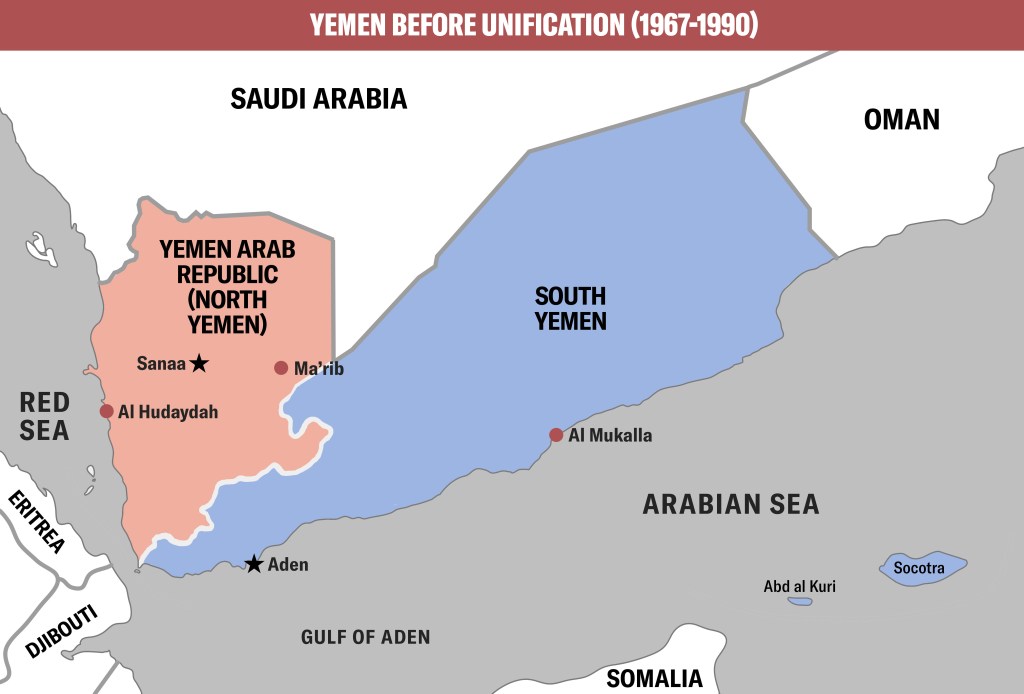
In the eyes of the STC, the conclusion is obvious: to form a new independent state of South Yemen, taking all areas outside Houthi control, to stem the bleeding.
“Given the circumstances, it’s the only solution, to have a state in South Arabia,” Bidh said. “That’s the only solution right now. Otherwise, things will get worse. The Houthis will expand, and the only way to not let the Houthis expand is to have a state in the south.”
“The idea of taking [them] out of Sanaa, it’s done. No one can. No one is talking about it anymore,” he reasoned.
His comments are markedly different from his assessment in his first interview with the Washington Examiner in July, when he bashed the Saudi appeasement strategy and argued for more aggressive action to be taken. Further counterattacks would only lead to further losses that would weaken the remainder of anti-Houthi forces, as recent ones had.
A huge PLC counteroffensive, led by the Southern Giants Brigades, made substantial progress, even briefly retaking control of the Bab el Mandeb Strait. They were soon pushed back by Houthi forces, who maintained their advance elsewhere on the front to ultimately surround Taiz.
Bidh said the STC had urged the Southern Giants Brigades to refuse to take part in the counteroffensive, viewing it as a pointless endeavor. The units were “undermined” by the offensive, and lost much of their capabilities, he said. Bidh also had little doubt that Taiz would fall soon.
The STC’s aim isn’t immediate independence, however, but to begin the process that would freeze the conflict and allow for a referendum on independence, which would presumably pass.
“We can have a transitional period. … We need to have at least one year to have a referendum and to solidify power to make sure that the Houthis don’t come to the south, and we create that defensive line against the Houthis, and create that balance of power. So this would need time,” Bidh argued.
The STC’s current road map puts their ideal date for a referendum in 2028.
Bidh even offered a sweetener for President Donald Trump.
“Let’s talk, let’s make sure the Houthis don’t expand, and get a deal. And let Trump have something to celebrate with,” he said with a smile.
The flip side of the turned tables
Unsurprisingly, Bidh and the STC’s proposal to accomplish its dream of an independent South Yemen as a way to counter the Houthis was unconvincing. Mohammed al Basha, a Washington-based Yemen analyst and former Yemeni official, doubted that the Houthis would even accept any deal that left Yemeni territory outside their control, as indicated by their push toward historically southern territory.
“Today, the Houthis are occupying historically southern territory in Lahj, testing the ground in Shabwa, and continuing to launch missiles and drones at bases in Hadramawt. In my assessment, their ambition remains to control all of Yemen, north and south,” he said.
Basha pointed out that the General People’s Congress, the party that ruled Yemen before the civil war, believed it was viable to sustain a power-sharing agreement with the Houthis, before the partnership “ended violently” in December 2017.
“I see little reason to believe the Houthis would accept a lasting coalition with a southern group or allow the south to govern itself. Shabwa and Hadramawt’s oil and gas resources are central to their ambitions and their pursuit of long-term financial survival,” he said.
AbdulSalam Mohammed, president of the Abaad Studies & Research Center and an adviser to Yemen’s Information Ministry, went a step further, arguing that the initiative played into the Houthis’ hands.
“This repeatedly recycled argument is remarkably similar to what some leftists and Arab nationalists said during the six Saada wars: that Saada was a stronghold of the Zaydi sect and that the solution was to grant it autonomy,” he told the Washington Examiner, referring to the six insurgencies the Houthis fought with the central government.
Throughout their history, the Houthis have struck tactical truces and pauses in fighting, only to emerge afterward stronger than ever, a position they used to seize even more land. AbdulSalam views this as the same, believing that the Houthis could strike a temporary bargain with the southerners to consolidate their gains, then attack at a more advantageous time.
He pointed to the changing justifications that more dovish Yemenis have clung to in the past — from the first explanation that the Houthis were only looking to defeat the Hashid tribal confederation and the Islamist Islah party, all the way to reasoning that they “only wanted to establish a state within the borders of former North Yemen and had no interest in the South.”
“At every stage, their opponents risk repeating the same mistake: accepting the movement’s latest narrative at face value, only to discover that it was a temporary instrument serving a broader strategic objective,” AbdulSalam said. “And each time, despite the Houthis having lost many of their former supporters, some of their adversaries continue to fall into the same political trap.”
But a deal with the Houthis to halt the fighting and create an independent south in exchange would contain within it the seeds to destroy the south as well, he argued.
“After consolidating their positions, [the Houthis] could mobilize Yemenis toward Aden under the banner of defending national unity and sovereignty,” AbdulSalam said. “In other words, southern secession could become both a temporary political arrangement and a future justification for renewed military expansion.”
This would all occur after a deal that would grant the Houthis newfound recognition and legitimacy.
‘Another Iran’
Among the STC’s gripes with the PLC before the war reignited in July was their perception that the PLC and Saudi Arabia weren’t being aggressive enough in countering the Houthis. Their turn into settling for a peace deal that includes southern independence may come as a surprise then, but Bidh stressed that a deal wasn’t presaged on the goodwill of the Houthis, but would rely on international pressure, especially from the United States.
As part of this deal, the U.S. doesn’t “need to go there and fight. They don’t need to even do airstrikes in Yemen. They just need to convene,” he said.
The strategy isn’t to rely on the U.S. either, however, as Bidh explained, saying their call to convene all regional powers is to bring “all the regional powers together, and thinking constructively on a strategy in Yemen, and not leaving the situation as it is, because it’s disastrous.”
Bidh also clarified that the deal was so the anti-Houthi coalition could cut its losses “for now,” opening up the possibility for a struggle against the Houthis in the future.
STC officials also reasoned that the Saudis and PLC were transforming the war from a nationalist struggle to a sectarian one, which they believe would prove disastrous.
“The narrative from the Saudis is a kind of Salafi sectarian narrative, and using [southern] forces alongside the National Shield is part of that campaign to turn the war in Yemen with the Houthis … from our point of view in the south, a nationalist position to more of a sectarian one, and that’s a very slippery slope, and it’s very dangerous,” Nabeel Bin-Lasem, political officer in the Office of the Special Representative of the STC President for Foreign Affairs, told the Washington Examiner.
The STC’s foremost argument for an independent South Yemen outside Houthi control, backed by regional powers, was that it was simply the only viable way forward, claiming the southerners are the only ones willing to fight, but under Saudi and PLC management they’re being held back and disillusioned. If the current course is maintained, the U.S. would be facing a worst-case scenario in Yemen.
“Imagine the Houthis are taking all of this area, and then [they] have Socotra here, and then [they have the] border with Oman, and all of this border with Saudi Arabia, and then taking Aden,” Bidh said. “It’s not anymore a Houthi proxy of Iran. That’s another Iran.”
AS YEMEN’S CIVIL WAR ENTERS A NEW PHASE, WHAT’S NEXT FOR THE EMBATTLED COUNTRY?
Christina Sheetz, a senior policy adviser at Independent Diplomat in Washington, D.C., concurred with the STC’s position, tying it to the wider U.S. struggle against Iran in the region.
“Yemen is in very real terms the exit strategy for the [Islamic Revolutionary Guard Corps] if that were ever to come to pass as well,” she said.