
The Supreme Court could give Trump administration officials a stronger defense against criminal contempt charges as Democrats prepare to turn their incoming congressional majorities into investigations of the president and his advisers.
The looming oversight battles have raised the stakes of Peter Navarro’s challenge to his conviction for defying the House Jan. 6 committee during the Biden administration. Republican attorneys general and conservative legal groups are urging the justices to hear the case, which could make future contempt convictions harder to obtain.
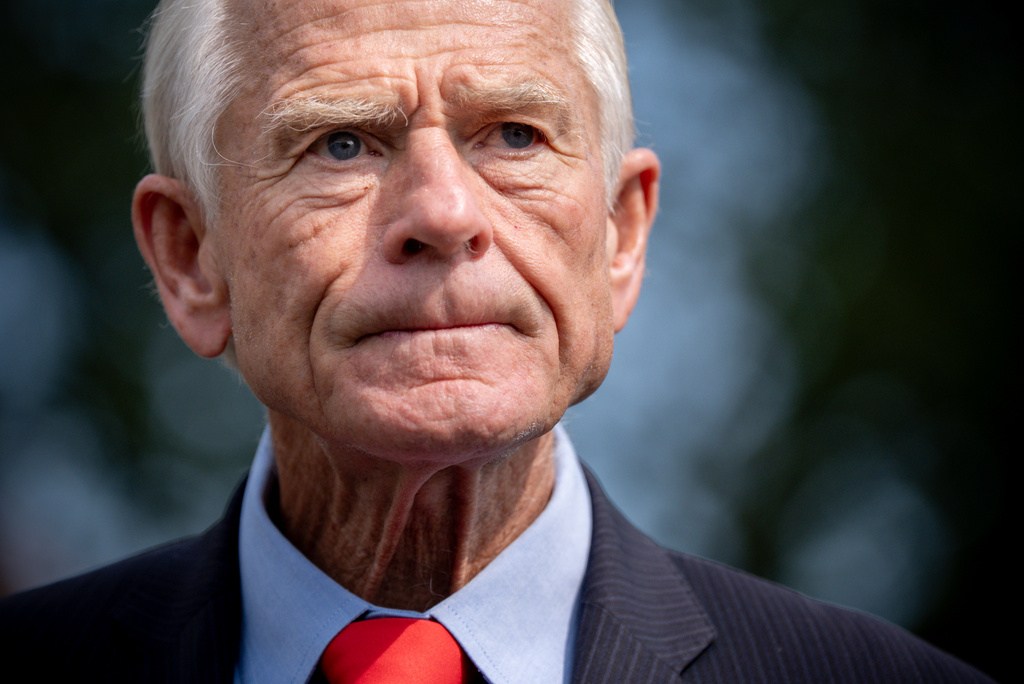
Navarro, a first-term Trump adviser who served four months in prison before returning to the White House, wants prosecutors to have to prove that a witness knew refusing a congressional subpoena was unlawful in order to bring criminal charges. That standard could allow officials to argue they genuinely believed executive privilege barred their cooperation, even if that belief proved mistaken, in the event they are found noncompliant with congressional demands.
The push comes as Democrats assemble investigators for their return to power and Trump’s Justice Department seeks to erase former Trump White House adviser Steve Bannon’s separate contempt conviction, citing concerns about the exclusion of a similar defense.
Rep. Robert Garcia (D-CA), who is poised to chair the House Oversight and Government Reform Committee, directed a fresh warning at Stephen Miller on Friday after President Donald Trump named him White House chief of staff.
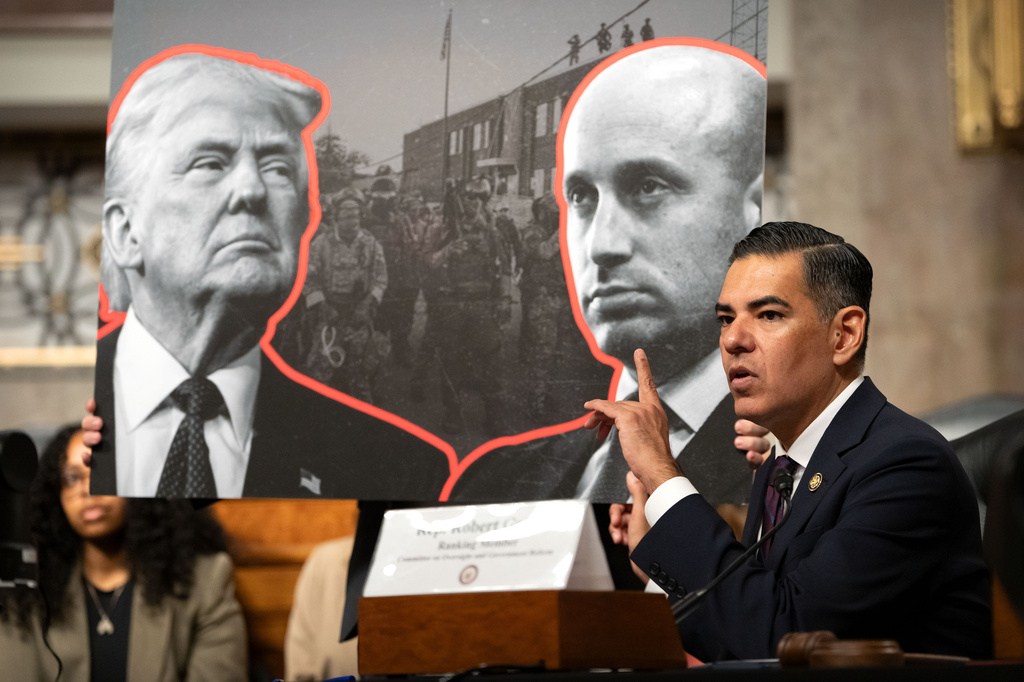
Garcia pledged scrutiny of the administration’s immigration policies and said, “Stephen Miller should lawyer up.”
Navarro’s attorney, Abhishek Kambli, cast his client’s petition as a chance to establish protections before another round of congressional confrontations.
“Although Navarro v. United States occurred in the backdrop of the J6 committee, history has a way of repeating itself,” Kambli wrote on social media on Monday, predicting the same dilemmas that arose with Navarro would likely repeat themselves over the ensuing years.
A Biden-era prosecution with new stakes
Navarro’s case dates to February 2022, when the Democrat-led House select committee subpoenaed documents and testimony about efforts to challenge Trump’s 2020 election defeat. Trump had left office more than a year earlier, and Joe Biden was president.
Navarro declined to produce documents or appear for his deposition, asserting that Trump had invoked executive privilege, which protects certain confidential executive branch communications from scrutiny. The House held him in contempt, Biden’s Justice Department obtained an indictment, and a jury convicted him in 2023.
His Supreme Court petition challenges the criminal-intent standard used in that prosecution. The dispute turns on what Congress meant when lawmakers made it a crime to “willfully” default on a congressional subpoena, and whether a jury should be allowed to consider a defendant’s stated belief that he was legally correct not to answer a subpoena.
Under the D.C. Circuit’s interpretation, a deliberate and intentional failure to comply can satisfy that requirement. A sincere belief that refusing was lawful does not, by itself, defeat criminal liability.
The Oversight Project, which filed its supporting brief on Nov. 5, argues the statute’s text and history support that reading. The group, which has taken on a defensive law firm role in anticipation of Democratic investigations, said Navarro was “unconstitutionally prohibited from telling the jury about his claim of executive privilege based on a prior instruction from President Trump.”
The conservative Article III Project warned that excluding good-faith defenses threatens the negotiations traditionally used to resolve disputes between Congress and the executive branch. “The D.C. Circuit’s ruling turns every congressional subpoena into a criminal trap,” the group’s founder Mike Davis said in a statement announcing its brief on Monday.
Meanwhile, an Oklahoma-led coalition of 12 states also submitted a supporting brief. Kambli identified Iowa Attorney General Brenna Bird among the participating attorneys general.
Citizens United and affiliated organizations, as well as former Interior Secretary David Bernhardt, submitted additional briefs addressing Congress’s handling of privilege disputes and the protection of candid presidential advice.
DOJ shifts course on Bannon
The lower courts identified problems with Navarro’s position beyond the question of criminal intent.
In upholding his conviction, the D.C. Circuit sustained the finding that neither Trump nor an authorized representative had invoked executive privilege in response to the subpoena. It also concluded that Navarro withheld testimony and documents that could not have been privileged.
The court treated an actual assertion of privilege and Navarro’s belief that privilege applied as separate questions, holding that binding precedent foreclosed his proposed good-faith defense.
Trump’s Justice Department has embraced concerns about that standard in Bannon’s case, marking a sharp shift from the Biden administration’s position, while notably staying quiet about its posture in Navarro.
Bannon, a former first-term Trump adviser, was convicted in 2022 after refusing the Jan. 6 committee’s demands for documents and testimony. Like Navarro, he served four months in prison.
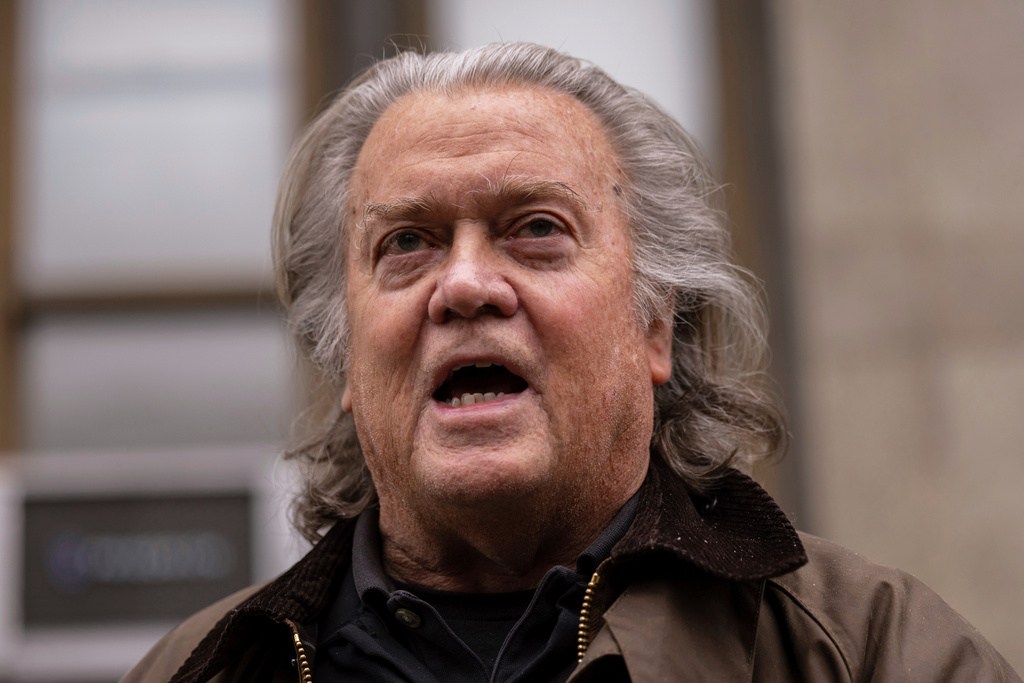
But in a notable motion filed Thursday, prosecutors asked U.S. District Judge Carl Nichols, a Trump appointee, to vacate Bannon’s judgment and dismiss his indictment. They questioned the fairness of a trial in which circuit precedent prevented Bannon from using his asserted reliance on executive privilege to contest criminal intent, a near-identical argument to that made by Navarro’s counsel.
The Supreme Court previously vacated the appellate judgment in Bannon’s case for further consideration of the dismissal request. That action did not resolve the meaning of “willfully,” leaving Navarro’s petition as a possible vehicle for deciding the question.
Would the justices be willing to take the leap?
Whether Navarro’s argument finds a receptive audience will depend on how far the justices are willing to go in extending protection from criminal prosecution to officials beyond the president himself.
In its 2024 decision in Trump v. United States, the court granted presidents absolute immunity for actions within their exclusive constitutional authority and at least presumptive immunity for other official acts. The ruling arose from a separate Biden-era prosecution over Trump’s efforts to challenge the results of the 2020 election.
The majority grounded those protections in the president’s unique constitutional responsibilities, reasoning that does not automatically shield his aides.
Speaking Saturday at the George Washington Presidential Library, Justice Sonia Sotomayor identified presidential immunity as one of the decisions she hopes the court will overturn in her lifetime.
“I’m hoping that the court will take back some of the crazy things that it’s done,” she said.
BLANCHE BACKS TRUMP CALL FOR DOJ INVESTIGATION INTO DEMOCRATIC IMPEACHMENT PUSH
If Navarro were granted certiorari, a favorable ruling for him could strengthen officials’ defenses without granting immunity.
And even if Bannon’s separate conviction is erased, future officials would still face the same legal standard unless the Supreme Court weighs in on Navarro’s case and changes it. The government has until Dec. 9 to respond to Navarro’s petition.