
WARREN, Michigan — Michael Howard was sitting in church Sunday when his phone began blowing up.
The Warren resident initially thought little of the news that Rep. Haley Stevens (D-MI) had appeared at a church event with Republican Senate nominee Mike Rogers. Perfecting Church, he figured, was a large congregation that routinely hosted politicians.
Then he realized Stevens had not simply attended the church. She went with Rogers, whom she had spent months criticizing, and endorsed him in the final days of a Senate race that could determine control of Congress’s upper chamber.
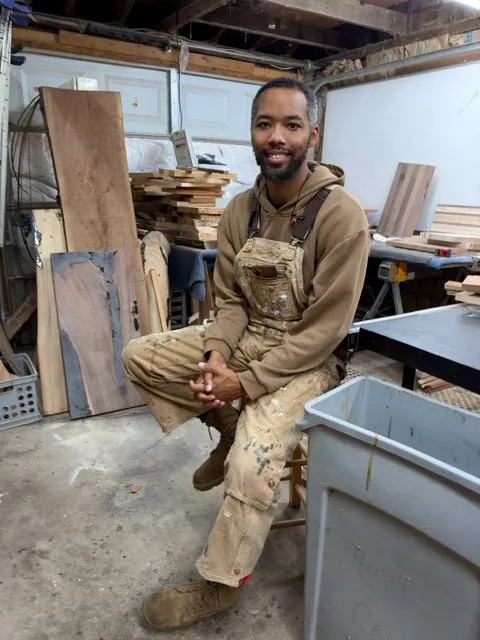
Howard was stunned.
“I’m just confused, to be honest,” he told the Washington Examiner. “I didn’t see this coming.”
Stevens was someone Howard considered a friend, a congresswoman who had earned his affection by showing up in black communities without making her office or title the center of attention.
Now, he had questions.
Stevens’s endorsement of Rogers has sent shock waves through Michigan’s Democratic Party, prompting her expulsion from the state party and the resignations of two senior aides. But the fallout reaches beyond Democratic leadership, reverberating among black voters in Detroit and surrounding communities whose support could prove decisive in the Senate race.
For some, Stevens’s decision was a betrayal by a politician who had earned their trust. For others, it is another example of Democrats’ appetite for internal conflict just as they need voters to rally behind Abdul el Sayed, their Senate nominee.
Howard’s relationship with Stevens was not built around campaign appearances or political endorsements.
He first met her at a Juneteenth celebration in Madison Heights, where she was hanging out in the crowd. He spoke with her for nearly an hour without realizing she was a congresswoman.
“All right, cool white girl at the Juneteenth,” he recalled thinking. Only later did someone tell him he had been talking to his representative.
That kind of interaction, Howard said, helped explain why Stevens earned support among black voters during her congressional career and the Democratic Senate primary. “She has authentically shown up in our communities,” the father of four said. “She has authentically answered our calls. She has authentically just been around.”
Her endorsement of Rogers, however, left him questioning what he thought he knew about her.
“I think when you now support someone that clearly does not have the best interest for black folks in mind, it gives me great pause,” Howard said. He declined to speculate about Stevens’s motivations, saying he needed to speak with her directly before drawing conclusions.
“The Haley that I knew then, I think, was authentic, and so I need somebody to connect the dots for me,” he said.
Voter Marcene Juergenson told the Washington Examiner that she supported Stevens in the primary and, like Howard, was surprised by the outgoing congresswoman’s eleventh-hour endorsement.
“Primaries are like this … you’ve got to fight it out and then the one who wins, that’s where you put all of your energy,” she said. “I liked them both … but I don’t know about Haley now. It’s really sad.”
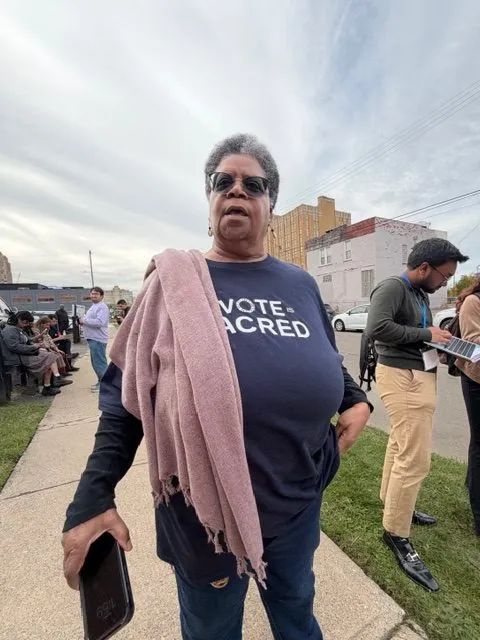
For Anthea Powers, the issue was less complicated.
“I don’t know who Ms. Stevens thinks she is, but you do not go into a black church and come out and say all of that stuff,” Powers told the Washington Examiner. “Have some respect. Sunday’s a day for church. You’ll find me here every Sunday. I’m not here for any of that foolishness.”
Powers said she would vote for el Sayed and that Stevens’s endorsement had not changed her mind.
Buddy Johnson, a retired Detroit-area security guard, was similarly emphatic.
“Mike Rogers is running the most racist campaign and putting himself with [President] Donald Trump,” Johnson said. “I’m not happy with everything Abdul has said, but you better believe I am voting for him on Tuesday.”
A fight over black voters
The outrage over Stevens comes as Republicans try to make inroads with black voters in Detroit, a bloc Democrats have traditionally relied on to deliver statewide victories.
Rogers has opened a campaign office in the city, held events focused on housing and literacy, and even tended bar. Republicans have also highlighted black voters who oppose el Sayed, a progressive former Wayne County and Detroit health official whose positions and identity have become central to the campaign.
A pro-Trump super PAC has aired advertisements featuring black voters who describe themselves as longtime Democrats but say they intend to vote for Rogers. Republican groups have also accused el Sayed of disrespecting black voters.
For Republicans, even a small erosion in Democratic support or turnout in Detroit could matter in a Senate contest expected to be decided by a narrow margin.
El Sayed’s participation in the “Uncommitted” movement over the Biden administration’s handling of the Israel-Gaza war has also complicated his relationship with some Democratic voters. The movement’s role in the 2024 election remains a source of resentment among some black voters who believe Arab American defections helped undermine then-Vice President Kamala Harris’s presidential campaign.
Stevens’s endorsement threatens to add another layer of frustration, even as it could allow el Sayed to consolidate Democrats divided during the primary.
Howard had already decided whom he would support but was struck by how quickly the controversy galvanized Democrats. He had not planned to attend campaign events Sunday. After leaving church, he texted el Sayed’s campaign and asked where he could go to show support.
Howard pointed to the fundraising surge that followed Stevens’s endorsement as evidence of the immediate reaction. El Sayed’s campaign reportedly raised $1.4 million in roughly 12 hours.
Still, Howard cautioned against confusing campaign enthusiasm with a lasting political relationship: “Right now, black voters have never been more important to politicians since 2008.”
The question, he added, is what happens after the election. “Will we be this important on Nov. 4 and Nov. 5, and then everyone gets sworn in in January [2027], and will we be this important on Jan. 21 or Feb. 1 or two years from now?”
Howard said he supported Stevens in part because she paired outreach with policy. He believes el Sayed has offered concrete proposals to improve the lives of black residents, while Rogers has not demonstrated the same commitment.
“Up and down the ballot, I have grave concerns,” Howard said. “Regardless who is in office, whether black voters will get the attention that we deserve after we deliver them their victory.”
Backlash or electoral consequence?
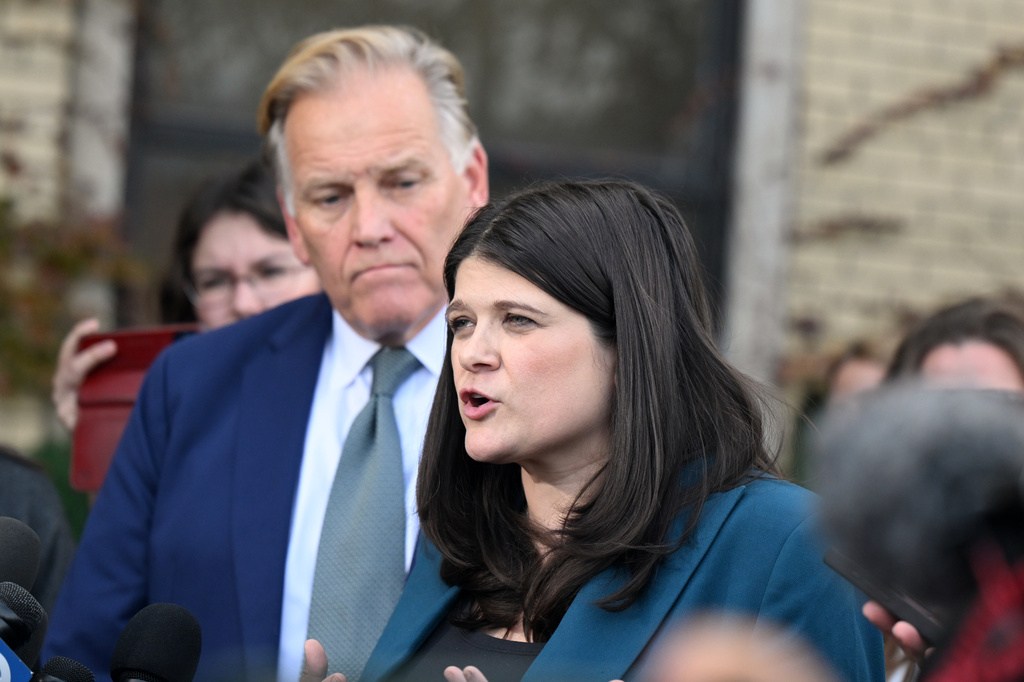
With Election Day just hours away, the question is whether Stevens’s move will meaningfully alter the Senate race or remain largely confined to political circles.
Rusty Hills, a former chairman of the Michigan Republican Party and lecturer at the University of Michigan’s Gerald R. Ford School of Public Policy, told the Washington Examiner the Stevens-el Sayed fallout will have “no effect on the black vote whatsoever.”
“This controversy will not mobilize black voters in Detroit and other urban areas,” he added. “High gas prices and grocery prices are much more of a motivator to vote than this disagreement.”
Dave Spencer, host of Practically Political, also doubts the endorsement will change many votes this close to Election Day.
“This isn’t translating into any meaningful voter mobilization,” Spencer said. “We’re talking about days before the election, when almost everyone has already made up their minds. A petty dispute between two politicians isn’t going to change someone’s vote.”
Spencer characterized the Stevens-Rogers appearance as the culmination of an increasingly personal dispute rather than a substantive disagreement over policy. He also questioned whether the backlash would benefit el Sayed.
“No, probably not,” Spencer said when asked whether Stevens’s endorsement could galvanize Democratic constituencies. “Most voters will see this as a stupid tiff between politicians that escalated because Stevens was offended and overreacted.”
But Nick Smith, president of Polaris New York, sees an opportunity for el Sayed to rebuild a coalition fractured by the primary.
“Republicans gained an endorsement but also inherited a political circus,” Smith told the Washington Examiner. “Democrats who were bitterly divided are suddenly condemning the same decision. That gives el Sayed an opening to rebuild unity, particularly among black voters whose participation is essential, although the turnout impact remains to be seen.”
For Howard, the episode is less about whether one endorsement will swing an election than about what it reveals.
Politicians are making extraordinary efforts to attract black voters, he said, but too often without addressing the policies that would improve their lives.