
Israeli voters will cast their ballots on Tuesday in the nation’s first elections following the Oct. 7, 2023, terrorist attacks.
Embroiled in a multi-front conflict and facing historic unpopularity among its allies, the nation and its people are living in a drastically different political landscape than three years ago. The voters will now decide if this new scenario — defined by the omnipresent threat of terrorism, civil disunity among religious and ethnic minorities, and a lack of certainty about what nations they can rely upon — requires new leadership.
1) Many parties, one leading opponent
As voters head to the polls, it is Benjamin Netanyahu, prime minister and leader of the Likud party, who is center-stage. The election is widely perceived as a referendum on the conservative statesman, having been in power for almost two decades with only brief interruptions.
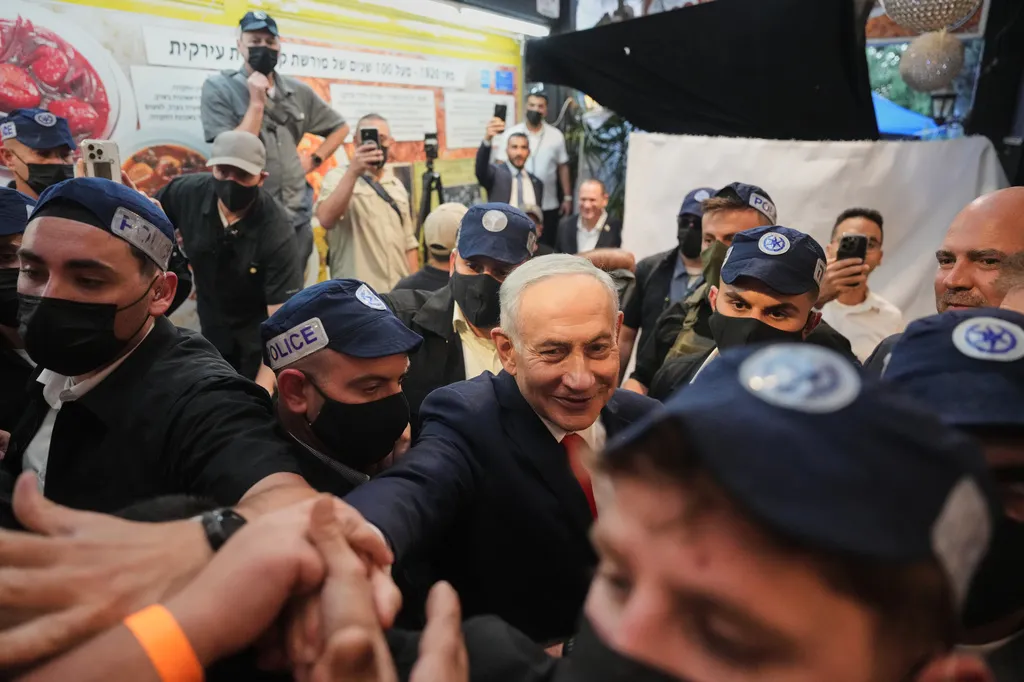
Most importantly, it was Netanyahu who was in power when Hamas launched the devastating terrorist attacks of 2023. An opinion poll released last month by the Israel Democracy Institute found that a significant majority of Israeli voters consider the events of Oct. 7 to be a “very central or fairly central element in their decision on who to vote for.”
A loose coalition of opposition parties has emerged that threatens to remove Netanyahu from office, running on the accusation that the prime minister’s policies and political mistakes ultimately caused the massacre.
Israeli voters cast ballots for a political party, not a specific candidate. Potential members of the Knesset are drawn up and listed ahead of time according to their respective party conferences and internal procedures. Parties that can score at least 3.25% of the total vote are given a proportional number of seats in the Knesset, with the minimum being four seats. If a party doesn’t manage 3.25%, it is dropped.
After the Knesset is composed proportionally to the results, the negotiations and head-butting begin as each party seeks a stake in a viable government coalition.
There are 38 parties running in the Oct. 27 election, but only 11 are expected to be seated in the Knesset.
IN FOCUS — NETANYAHU’S LAST STAND: CAN ‘THE MAGICIAN’ CONJURE UP ANOTHER ELECTION WIN?
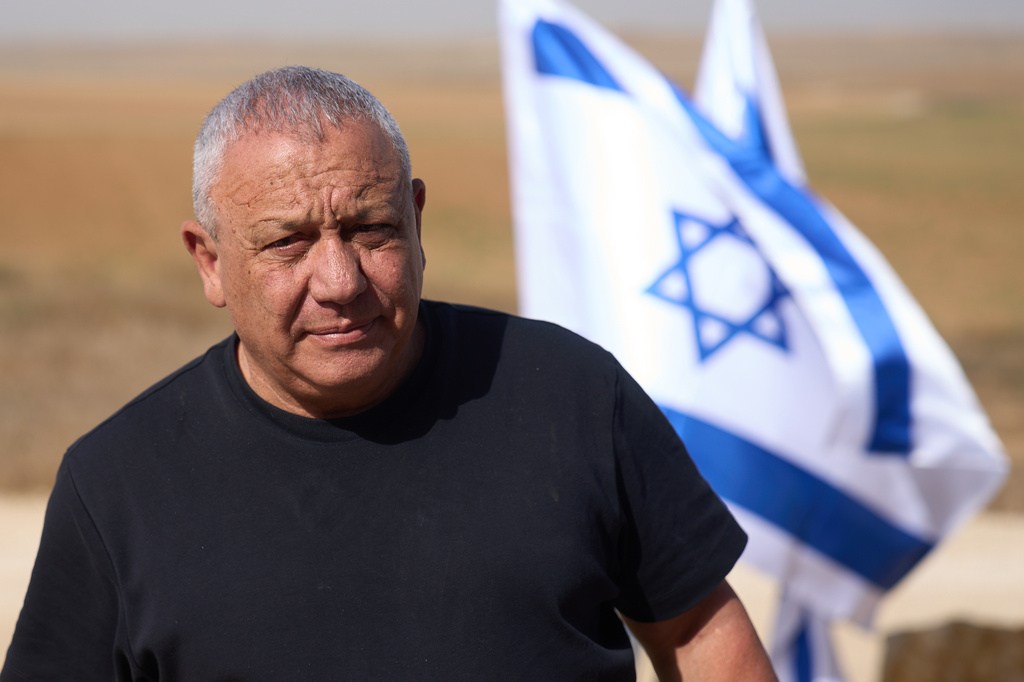
Gadi Eisenkot, a former military chief of staff and leader of the centrist Yashar party, is the front-runner to replace Netanyahu. Positioning himself as the janitor necessary to clean up Netanyahu’s mess, he has aggressively sought to muscle other, smaller opposition party leaders out of the fight for top office.
Yisrael Beytenu party chief Avigdor Liberman, former Israeli Prime Minister Naftali Bennett of the Together party, and others have also signaled interest in the prime ministership — but Eisenkot remains the projected favorite.
2) Polls show dead-heat race that could benefit small parties
Months of polling data compiled ahead of Election Day have consistently shown that this will be a tight race.
To form a government, a bloc must secure 61 seats, a majority in the parliament.
The latest calculations from Haaretz — which compiles voting data from Israel’s three largest channels — show Eisenkot’s bloc projected to score 53 seats in the Knesset and Netanyahu to score 51. In this model, 16 seats are projected to go to parties that are currently unaligned with either bloc.
This is a situation that can turn minor, forgettable parties into kingmakers as larger blocs offer concessions and high-ranking positions to get over the 61 threshold.
Religious and ethnic groupings can use this method to bolster their political leverage. For example, the ultra-Orthodox and Arab parties are too small and politically unpopular to have any chance on their own, but both can turn out enough voters to make themselves valuable to potential governments.
The Arab parties mainly advocate greater opportunities for their ethnic group within Israel, as well as the adoption of a two-state solution following the war in Gaza. The ultra-Orthodox communities are fighting to maintain exemptions from their military service — a policy that has grown to become enormously unpopular in recent years and was subject to reversal by the High Court of Justice.
The ultra-Orthodox, for years protected by Netanyahu’s coalition, have become a political football after the prime minister was forced by legal restraints and public opinion to temper his alignment with the community.
Left-wing voters have reported that the Israeli state’s relationship with religion — which includes whether ultra-Orthodox will be forced to serve in the military like everyone else — is one of their most pressing considerations in which party to support.
3) Israel is fatigued by conflict, but few are advocating peace
The issue of religion overlaps heavily with national security amid Israel’s conflicts on seven different fronts. This situation has fatigued the Israeli public, leading to hard questions about how troops can be rotated without pushing soldiers to their limits.
The Jewish state is currently on a war footing against Hamas in Gaza, radical cells in the West Bank, Iran’s Revolutionary Guard, Hezbollah in Lebanon, Shia militants in Iraq, disparate sectarian forces in Syria, and Houthi soldiers in Yemen.
These conflicts have become an all-encompassing struggle for national security since the Oct. 7 attacks, though many are rooted in conflicts that began far prior to the massacre.
Neither Netanyahu’s alliance nor Eisenkot’s coalition is entertaining the prospect of peace in the near future. Both factions are extremely hawkish, with only minor disagreements on how to handle adversaries such as Hamas and Tehran.
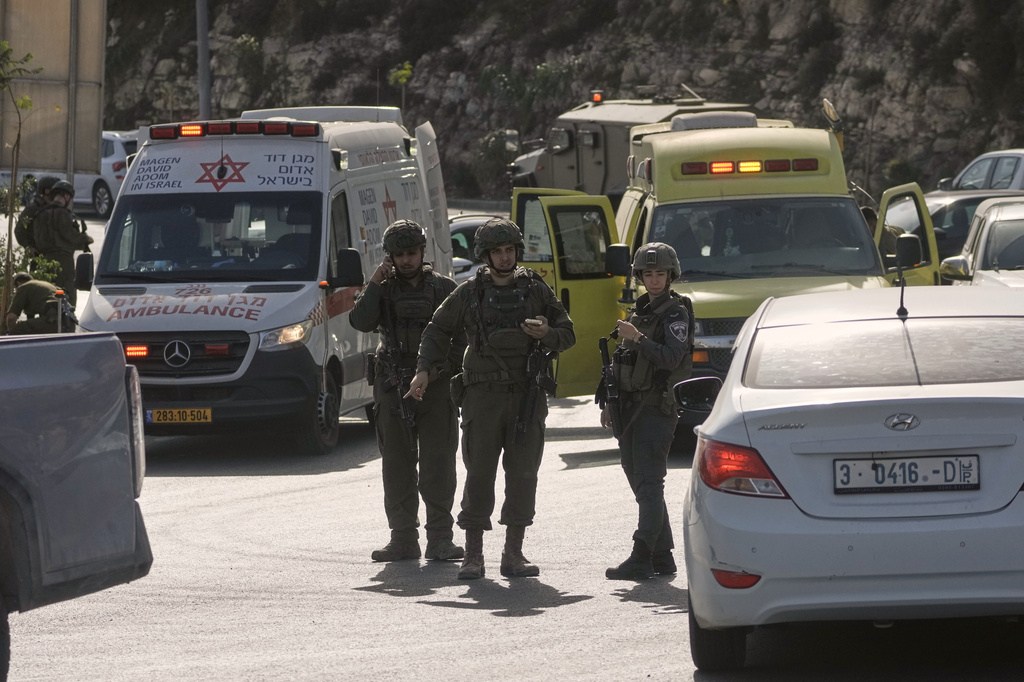
Netanyahu banged the war drums last week after two Israeli soldiers were killed by Palestinian radicals in the West Bank, promising to execute Gaza-style raids in the region.
On Monday, the prime minister denied reports that he had butted heads with Israeli military officials over the potential of restarting hostilities with Iran ahead of the election. Eisenkot warned the prime minister not to “place your own political interests above the security of the state,” but Tehran shrugged off the entire election as meaningless from its point of view.
“It makes no difference to us who ultimately takes the helm of a regime whose track record shows that it has brought nothing to our region but violence and bloodshed,” Iranian Foreign Ministry spokesman Esmail Baghaei said on Monday.
4) Outcome could affect already-frayed relations with US
The election also comes at a low point in Jerusalem’s relationship with the United States, and while Washington has put its thumb on the scales for Netanyahu, affecting the outcome of the election has hardly been a priority.
Vice President JD Vance offered perhaps the most explicit assessment of U.S. frustrations toward Jerusalem in June. After Israeli officials voiced opposition to attempting a U.S.-led ceasefire with Iran, he warned them not to cross “the only powerful ally” they have “anywhere left in the entire world.”
“[U.S. President] Donald J. Trump is the only head of state in the entire world who is sympathetic to the nation of Israel at this moment in time,” Vance said. “The problem for Israel is not Donald J. Trump, and anybody in Israel who thinks their biggest problem is the president of the United States needs to wake up and smell the reality of the situation that country is in.”
Israel is suffering a worldwide collapse in support due to its conflict in Gaza and a surge of settler violence that has gone largely unpunished. A recent Pew Research Center survey across 36 countries found a median of 67% of adults had a negative perception of the state, compared to only 25% who reported positive feelings.
Trump issued a late, somewhat tepid endorsement of Netanyahu last week, just days before the election. While Trump called his Israeli counterpart “strong, brave, and brilliant in the face of tremendous opposition,” the crux of his endorsement seemed to be a warning that the U.S. might walk away from the Iranian conflict if the government changes.
“If Israel has the wrong Leader, which would be anyone other than Bibi [a nickname commonly used for Netanyahu], America will have to do this work ourselves, and I am not inclined to do so,” Trump said in the post on Truth Social.
The White House has tempered its usually unequivocal support for the Jewish state during Trump’s second administration — frustrated by divergent visions of peace in Gaza, the conflict in Iran, and the fundamentals of the bilateral relationship.
Netanyahu seems to be preparing for a future without the certainty of U.S. support, pushing for greater independence.
“If you think we’re going to continue receiving what I secured twice, and that’s tens of billions of dollars in American aid for the defense budget, prepare yourselves and get used to the fact that it won’t happen, because America has changed,” Netanyahu said last week.
Ultimately, the Tuesday vote will be the beginning of a monthslong process to install the next Israeli government. Results will not be posted until Nov. 4, when negotiations for coalition building can begin in earnest.
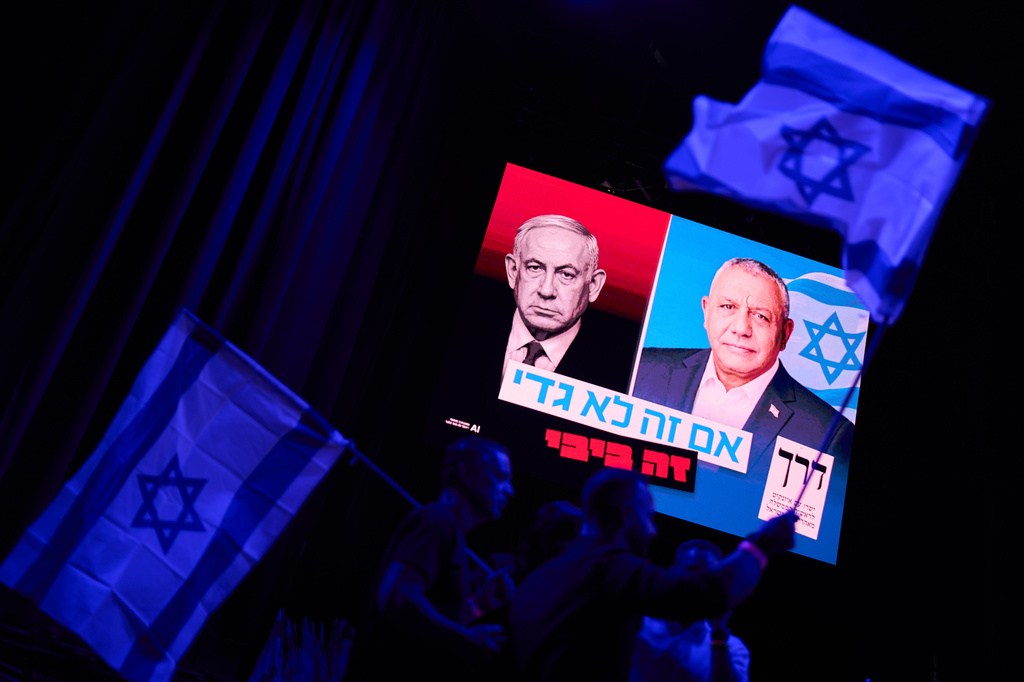
Coordinating a majority in the Knesset can take weeks or even months, depending on each party’s flexibility.
‘PALESTINE ACTION’ GROUP PROMOTES VIOLENT ATTACKS IN US AND CLAIMS TERRORISM SANCTIONS CAN’T STOP IT
If neither bloc can wrangle a 61-seat majority after the election next month, it could trigger a situation in which Netanyahu remains caretaker prime minister, the Knesset dissolves, and Israeli voters head back to the ballot box for another election.
The prime minister is quite familiar with this scenario. During Israel’s political crisis from 2019 to 2022, the country held five elections in four years due to repeated deadlocks that prevented a majority government. After three failed results and Bennett’s short-lived coalition collapsed, Netanyahu rode back into power in 2022.