
The governments of Italy and Spain have buried the hatchet after months of hostility caused by the migrant invasion of Ceuta in North Africa, but the city remains a hot spot of illegal immigrants.
Interior Ministers Matteo Piantedosi of Italy and Fernando Grande-Marlaska of Spain announced Thursday that the two nations would be simultaneously normalizing their Schengen Area agreement. Italy suspended free movement from Spain in July after 70,000 migrants, mostly from Morocco, flooded into the Spanish enclave of Ceuta. Spain almost immediately retaliated with border checks of their own aimed at Italian travelers.
“The decision, reached after a careful assessment of the situation, will be accompanied by enhanced information-sharing measures to ensure the full security of the common Schengen area,” the ministries announced.
Approximately 72,000 people illegally swarmed into the Spanish territory of Ceuta in northern Africa in late July, crossing into the enclave from Morocco via land and sea. It was a catastrophic event for a region with only 84,000 legitimate residents, and fellow European leaders feared Madrid’s weak response would allow the migrants to make it into the continent.
Italy’s decision to suspend free travel was a shocking development, given the intense commitment among European Union member states to preserve the seamless nature of the Schengen Area.
Italian Prime Minister Giorgia Meloni explained her decision was made to “protect national security” amid the Moroccan migrant invasion and “prevent possible repercussions for our nation” as tens of thousands sought entry into continental Europe.
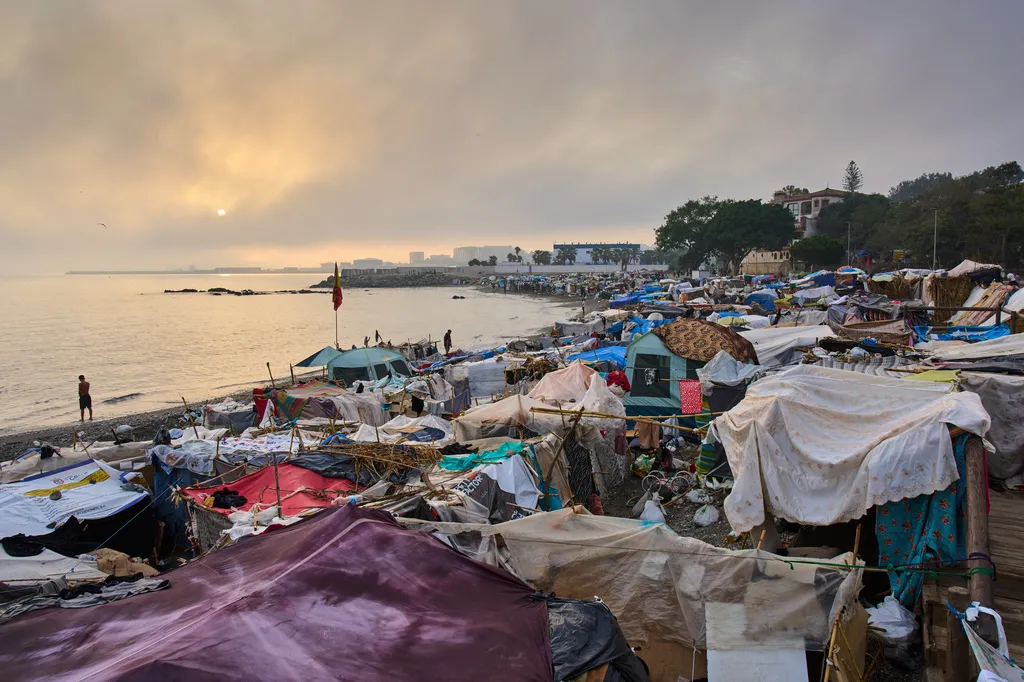
While Italy and Spain might see the Ceuta crisis in their rearview mirror, the autonomous city remains overrun with approximately 15,000 undocumented people lingering within its borders and seeking asylum.
Mayor-President Juan Jesús Vivas said at a press conference this week that Ceuta “has not returned to normal almost three months later” because the Spanish government is dragging its feet on deportations.
“No one has yet been returned through administrative resolution, and all those who have left have done so through voluntary returns or for committing crimes — so it seems that the government’s strategy is for this to collapse under its own weight,” Vivas lamented.
“The situation is extraordinarily far from normal, and every day that passes it gets worse because our capacity to resist is weakening, and it seems we’re at a dead end,” he continued. “No one can stand this injustice.”
Migrants are squatting in impromptu camps and hiding outside the city to avoid prosecution or deportation. Police reports and emergency service calls remain far higher than pre-invasion norms, and migrants have been documented clashing with officers when disturbed.
Spanish outlets are reporting that there has been a spike in asylum-seekers identifying as LGBT, indicating a coordinated strategy to exploit European legal loopholes.
Spanish outlet ABC, citing sources within the Ceuta police force, asserts that approximately 70% of migrants requesting asylum are telling interviewers that they are gay or another sexual minority.
IN SPAIN’S CEUTA, A DELAYED GOVERNMENT RESPONSE LEAVES UNDERAGE MIGRANTS ON THE STREETS
“This doesn’t prove widespread fraud, but it does require more rigorous checks,” a source in the Unified Police Union reportedly told ABC.
Amid public speculation that the Spanish authorities failed to react effectively to the situation, Prime Minister Pedro Sanchez promised last month to publish a comprehensive document examining the timeline of events.