
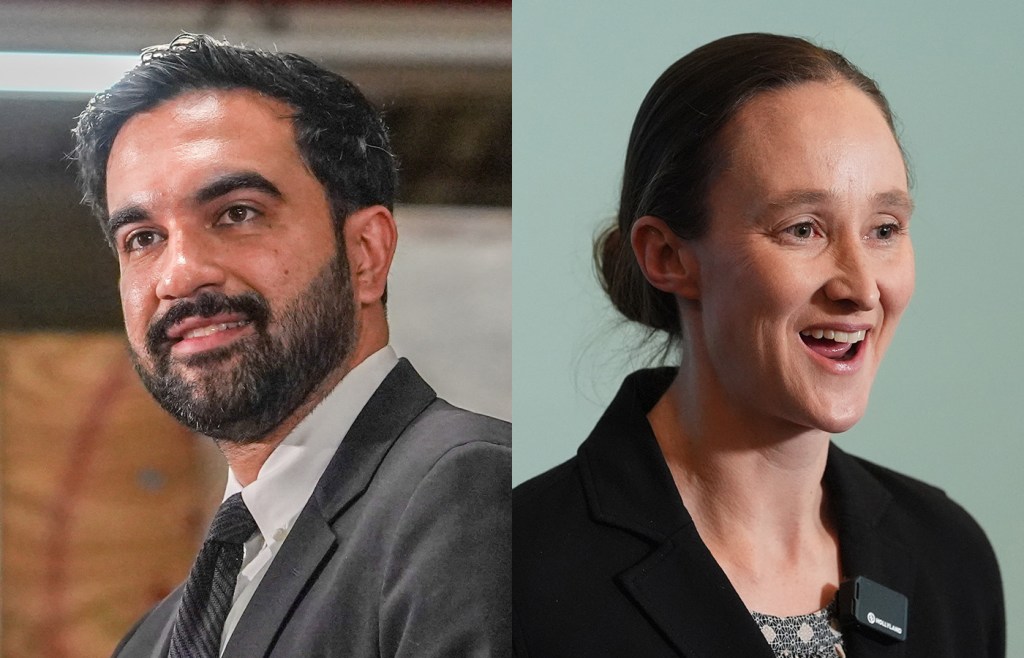
When members of the Democratic Socialists of America win a local election, they fly into office on the wings of soaring rhetoric. Whether it’s New York City Mayor Zohran Mamdani calling for the “warmth of collectivism” or Seattle Mayor Katie Wilson urging her public sector employees “to do big, new things,” the DSA-connected players (like all successful elected officials) know how to play to the base.
However, the realities of running a city and wrestling with economic challenges rarely play along with bumper stickers or slogans gleaned from a political science class. Eventually, speeches and campaign promises face consumer needs, annual budgets, and unemployment numbers.
How do elected leaders of a party that defines itself as hostile to capitalism and the private sector adapt when faced with the needs of their local business communities? Will socialist campaign promises go the way of many political vows when the bills come due?
Daniel Schatz, Ph.D., is a political scientist and former visiting scholar at Harvard, Stanford, and Georgetown. He argues that DSA leaders are still politicians who like to stay in office and maintain power. To do so, even the most strident DSA elected officials must learn and embrace the art of compromise.
“The DSA may campaign as though politics is a purity contest, but governing a major city means dealing with budgets, employers, public safety, housing, unions and taxpayers,” Schatz said. “City Hall has a way of curing revolutionary romanticism. A mayor cannot run a city on purity tests. Someone still has to collect the garbage, pay the pension bill, and persuade employers not to leave.”
Schatz foresees a reckoning in any given DSA-run city when rhetoric collides with capital flight, shrinking tax revenues, deteriorating services, and angry middle-class voters.
“A mayor can denounce corporations all day, but it is harder to replace their tax base once they relocate,” he said. “The warmth of collectivism cools rather quickly when the financial district empties and the city budget turns red. We will likely see some DSA leaders creep toward conventional Democratic pragmatism — not because they have suddenly discovered the virtues of markets, but because they want to keep their jobs.”
James Colistra put 20 years into working for Forbes’s business media and integrated marketing. His experience tells him DSA leaders can delay the need to abandon ideology in favor of compromising by making villains or finding alternative targets their followers can blame.
“Political parties mimic the path many brands take,” Colistra said. “By starting out with controversial statements, they gain traction with their die-hard followers. Once they need to appeal to a larger crowd, they have to start focusing on getting people to work together. They will continue to not allow the leader to be questioned by their loyal following by pinning any problems on others — such as Donald Trump.”
If problems persist and consequences build over time, Colistra insists diversion tactics fail.
“As [DSA leaders] start to fall out of favor with the masses — and while many interest groups are pressuring them to change — they will shift to more moderate talking points,” he said. “They will adjust their message to that of more common-sense policies because it’s better to have that greater reach over pleasing a small group.”
A defining motivation of DSA policies is improving conditions for the underprivileged. After 27 years in law practice, aiding clients with immigration legal services and criminal defense, Donald Leeth believes socialist politicians can better serve their constituents in need by learning to compromise and work within the worlds of business and politics.
“It’s not selling out your cause by agreeing to work within the system’s rules,” Leeth said. “I have come to realize that dogmatism will fail when statutes require otherwise.”
Leeth turns to a possible immigration case to demonstrate.
“There may be instances in law where it may seem best to hold your ground and not negotiate a plea, but — if you choose not to plea out to a crime — then a client can end up being deported immediately after sentencing. Many political factions find themselves in this situation as well when their beliefs become dogmatic. There comes a time when politicians need to cut deals in order to obtain results.”
Political scientist Schatz agrees that, while DSA politicians might sweep into City Hall or the local council on the backs of their fellow party members’ near-religious fervor and unwavering support, successful leaders with ambitions greater than just winning a single election must widen their appeal and attract the support of less single-minded citizens.
“Ordinary voters are less ideological than activists,” he said, invoking President Donald Trump, Democrats’ most widely reviled figure.
“If rents rise, jobs disappear, downtowns deteriorate, or public safety worsens, expect DSA members’ blame to be directed outward to Trump, Wall Street, Republicans, state legislatures, billionaires, the media – anyone but the officials making decisions at City Hall. There is always a convenient villain,“ Schatz said. But average residents will judge their mayor by daily life, not by the sophistication of the excuse, he added.
Though history suggests socialist politicians and businesspeople are always in opposition, it’s possible the former learning to work with the latter would keep DSA leaders in power longer with more success.
“Businesses do not need ideological speeches to pressure DSA politicians,” Schatz explained. “They have a more persuasive language: Investment decisions. A major employer can freeze hiring, delay expansion, relocate functions, or stop investing in a downtown. The effects are immediate: less tax revenue, weaker local businesses, and angry workers asking why their jobs are leaving.”
Businesses can also act through chambers of commerce, file lawsuits, create ballot initiatives, and withhold new investments unless taxes, public safety, and regulation are predictable. Working on all of the above can bring a DSA mayor in line and improve municipal conditions.
“The DSA cannot ‘own the means of production’ in a modern American city,” Schatz said. “Capital, talent, and investment are mobile. A mayor may dislike that reality but cannot repeal it. Once companies start leaving, rhetoric gives way to arithmetic. So, the real question is not whether [DSA politicians] will compromise, but when. Governing requires choices. Activism often demands absolutes. That tension will define the DSA in office.”
MAMDANI’S ANTISEMITISM PLAN INCLUDES PROGRAM CO-LED BY CONTROVERSIAL ARAB GROUP
From his media and marketing perch, Colistra speaks like a campaign adviser.
“Socialist politicians are still politicians,” he said. “The only uncertainty is whether they learn the limits of ideology early enough to govern competently, or only after voters learned the cost of their ideological experiments.”
Wisconsin-based John Scott Lewinski (@johnlewinski) writes from Milwaukee.