
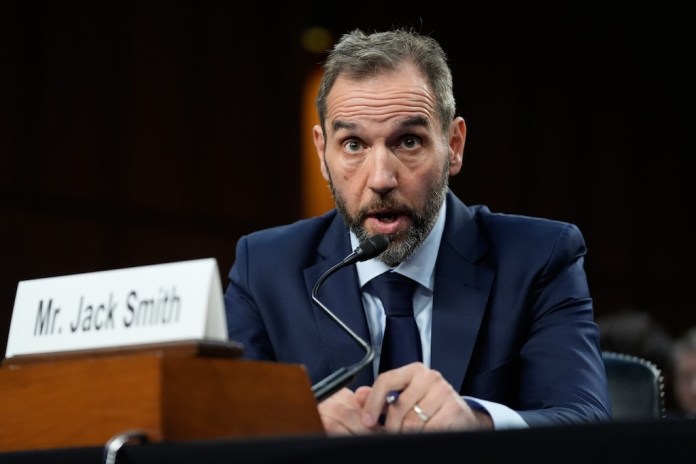
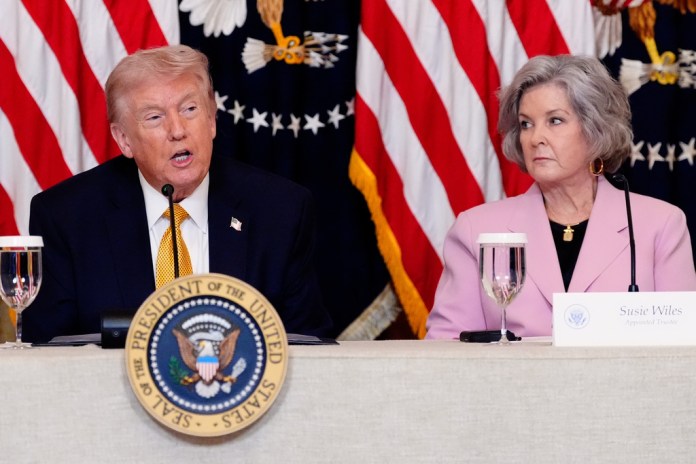
Former special counsel Jack Smith’s investigators tracked Susie Wiles’s phone contacts with Donald Trump’s attorneys, journalists, and political advisers during the classified documents investigation, according to records released Monday by the White House Government Transparency Task Force.
The task force, led by Just the News founder John Solomon, revealed recently declassified records showing investigators from the Biden administration-era inquiry examined communications involving at least five journalists, 21 defense attorneys, and several political advisers. Wiles, who led Trump’s 2024 presidential campaign, is now Trump’s White House chief of staff.
The monitoring was part of “Plasmic Echo,” the investigation into Trump’s alleged mishandling of classified documents, according to the task force. Investigators obtained phone metadata through a pen register, a surveillance tool that records information such as numbers contacted and the timing of calls, rather than the contents of conversations. The records, therefore, do not establish what Wiles and her contacts discussed.
One memo described investigators reviewing Wiles’s communications around May 19, 2023, the same day Smith’s office reported correspondence with Trump’s retained counsel. The purpose, according to the excerpt released by the task force, was “to document WILES’s telephonic communication” with Trump’s attorneys and members of his post-presidential office around that date.
Other records detailed earlier contacts. The task force cited a March 10, 2023, FBI memo containing three pages of Wiles’s phone contacts. A copy of those pages lists calls to people identified as “Staff 1” or “Lawyer 12,” along with the calls’ durations.
Most names were redacted, but the records identified contacts associated with reporters from CNN, the Washington Post, Politico, and Just the News, according to the task force.
Another memo described an April 7, 2023, FBI interview during which investigators showed Wiles four pages of communications records. A copy of the declassified FBI interview states: “Wiles received a call from phone number [redacted] resolving to the Washington Post at 12:02pm for 20 seconds.”
The inquiry extended to email records as well. The release included preservation requests sent to Google, Microsoft, MSN, and Yahoo on Feb. 3, 2023, asking the companies to retain Wiles’s email information. According to the task force, internal FBI emails throughout February detailed the frequency of her contacts with various people, using metadata rather than message contents.
Investigators also expressed interest in the social media activity and political endorsements of Robert O’Brien, Trump’s former national security adviser.
“It looks like O’Brien is active in endorsing Republican candidates,” an FBI email dated Feb. 6, 2023, said, according to the task force. “Can FBI please look at his social media and see if there’s anything of relevance we would want to ask him about?”
The subject line asked whether O’Brien had endorsed Trump again, according to the task force. Two days later, Smith’s team subpoenaed O’Brien as part of the investigation into Trump.
The White House portrayed those inquiries as inappropriate scrutiny of protected political and journalistic activity. An administration official quoted in the task force’s account said investigators had shown interest in reporting, social media, donations, and campaign advice.
The release also included records tracing the origins of the classified investigation into the documents and investigators’ preparations for a possible search and trial.
The March 2023 records of Wiles’s phone contacts came roughly a year after then-FBI Director Christopher Wray sent a memo to then-Attorney General Merrick Garland and then-Deputy Attorney General Lisa Monaco seeking approval for a “Sensitive Investigative Matter” that would become Plasmic Echo.
“I recommend you approve,” Monaco wrote at the end of the March 2022 memo. She signed a similar memo a month later, approving the investigation that would become Smith’s election interference case against Trump.
A June 1, 2022, email described an FBI official’s recommendation to pursue further discussions with Trump’s lawyers while continuing preparations for a possible search warrant. That email was sent just two months before the FBI raided Trump’s Mar-a-Lago resort home. The official argued that possibly sensitive documents should be secured while questions about their classification were addressed, according to the released email.
Later records addressed preparations for the anticipated trial involving classified documents.
An eye-raising memo released by the task force described a never-before-reported Nov. 3, 2023, meeting with former CIA Director John Brennan at CIA headquarters in McLean, Virginia. The memo revealed that the FBI and Smith’s personnel discussed possible expert testimony “related to defense information” for the then-forthcoming trial over the classified documents.
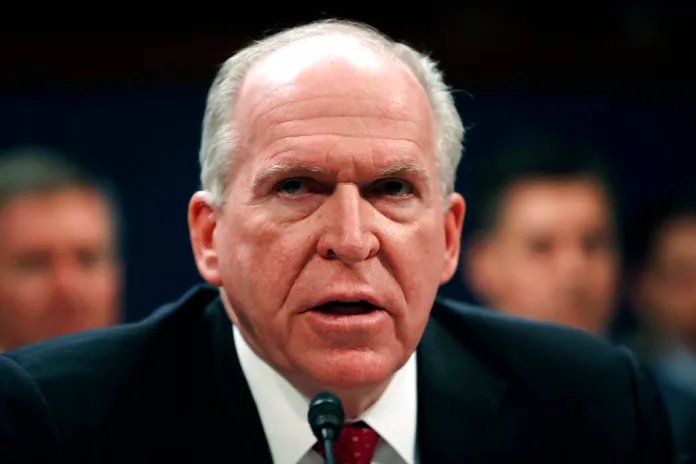
The memo said no documents were shown during the meeting. Notably, a page released alongside it indicated that Brennan took no notes that day.
The disclosure of these records comes one week after Sen. Chuck Grassley (R-IA) asked Smith during sworn testimony whether he had received consultation or counsel from Brennan.
HAWLEY CALLS FOR JACK SMITH TO BE DISBARRED
“Have you ever received any consultation or counsel by John Brennan, former CIA Director, whether during your time as Special Counsel or otherwise? If so, when and for what purpose?”
Smith gave an indirect response, saying, “I’ve never met John Brennan.”
Records declassified earlier in Trump’s presidency showed how Brennan pushed behind the scenes, without citing much credible evidence, for the intelligence community conclusions in 2016 and 2017 that formed the basis of the since-discredited Russia investigation.