
A ban on Arab parties running in the upcoming Israeli elections has been overturned, setting the stage for the ethnic minority groups to play kingmaker after ballots are cast.
The Israeli Central Elections Committee issued the ban in late September on the accusation that the Arab parties, which are organized into the United Arab List and Joint List alliances, reject the country’s existence as a Jewish, democratic state. They also voted to ban Hadash party lawmaker Ofer Cassif and Balad party leader Sami Abu Shehadeh on similar grounds.
The Israeli Supreme Court unanimously voted to overturn the ban placed on the Arab parties, ruling that the CEC failed to provide sufficient evidence that the groups carried such convictions.
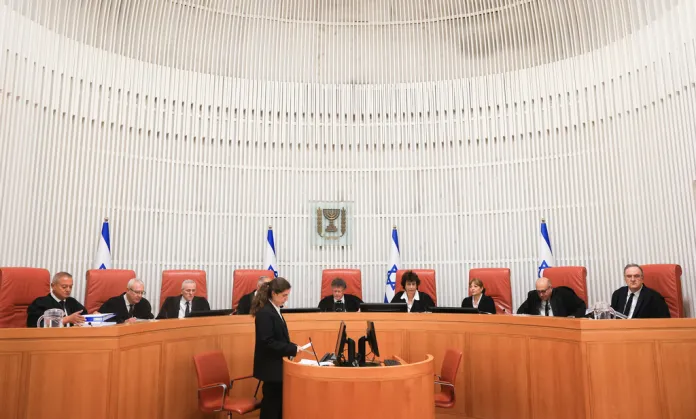
The CEC’s vacated bans were largely the result of lobbying from Prime Minister Benjamin Netanyahu’s Likud party and National Security Minister Itamar Ben-Gvir’s Otzma Yehudit party, who accused them of holding values that disputed the Jewish state’s existence.
Opponents have accused the prime minister and his allies of trying to remove the Arab parties due to the neck-and-neck polling ahead of the Oct. 27 election. Neither the right-wing nor the left-wing Jewish political alliance seems to have enough votes to form a government on its own, putting the Arabs in a position to potentially play kingmaker.
“This turn of events is more than a legal dispute: it also reveals Israeli Prime Minister Benjamin Netanyahu’s broader campaign strategy for the elections, given that he is unlikely to win an outright majority,” a Friday report from the Arab Center Washington DC reads. “Instead, he appears to be working to prevent anyone else from forming a new government, leaving him in office as caretaker prime minister until Israel holds another round of elections.”
Arab parties broadly serve as ethnic advocacy groups that primarily advocate their communities to receive better resources and accommodations from the Jewish majority, but maintain unpopular policy platforms when it comes to the future of the Palestinian territories.
United Arab List “supports the establishment of a Palestinian state with Jerusalem as its capital, with an end of the occupation and dismantling of the settlements,” according to the Israel Democracy Institute. “It also seeks the release of Palestinian prisoners and the right of return of Palestinian refugees. The party advocates the recognition of Israeli Arabs as a national minority and seeks to ensure their rights in a constitution.”
The Supreme Court also overturned the CEC decision to bar Cassif from running, though two of the judges dissented in favor of banning the party leader.
“This is no time for celebration or triumph,” Cassif said following the ruling. “Our right to run in the elections should be self-evident. In any democracy, political participation for all is the baseline default, not a privilege to be granted or revoked. The restoration of a basic democratic right is a necessity, not a cause for party.
“Above all, our primary focus, outrage, and ongoing struggle must remain centered on the disgraceful disqualification of my colleague and friend, Sami Abu Shehadeh. This remains the central issue—one that demands we pause, express our outrage, and fight with full force to ensure such political persecution never happens again.”
Shehadeh, however, was forced to withdraw his party leadership before an impending judgment from the Supreme Court would have banned him. The Balad party leader was urged to step down by Supreme Court President Yitzhak Amit, who warned him that the court would likely disqualify him anyway due to statements he made following the Oct. 7, 2023, attacks.

In the days after the massacre, Shehadeh wrote an article calling it a “significant historical event in military, political, and strategic terms” and the logical consequence of the “racist Israeli mentality, which treats Palestinians and Arabs with appalling arrogance and condescension.”
Leading up to the Supreme Court case, he argued that his analysis “may have been taken out of context,” clarifying that he is “completely opposed to acts of violence.”
Shehadeh ultimately stepped down as requested but lambasted the court in subsequent statements.
CO-PILOT STABBED DURING FLYDUBAI FLIGHT DESCRIBES LIFESAVING MOMENT HE OPENED COCKPIT DOOR
“The same Central Election Committee that disqualified me for an article refused to disqualify all the extreme right-wing racist politicians with all the serious files that were against them,” Shehadeh said Friday. “Committing a genocide is considered acceptable and legitimate, but talking about ending the occupation [of Palestinian land] and peace is considered illegitimate.”
Arab parties have only been part of a government coalition once, in 2021, a short-lived administration that collapsed within months.