
A wave of federal charges and military actions are rooted in President Donald Trump’s move to legally recognize drug cartels and gangs as foreign terrorists.
Bombings of alleged drug boats, at least two dozen prosecutions, and the military’s January capture of Venezuelan dictator Nicolas Maduro directly stem from Trump’s State Department listing criminal groups as “Foreign Terrorist Organizations,” court records and government statements show. Terrorism charges targeting Jalisco New Generation Cartel, or CJNG, led to two convictions over the summer.
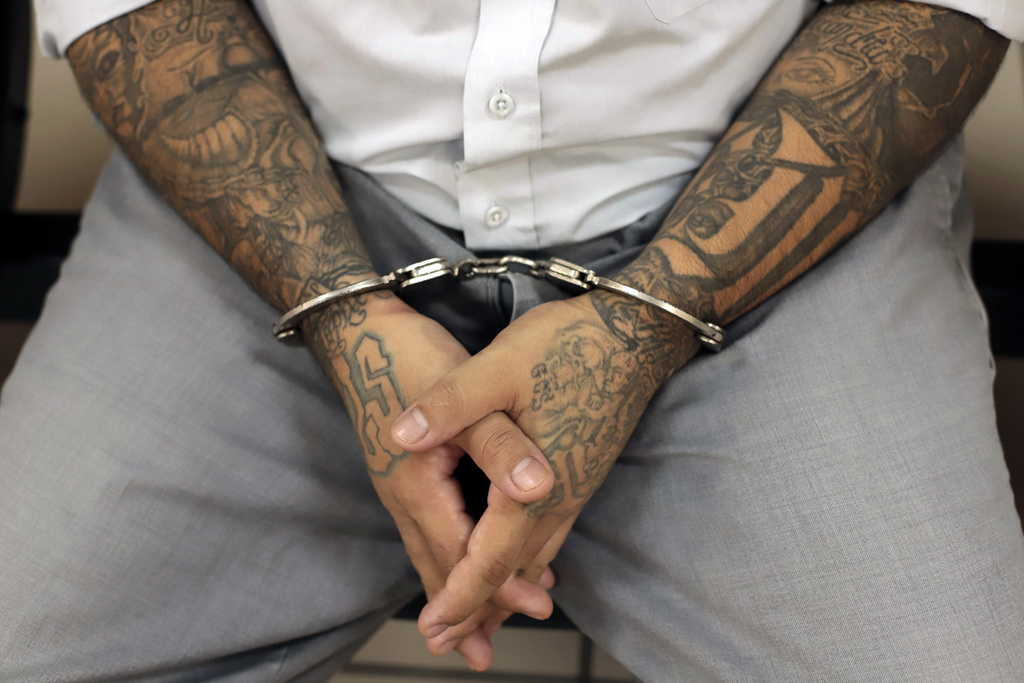
Trump promised a crackdown during the 2024 election cycle as officials reported transnational criminal networks attacking apartment complexes in Colorado, flooding deadly narcotics into the country, and exploiting loose immigration policies to traffic slaves at the U.S.-Mexico border. The State Department has now given terrorist designations to 21 related groups across the Caribbean and Latin America, including MS-13 and the Sinaloa Cartel, in response to a Day 1 executive order from the president.
The State Department previously limited its foreign terrorist list to political and ideological groups. But for decades, the United States has called out drug-related criminal cells for similarly using violence, intimidation, and corruption to destabilize democratic societies. Trump’s explicit use of the foreign terrorist label allowed federal agencies to treat America’s cartel and gang threat with harsher methods usually applied against Islamic terrorism.
“The Department is fully committed to taking appropriate action against foreign groups engaging in terrorist activity to prevent such groups from obtaining the resources and support needed to undertake such terrorist activity,” a State Department spokesperson told the Washington Examiner when asked if the list might grow. “The Department’s designation of 21 violent cartels and gangs in our hemisphere as Foreign Terrorist Organizations and Specially Designated Global Terrorists has demonstrated the Administration’s commitment to eliminate the threat posed by these groups.”
Trump is also urging other countries to label transnational crime groups as terrorists under their own systems, and “some have already done it,” Secretary of State Marco Rubio told reporters Wednesday.
Boosting legal penalties
The Department of Justice has charged alleged associates of Tren de Aragua, the Sinaloa Cartel, and CJNG, with material support for terrorism due to Trump’s sanctions against the groups. The defendants are accused of that crime for allegedly providing resources that enable the organizations’ harmful activities, along with other charges.
Following the World Trade Center and Oklahoma City bombings, Congress and then-President Bill Clinton authorized the State Department to designate foreign terrorists in the 1990s and allowed prosecutors to bring material support charges. Other laws after the 9/11 attacks made the crime punishable by up to 20 years in prison or, if it causes death, a life sentence.
The foreign terrorist list provides “the basis for indictments of those materially supporting the FTO in any way and instituting sanctions on any foreign entity involved,” Ryan Mauro, a counterterrorism expert at the Capital Research Center, told the Washington Examiner.
“My understanding is that with the gangs [and] cartels, any prosecution has to be more narrowly focused on a person’s involvement in a specific crime as opposed to more general involvement,” said Mauro, who founded the national security think tank Mauro Institute.
A Mexican national pleaded guilty in August to conspiring to provide material support to CJNG after prosecutors said she trafficked guns and grenades in Texas for the cartel’s benefit. The defendant “knew CJNG engaged in terrorist activities, including hostage taking, committing assassinations, and using explosives, firearms, and weapons in support of these activities,” prosecutors said.
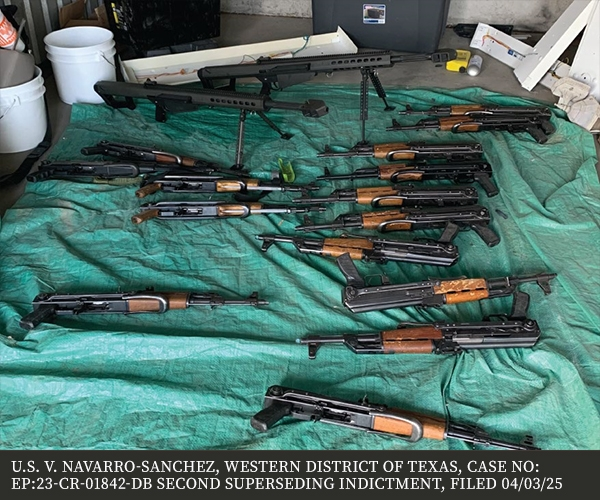
The case was the first terrorism prosecution related to CJNG, according to prosecutors. “This designation makes available much stronger criminal charges in the fight to secure our nation’s borders,” the DOJ said when announcing an indictment against her in May 2025.
Prosecutors also won a guilty plea in June for a Chinese national extradited from Guatemala who helped “smuggle multi-kilogram loads of cocaine into the United States,” according to the DOJ. He pleaded guilty to providing material support to CJNG.
‘They should be killed, exiled, or detained’
Elevating transnational criminals to a terrorist threat could have another consequence for the U.S. down the road: more interventionist foreign policy, Mauro told the Washington Examiner.
“I have reservations because it is such a big step towards being a global policeman, but if they are linked to FTOs or State Sponsors of Terrorism, I would consider them to be involved in terrorism,” he said. “Terrorists and even governments like Iran and Russia use organized crime groups, drug traffickers, and other criminals to do their work for them, and it’s important to treat them as one network when that happens.”
The material support for terrorism charge bolstered the DOJ’s indictment of Maduro, who was seized in Caracas in January and brought before a New York federal court for an alleged “Narco-Terrorism Conspiracy” and other crimes. The DOJ accuses the socialist leader and others of material support for Tren de Aragua, Cartel del Noreste, the Sinaloa Cartel, and Marxist rebel groups that the State Department sanctioned before Trump’s second presidency.
“In sum, [Maduro] and his co-conspirators have, for decades, partnered with some of the most violent and prolific drug traffickers and narco-terrorists in the world, and relied on corrupt officials throughout the region, to distribute tons of cocaine to the United States,” says the DOJ’s indictment, which builds on charges from 2020. Maduro pleaded not guilty to the charges and remains detained in New York.
The terrorism sanctions also criminalize financial transactions with the banned groups, adding to the existing legal pitfalls for banks if they facilitate money for them.
In addition to deploying troops for Maduro’s capture, Trump’s military has bombed numerous boats in the Caribbean Sea and eastern Pacific Ocean on suspicion of being drug trafficking vessels. The Pentagon’s operation specifically targets “drug cartels that the President has named as designated terrorist organizations,” according to a July federal report to Congress.
Critics question the legality of the fatal bombings, while the Trump administration argues they align with the Constitution and America’s right to self-defense.
HOW CHARLIE KIRK’S MURDER DROVE TRUMP’S CRACKDOWN ON ‘RADICAL-LEFT LUNATICS’
Trump said the number of strikes has reached “dozens” and curbed “97% of the drugs coming in to the ocean” in a Tuesday speech to the U.N. General Assembly. He also raised the threat of treating suspects as “enemy combatants,” a term the Bush administration used after 9/11 to detain captives without charges.
“The cartels are the ISIS of the Western Hemisphere — not good people,” Trump told the roomful of world leaders. “They are enemies at war with civilization, using murder, rape, torture, and extortion as instruments of terror. Like ISIS, they should be killed, exiled, or detained as enemy combatants without the possibility of release, which is what we’re doing.”