
Flock Safety said Wednesday it has tightened the rules for searching its database of billions of license-plate scans ahead of a Senate hearing set to scrutinize whether the company’s rapidly expanding surveillance network has outpaced meaningful safeguards.
At the outset of the hearing, Sen. Josh Hawley (R-MO) said Flock issued him a letter saying it changed the information police officers and other users must provide to justify searches. Users were already required to state a reason, but the company acknowledged that the old free-text system yielded explanations that were not always specific.
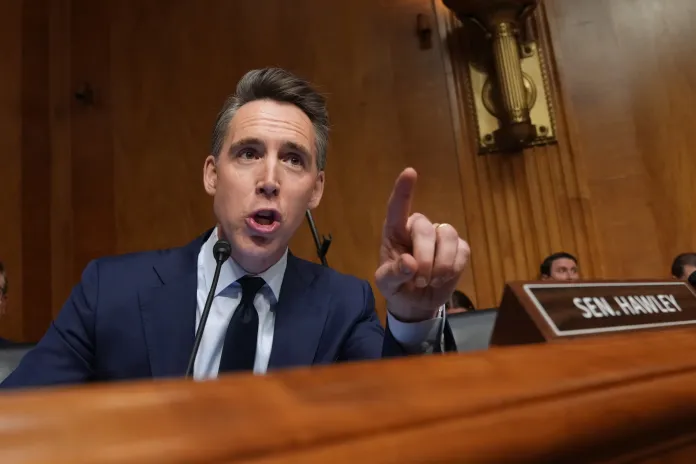
“Flock has admitted that until very recently, there were basically no curbs or restrictions on which of these subscribers, so to speak, could search their databases, what they could do with the images, how long the images were kept, or what other uses they were put to,” Hawley said Wednesday afternoon.
The concession made Wednesday, first reported by the Wall Street Journal, arrives as the Senate Judiciary convened a subcommittee hearing examining Flock’s AI-powered camera network and the possibility of abuse. Notably, the CEO of Flock was absent for the hearing in Washington D.C., which also invited owners of similar surveillance technology, including the companies Axon, Motorola, and Verkada.
The Atlanta-based company says its cameras scan roughly 20 billion license plates a month. Hawley says the network includes about 120,000 cameras across 49 states.
That scale, Hawley argued, has created a private surveillance dragnet with extraordinary reach. The cameras do more than record plates. They log vehicle make, model, color, location, and time, while searches can reportedly isolate details including damage, roof racks, and bumper stickers. Users can trace a vehicle across jurisdictions and assemble what Hawley called a “pattern of life” from records involving people who may never have been suspected of a crime.
Flock has portrayed its tools as critical to public safety and says it is improving privacy protections. But the company’s decision to impose more structured search justifications underscores a central criticism, that its access to a nationwide trove of vehicle data was previously governed by vague, easily satisfied explanations.
NORTHERN VIRGINIA CITIES TAKE A STEP BACK FROM FLOCK CAMERAS AFTER COMMUNITY OUTRAGE
Hawley has questioned whether customers who buy a camera and a subscription can gain access to a database far larger than their own community’s footage, with too few restrictions on who searches it, why they search it, and how long records are kept.
The hearing will also examine competitors such as Axon, Motorola, and Verkada, and more broadly, whether constitutional privacy protections can withstand a surveillance system built to catalog the movements of millions of U.S. residents.