
A United Nations watchdog group is accusing the supranational body of conducting a willfully ineffective and handicapped reform of its Palestinian relief agency.
The United Nations Relief and Works Agency for Palestine Refugees in the Near East has issued periodic updates since 2024 on reforms suggested by an independent investigative body following accusations from Israeli leadership that the agency was employing members of Hamas.
UNRWA asserts that it has thus far implemented 41 of the 50 reforms suggested in the aftermath of the scandal to ensure political neutrality, but independent oversight group UN Watch is now accusing the agency of fudging the changes suggested by lead investigator former French Foreign Minister Catherine Colonna.
“Colonna’s report made 50 recommendations, identifying serious deficiencies involving staff vetting, politicized union, educational content and misuse of UNRWA facilities,” the September “Report Card on UNRWA Reform” said. “Two years later … UNRWA reports 41 of Colonna’s 50 recommendations are completed or close. This figure substantially overstates actual reform.”
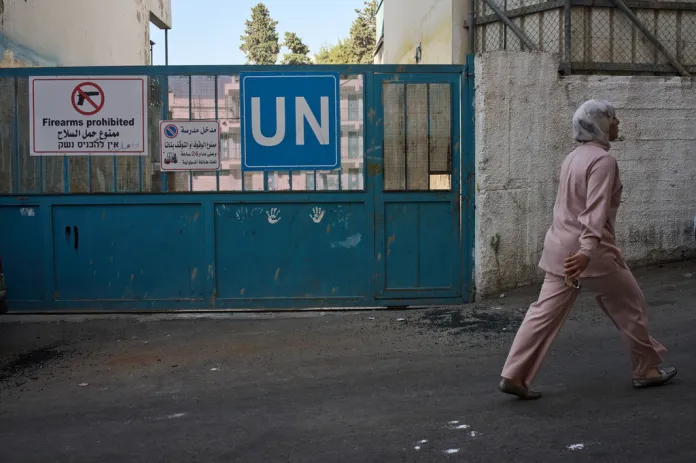
It continued: “UNRWA counts policies, training, pilot programs, drafted rules and other administrative milestones as completed recommendations even where the prescribed measures have not been fully implemented or the underlying terrorism problems remain.”
UN Watch accuses UNRWA of failing to demonstrate any mechanism for methodically screening employees for ties to Hamas.
The report card cited as an example the case of Imad Yousef al Samhouri, an UNRWA principal who was eulogized as a martyred soldier by Hamas after he was killed by Israel in 2025 — the U.N. has commemorated al Samhouri as a member of staff killed in the conflict without acknowledging his status within Hamas.
Additionally, the report contends that UNRWA educational staff continues to perpetuate material glorifying terrorism and martyrdom, promoting violent jihadis, and conveying antisemitic narratives. The report card offered as an example an UNRWA union page mourning the death of fellow educator and Hamas militant Nabhan al Amsi.
“UNRWA has graded its own homework and awarded itself high marks,” UN Watch Executive Director Hillel Neuer said on Monday. “But issuing a policy is not the same as enforcing it. Drafting a plan is not the same as implementing it, and closing a recommendation does not mean that the underlying problem has been solved.”
He added: “On paper, UNRWA reports sweeping progress. On the ground, its employees continue to be exposed as members and supporters of terrorist organizations, hateful educational content persists, and Hamas-dominated unions continue to obstruct neutrality and discipline.”
Israel accused UNRWA in 2024 of employing a dozen individuals who were tied to the Oct. 7 terrorist attacks. UNRWA Commissioner-General Philippe Lazzarini launched an investigation that found enough evidence to terminate nine UNRWA employees.
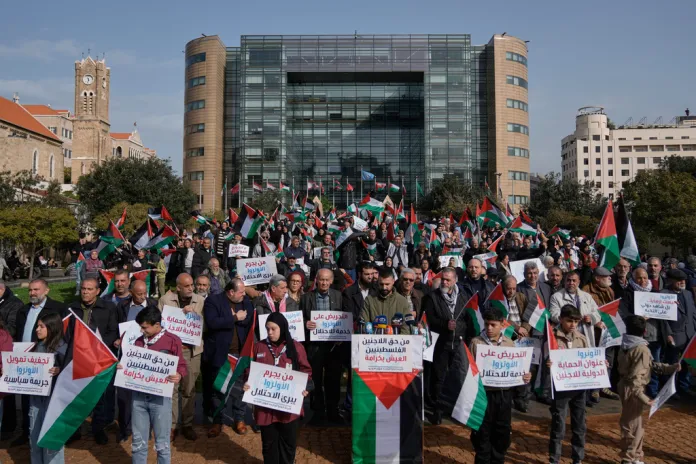
In June, the U.N. ordered the termination of a further 70 UNRWA employees due to Israeli claims that they maintain connections with Hamas. The U.N. clarified that their termination was “not part of a disciplinary process and does not constitute in any way a validation of the claims made against them.”
“The decision was taken in the interests of the Agency as provided for by UNRWA’s legal framework. Its purpose is to mitigate safety and security risks for the refugees the Agency serves under its mandate and for UNRWA personnel and premises,” the U.N. stated.
IAEA REPORTS IRAN NUCLEAR PROGRAM TO UN SECURITY COUNCIL FOR BREACHING NUCLEAR AGREEMENT
Last week, a previously unpublished USAID report from December was leaked, showing the U.S. agency’s independent inspector general found the U.N.’s investigation was intentionally hamstrung.
The U.S. government report found “major deficiencies” in the U.N.’s internal probe that ultimately investigated only the narrow question of whether UNRWA employees participated in Oct. 7 — and “did not review whether the UNRWA staff members were current or former members of Hamas.”
The report also found that the characterization of UNRWA employees’ termination — lacking a conclusive declaration of Hamas ties — meant that “absent robust vetting protocols, the likelihood for recirculation of these individuals into the aid sector is very high.”