
Gloria Steinem, the pioneering second-wave feminist leader, journalist, and activist who helped reshape the American women’s movement, died Wednesday at age 92, her foundation said.
Steinem, who spent decades at the forefront of the fight for women’s equality and abortion rights, remained publicly engaged in political and social issues into her 90s. She received some of the nation’s highest honors, including the Presidential Medal of Freedom, the country’s highest civilian honor.
“A feminist is anyone who recognizes the equality and full humanity of women and men,” Steinem famously said.
Steinem died peacefully on Wednesday at her home in New York, surrounded by people who loved her, according to a statement posted to her official Instagram account. The foundation did not disclose a cause of death.
“Gloria’s near-century on earth were years well-lived, and she continued working for equality until the very end,” the statement said.
Steinem was born March 25, 1934, in Toledo, Ohio. She spent much of her childhood traveling across the country with her father, a traveling antique salesman, alongside her older sister. Her mother struggled with mental health problems at a time when many doctors were unwilling to treat her, leaving Steinem to take on significant responsibilities within the family from a young age.
After graduating from Smith College, an all-women’s liberal arts college, she became pregnant at 22 while traveling. She received an illegal abortion in London and kept the experience private for many years.
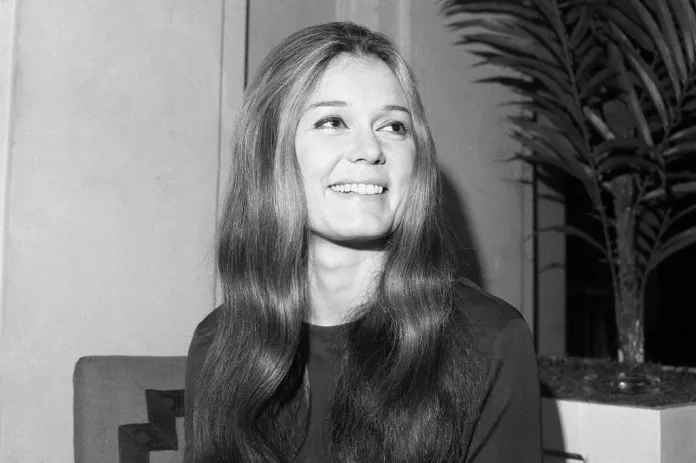
Steinem’s abortion would help shape her lifelong activism for abortion rights.
In a 2019 interview, Steinem pushed back against the framing of the abortion debate as a battle between those who are “pro-choice” and “pro-life,” arguing that the language failed to capture the circumstances surrounding many abortions.
“Nobody would choose one if they didn’t have to,” she said.
Steinem’s journalism career first attracted national attention in 1963, when she went undercover as a Playboy bunny at the Playboy Club in New York. Her two-part, diary-style expose, published in Show magazine, detailed the poor working conditions and treatment of female employees.
The reporting established Steinem as a journalist and helped launch the career that would eventually make her one of the most recognizable figures in the feminist liberation movement.
In 1968, she became a founding editor and political columnist for New York magazine. Her 1969 essay, “After Black Power, Women’s Liberation,” further cemented her role as a leading voice in the emerging women’s movement.
“Liberation isn’t exposure to the American values of Mom-and-apple-pie anymore … it’s the escape from them,” she wrote.
In 1971, Steinem co-founded Ms. Magazine, which initially appeared as an insert in New York magazine before becoming an independent publication. The magazine quickly became an influential platform for the women’s movement. But some slammed the magazine for its negative portrayal of women in the home.
Phyllis Schlafly, a conservative activist who vigorously campaigned against the Equal Rights Amendment in the 1970s, denounced Ms. Magazine.
“It is anti-family, anti-children, and pro-abortion,” Schlafly wrote. “It is a series of sharp-tongued, high-pitched whining complaints by unmarried women. They view the home as a prison, and the wife and mother as a slave.”
Steinem challenged traditional expectations surrounding marriage and relationships in her own life. For years, she joked about her decision to remain unmarried, famously saying, “I can’t mate in captivity.”
But in 2000, at 66, Steinem married David Bale, the father of actor Christian Bale. The marriage was short-lived as Bale died of lymphoma three years later.
When asked later why she had changed her mind about marriage, Steinem rejected the idea that her views had changed.
“I didn’t change. Marriage changed,” she told National Geographic.
“If I had married when I was supposed to get married, I would have lost my name, my legal residence, my credit rating, many of my civil rights,” she added. “That’s not true anymore. It’s possible to make an equal marriage.”
Steinem was also deeply involved in electoral politics. In 1971, she co-founded the National Women’s Political Caucus, an organization focused on increasing the number of women in elected and appointed office. She was also arrested outside the South African Embassy in Washington, D.C., in 1984 while protesting the country’s apartheid system.
Throughout her later years, Steinem remained an outspoken critic of conservative politics and President Donald Trump.
INSIDE THE LEFTIST NETWORK WORKING TO SABOTAGE TRUMP’S DC PROSECUTIONS
“The most painful criticism or attacks come from people who share your values, not people who don’t share your values,” she told the New York Times.
“If Trump spoke well of me, I would shoot myself,” she added.