
Vermont voters scanning this week’s Republican primary ballot may have wondered whether they were seeing double — or triple, or even quadruple.
There, appearing four times, was candidate H. Brooke Paige.
The 73-year-old Republican, known for his bow ties, hats, and persistent presence on Vermont ballots, was running for secretary of state, treasurer, attorney general, and auditor.
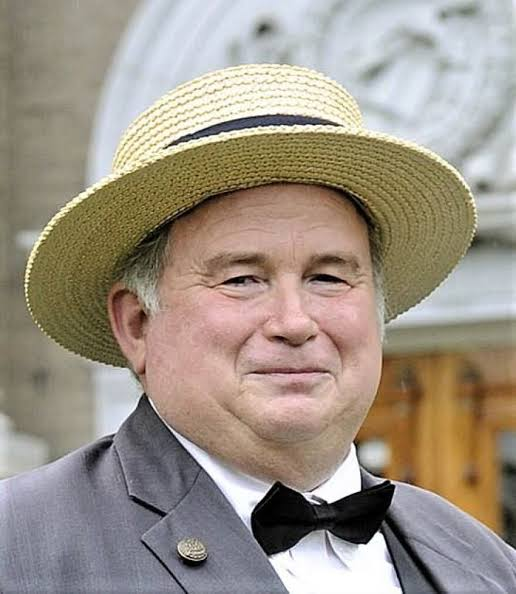
He won all four.
No, Paige does not expect to become Vermont’s first four-office holder.
Instead, he has spent the past decade turning an obscure feature of Vermont election law into one of the Republican Party’s strangest candidate-recruitment strategies: Run for everything, win the nominations, and then make room for someone else.
Paige calls it an electoral relay race. He runs the first leg. If another Republican is willing to take the baton, Paige steps aside before November.
“I’m the guy who gets us to the starting line,” Paige told the Washington Examiner.
The strategy was born out of frustration after the 2016 election, when Vermont Republicans struggled to field candidates for several statewide offices.
That year, no Republicans filed for races including secretary of state and treasurer. Because Vermont allows voters to participate in either party’s primary, Democrats were able to cross over and vote in the Republican contests. More than 1,000 did so, writing in the names of Democratic incumbents.
The result was an electoral oddity: Democrats won the Republican nominations, allowing some Democratic incumbents to appear on the November ballot as both the Democratic and Republican nominees.
Paige thought the whole thing was absurd and made the GOP look foolish.
He approached state Republican leaders and described the situation as “a glaring problem and an embarrassment to the party.”
Then he started looking for a way around it.
He found one in a combination of Vermont constitutional and election law provisions that allowed him to seek multiple statewide offices, collect the necessary signatures, and win Republican nominations. He could then withdraw from most races after the primary, allowing the state party to nominate replacement candidates for the general election.
One time he tried it, Paige went much further than four offices.
He recalled sitting down with David Sunderland, then the Vermont Republican Party’s executive director, after the 2016 election. The party had few candidates and even fewer obvious solutions.
“We were sitting there and going, ‘We can’t let this happen again. What on earth are we doing here? We look like fools,’” Paige recalled.
Sunderland and another party official told him that having a candidate — even a “warm body on the ballot” — was better than relying on a write-in campaign.
Then, Paige said, they essentially permitted him to take matters into his own hands. And so he did.
“All you need are 500 signatures for each of these offices,” Paige said.
So he started collecting them.
First came four statewide offices. Then he realized the party also lacked candidates for the U.S. House and U.S. Senate. He went after those, too.
Then the party needed someone for lieutenant governor.
“So at one point I was running for seven offices,” Paige said.
Since then, the strategy has become his calling card. This year, Paige won the Republican nominations for treasurer, attorney general, auditor, and secretary of state. He plans to withdraw from the first three.
Vermont Republicans are scheduled to meet Saturday to determine whether qualified candidates are ready to take over the nominations Paige secured. The state Republican committee can then select replacement candidates for the November ballot.
Paige plans to stay in the secretary of state race, the one office he actually wants, and that is where his unusual ballot stunt becomes a more conventional campaign.
Paige is challenging Democratic incumbent Sarah Copeland Hanzas, and the secretary of state’s office is particularly important to him because of its role in administering elections.
He opposes Vermont’s open primary system and early voting — two features of the state’s election system that he has spent years criticizing.
For Vermont Republicans, however, Paige’s strategy is less about election law eccentricity than a practical problem confronting a party that has struggled to recruit statewide candidates.
Republican Party Chairman Paul Dame told Vermont Public the party is focused heavily on recruiting candidates for legislative races and building on gains Republicans made in 2024. Democrats have controlled both chambers of the legislature since 2005, and just two Republicans have been elected statewide since 2011, with Gov. Phil Scott (R-VT) serving three terms as lieutenant governor before his election as governor in 2016.
Scott, however, campaigned aggressively for down-ballot candidates in 2024, helping Republicans break supermajorities in both chambers and an upset in the lieutenant governor contest, a rare bright spot for the state party.
But statewide contests are harder to fill because they require considerably more money, time, and organization than a legislative race, especially when a candidate is taking on an incumbent. Paige’s unconventional approach buys the party something it badly needs: time.
“It’s helpful to keep those slots open, so if we do get a candidate that comes forward, we can pretty much guarantee we can get them on the ballot in November using Brooke’s approach,” Dame said in the Vermont Public interview.
In other words, Paige runs so someone else can have a chance to run.
It is an unusual solution to an ordinary political problem.
And it has turned one Vermont Republican into a one-man candidate factory — at least until the party finds someone willing to take his place.
For Paige, though, there is ultimately only one race that matters: the secretary of state contest.
DID BAD POLLS MAKE DSA MORE APPEALING THAN IT WAS?
That is where the four-time candidate on the primary ballot becomes what he always intended to be: one candidate, one office, and one Democratic incumbent to beat.
In the past, he’s secured about 30% to 40% of the vote in the general election, though he hopes this time might be different.