
The New York City Council has opened an investigation into four major prediction market platforms, alleging they may be using false, deceptive, or abusive marketing tactics to target young people.
City Council Speaker Julie Menin sent letters to Kalshi, Polymarket, Coinbase, and Gemini notifying the companies of the investigation and requesting information about their marketing practices.
According to a City Council memo, the inquiry will examine whether New York consumers need additional protections from possibly abusive marketing by prediction market platforms.
“Prediction markets aggressively entice consumers to bet and wager on sports, politics, culture, weather, and pretty much anything,” Menin said. “We refuse to let New Yorkers, especially our young people, become collateral damage.”
Menin said the council would use its “full power” to protect New Yorkers from deceptive and predatory marketing. While the council does not have the authority to bring criminal charges, the investigation will examine whether additional consumer protection legislation, enforcement, public education campaigns, health measures, or funding are needed to protect city residents.
The letters also cited a June Wall Street Journal report alleging that Polymarket used or allowed social media influencers to advertise fake bets in an effort to attract young users to the platform. According to the report, college-aged influencers placed bets that generated large payouts, though the markets were allegedly not real.
“Understanding whether such marketing practices are prevalent within the prediction market industry is critical to determining what legislation, regulations, and programs are needed,” the council said. “The fact that key marketing restrictions and consumer protections that govern casinos and online sports betting do not currently restrain prediction markets adds to the necessity and urgency of the Council’s inquiry.”
The investigation comes as New York Attorney General Letitia James is separately suing Kalshi, Coinbase, and Gemini, alleging the companies are operating illegal gambling platforms in the state. There is no ongoing litigation against Polymarket in New York.
The lawsuit has drawn a sharp response from the Commodity Futures Trading Commission, which oversees federally regulated derivatives markets. CFTC Chairman Michael Selig criticized the state’s legal challenge and pledged that the agency would “continue to defend its jurisdiction.”
“Rather than seek reasoned answers from the courts, Letitia James and New York seek to force an unprecedented, sudden shutdown of prediction markets nationwide,” Selig said on social media following the lawsuit.
At the center of the broader legal battle is whether prediction market event contracts qualify as “swaps” or other derivatives under the Commodity Exchange Act, placing them under the CFTC’s jurisdiction, or whether states can regulate them as gambling.
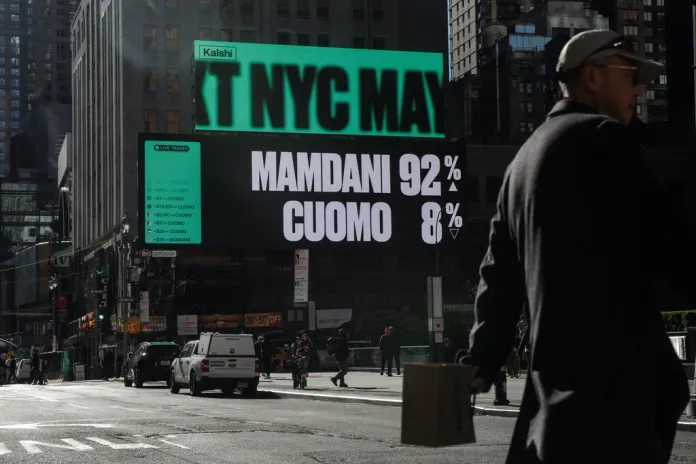
Kalshi and other prediction market companies argue that their platforms differ structurally from traditional sports betting because users trade contracts against one another rather than wagering against a house.
“Kalshi is different from sports betting from the way our exchange operates on a structural level, which has significant effects on our products and business model,” a Kalshi spokesperson told the Washington Examiner. “Sports betting operates like a casino, where everyone is playing against the ‘house.’ Kalshi works like the stock market, with customers trading against other customers. Unlike a casino, Kalshi doesn’t win when our customers lose.”
On Tuesday, the CFTC announced that it was exercising emergency authority to order Kalshi to “continue to operate in accordance with the Commodity Exchange Act’s Core Principles” as litigation plays out following James’s complaint.
Prediction market lawsuits set stage for major court battles
“The New York State Attorney General does not set the rules for national derivatives markets,” CFTC spokeswoman Brooke Nethercott said. “That’s the Congressionally mandated role of the CFTC. As stated in the order, Kalshi is required to operate as normal to maintain market integrity and stability.”
Kalshi, Polymarket, and Gemini are all headquartered in New York City. Coinbase is headquartered in Texas but announced earlier this year that it plans to expand its New York workforce to more than 1,000 employees.