
The Department of State has revoked the visa of Brazil’s ambassador, striking back at the Brazilian government’s refusal to approve Washington’s own appointed ambassador to the country.
Brazilian ambassador Maria Luiza Ribeiro Viotti was stripped of her visa on Wednesday, suspending her ability to represent the country. The decision was explicitly made in retaliation for Brazil’s refusal to recognize the appointment of former Florida House speaker Danny Perez as U.S. ambassador.
“We communicated continually with the Brazilian government for weeks and have given the Brazilian government every opportunity to do the right thing, yet they have continually delayed and obfuscated,” a State Department spokesman said, calling it a “reciprocal action.”
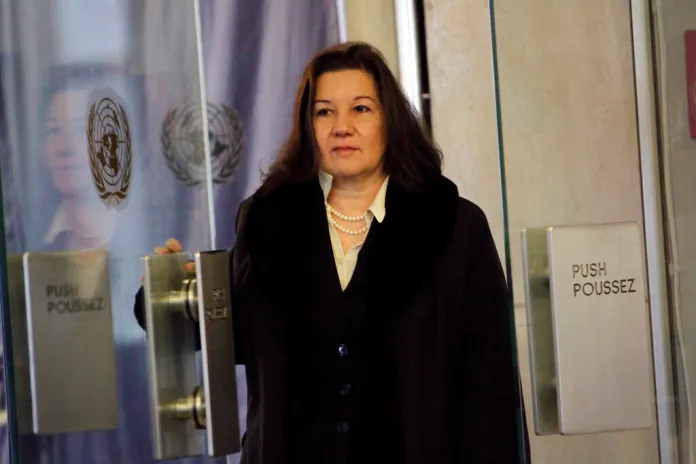
The State Department has said that Viotti is not being expelled from the United States but “should the ambassador leave the country, she would need to reapply for a visa,” infuriating Brazilian President Luiz Inacio Lula da Silva.
“Today’s decision is not an isolated incident,” a spokesperson for Lula said following the decision. “It is part of a deliberate escalation of hostile measures against Brazil, motivated by ideological reasons.”
Lula has repeatedly frustrated the White House by refusing to confirm Perez until after the nation’s Oct. 4 elections. The State Department maintains that Viotti’s visa will be reinstated when Perez is approved.
Additionally, the Brazilian government rejected U.S. Assistant Secretary of State Riley Barnes and one of his aides from entering the country last month, with claims that the two diplomats “were planning to visit the country to cast doubts about the integrity of the Brazilian electoral system, in an unacceptable attempt to interfere in the national political process.”
The State Department said the diplomats were planning to meet with government leaders to discuss “election integrity” and that “any insinuation of a ‘ploy’ to undermine a democratic nation’s election is a baseless lie.”
President Donald Trump’s administration has grown increasingly comfortable weaponizing diplomatic credentialing against foreign nations perceived as undermining its political agenda.
Aurelien Lechevallier, French President Emmanuel Macron’s appointee as the next ambassador to the U.S., is caught in limbo as the State Department procrastinates his approval. He was slated to take office as ambassador next month.
The delay is believed to be a punishment against France after its diplomatic mission in Geneva, Switzerland, criticized the U.S. for siding with North Korea and Russia against renewing the mandate of United Nations High Commissioner for Human Rights Volker Turk.
“The US used to be a beacon of human rights. Not anymore,” the mission wrote on social media last month. “Today, it stands alongside North Korea, Nicaragua, Mali & Russia, isolated. And the world no longer listens to it.”
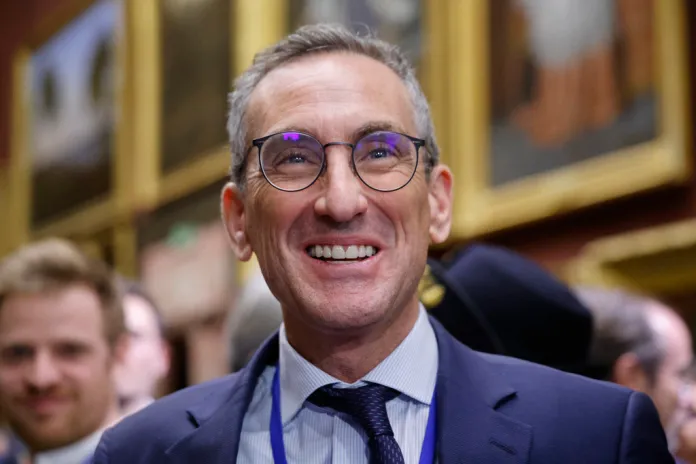
Deputy U.S. Ambassador Dan Negrea called France’s criticisms “politicized drivel” and called on them to “renounce their condescending and disrespectful rhetoric and behave in a manner commensurate with their seat on this council.”
“The United States is very disappointed in the irresponsible and disrespectful rhetoric from the French,” a State Department official previously told the Washington Examiner. “We are responding appropriately to their comments.”
US CONSIDERS REJECTING FRENCH AMBASSADOR APPOINTMENT AS COUNTRIES FEUD OVER UN AND HUMAN RIGHTS
The Brazilian elections could prove consequential for Trump’s geopolitical strategy of flipping leftist South American governments conservative.
Lula is currently polling ahead of his right-wing challenger, Flavio Bolsonaro, 44% to 39% in simulated second-round runoff polls. Three other candidates are running in the election, but none are currently polling above 5%.