
The Justice Department on Tuesday charged 19 defendants in alleged Philadelphia-area schemes that generated more than $4 million in fraudulent Medicare and Medicaid claims, while expanding its Northeast Health Care Fraud Strike Force into the city.
The defendants include home health aides, Medicaid recipients, and owners and employees of home care companies, according to the DOJ’s announcement. Officials alleged that some billed Medicaid for services that were never provided, including care purportedly delivered while aides or recipients were incarcerated, hospitalized, traveling overseas, or working other jobs.
The charges were announced alongside a partnership between the DOJ’s National Fraud Enforcement Division and the U.S. Attorney’s Office for the Eastern District of Pennsylvania. The new Philadelphia office will focus on healthcare-fraud schemes, particularly those targeting Medicaid home-care programs.
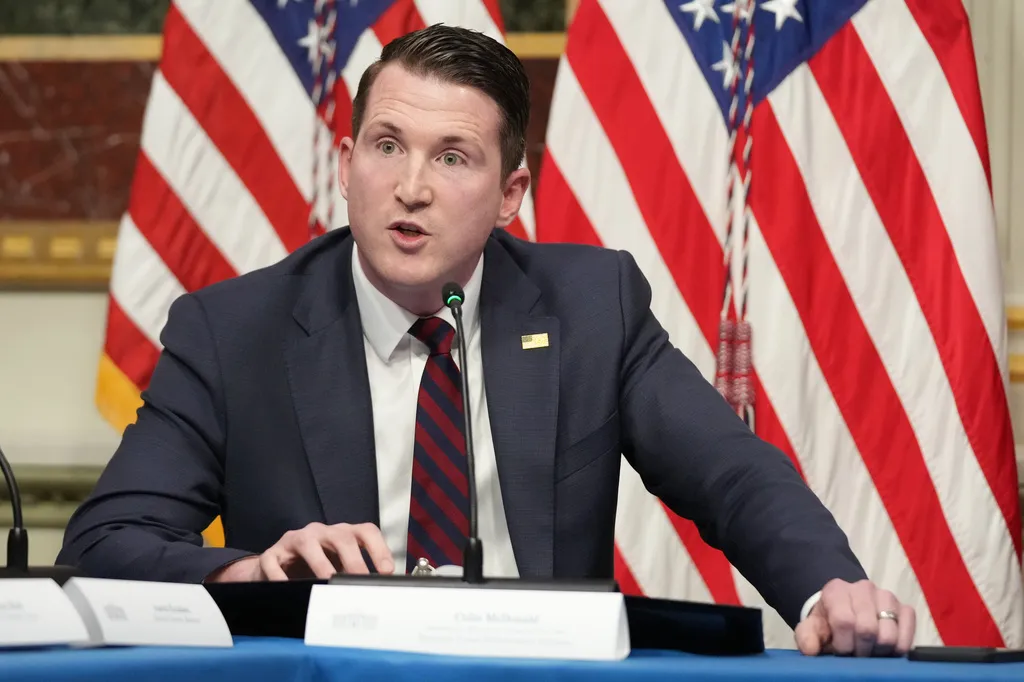
“Home care funding exists to assist America’s elderly and most vulnerable — not to fund schemes in which aides claim be providing care while incarcerated or vacationing in Miami and Saudi Arabia,” Assistant Attorney General Colin M. McDonald said in a statement. “Today’s charges and the expansion of our Northeast Strike Force into the Eastern District of Pennsylvania send a clear message to fraudsters in the region.”
Nationally, the Health Care Fraud Strike Force model has prosecuted more than 6,200 defendants who collectively billed federal healthcare programs and private insurers more than $45 billion, according to the DOJ.
The Philadelphia cases include allegations that four defendants submitted more than $440,000 in Medicaid claims for home health services that never occurred. Federal authorities also alleged that one defendant submitted claims for home care while traveling overseas, including on a trip to Miami documented in social media posts shared by the DOJ.

In another case, prosecutors alleged that a purported aide sought reimbursement while working as a ride-share and food-delivery driver. Officials also accused one home health aide of claiming to provide care to as many as seven Medicaid recipients simultaneously. The aide allegedly submitted more than 1,100 claims for over 24 hours of work in a single day, resulting in more than $1.2 million in Medicaid payments.
During a Tuesday press conference, Dr. Mehmet Oz, administrator of the Centers for Medicare & Medicaid Services, pointed to Pennsylvania’s personal-care billing data as a reason for heightened scrutiny. Pennsylvania ranks fifth nationally in average monthly payments both per beneficiary and per provider, he said.
We reviewed Pennsylvania’s personal care billing trends — their data raises concerns:
PA ranks 5th nationally in average monthly payment, both per beneficiary and per provider
— Dr. Oz CMS (@DrOzCMS) August 4, 2026
More than 96% of personal-care claims in the state are coded as “illness unspecified,” a designation Oz said makes it harder for CMS to track the services being provided and detect improper billing. The average payment per beneficiary exceeded $51,000, according to Oz.
“Medicaid fraud robs hardworking taxpayers, deprives vulnerable Americans of the care they need, and undermines the public trust that sustains our social safety net,” Oz said in a statement. “CMS will continue partnering with law enforcement to shut down these scams while establishing new anti-fraud safeguards that flag criminal activity before the money ever leaves the building.”
Tom Jones, president of the American Accountability Foundation, told the Washington Examiner the Philadelphia cases should prompt similar scrutiny of applied behavior analysis, or ABA, providers serving autistic patients. His organization has accused parts of the autism-therapy industry of inflated billings, fraudulent filings, and billing for care that was never delivered.
“That is precisely the machinery the ABA industry needs pointed at it,” Jones said, arguing that the strike force’s resources and CMS data could be used to investigate alleged phantom autism-therapy services. He credited the Trump administration’s fraud-enforcement push and said AAF would continue providing evidence it says supports additional investigations.
DOJ ANNOUNCES DATA SHARING AGREEMENT WITH STATES AFTER $350 MILLION IN FRAUD FOUND IN SOUTHEAST
The DOJ’s Philadelphia announcement involved alleged home-care fraud, not charges involving ABA services. But Jones pointed to prior federal concerns over questionable ABA billing and urged officials to apply the expanded strike force’s enforcement model to that sector.
The Philadelphia expansion follows recent Strike Force growth in California, Arizona, Nevada, Massachusetts, and Minnesota. The DOJ said its healthcare-fraud enforcement efforts discovered more than $15 billion in alleged losses in 2025 and more than $6 billion in 2026.