
Since the United States and Israel first struck Iran, the war has drawn in at least 14 other countries that were not original parties to the conflict.
Some are officially neutral, while others are vocal critics of the regime. Yet all have absorbed Iranian missile and drone attacks since the conflict began in February.
Israel has the most to gain through the war. Israeli pilots have flown thousands of combat sorties, including in the joint U.S.-Israeli operation that killed Supreme Leader Ali Khamenei. The country has also borne the brunt of Iranian missile strikes.
Yet Iran’s retaliation has not been confined to the U.S. and Israel alone. Iran has readily struck nearby countries, many of whom it maintained friendly relations with before the war.
Below is a breakdown of the Middle Eastern nations that have been entangled in the war since it began in February.
Israel

Israeli Prime Minister Benjamin Netanyahu has made a political career around being hawkish on Iran. During one fiery United Nations speech in 2012, Netanyahu held up a poster of a bomb with a lit fuse. He then took out a marker and implored the world to draw a “red line” on Tehran’s nuclear ambitions.
Trump, too, has spent years warning about Iran’s nuclear program. He was an early and vocal critic of President Barack Obama’s ill-fated nuclear deal. Yet critics of the war have claimed that Netanyahu forced Trump’s hand, allegations that the U.S. president has rebuffed.
“I heard that the other day for the very first time, I said, ‘He tricked me?’ I’m the one that started it because, again, I don’t wanna bore anybody, but I started it because we can’t let them have a nuclear weapon,” Trump told the New York Post in June.
The U.S. and Israel worked closely during the opening stages of the war. The two countries have a longtime intelligence sharing agreement, and American forces have helped shoot down Iranian missiles and drones headed for Israel. The U.S. has also parked refueling tankers at Tel Aviv’s Ben Gurion airport.
Israel has refrained from joining the current round of fighting over the Strait of Hormuz.
Jordan
The Jordanian military has not publicly participated in direct strikes on Iran. That hasn’t stopped the Iranians from striking Jordanian territory, however.
Jordan is home to Muwaffaq Salti Air Base, the site of the recent Iranian strikes that killed three U.S. service members and damaged several helicopters. The American personnel were assigned to the Army’s 55th and 57th Air Defense Artillery Regiments, according to the Department of War.
Iran-backed forces killed an additional three Americans in Jordan in 2024, when a Shia group in Iraq launched a Shahed attack drone at the Tower 22 military outpost. The remote outpost is located near the borders with Iraq and Syria.
Jordan has maintained its neutrality, with officials repeatedly insisting that Amman is not a party to the war unfolding across the Middle East. Yet the nation also hosts nearly 4,000 U.S. soldiers, according to a January congressional report, and has repeatedly shot down Iranian projectiles headed to Israel over its airspace.
The Iran war represents a delicate balancing act for Jordan. Amman has long feared that regional instability would boil over into the country, which relies on billions of dollars in U.S. aid. Yet Jordan is also home to a significant population of Palestinian refugees, and American priorities remain deeply unpopular. Only 12% of Jordanians view President Donald Trump’s foreign policy favorably, according to a 2025 survey.
Saudi Arabia
Saudi Arabia has served as a staging ground for U.S. military operations in the Middle East for decades, stretching back to the Gulf War in 1991.
The petro-state hosted 2,700 American soldiers as of June 2023, though that number has likely shifted with America’s changing posture in the region. The largest U.S. installation in Saudi Arabia is at the Prince Sultan Air Base, roughly 60 miles southeast of Riyadh.
The country has repeatedly faced Iranian drone and missile strikes. Two Iranian drones smashed into the U.S. embassy in Riyadh in March. The U.S. lost an E-3 Sentry early warning and control aircraft on the ground at Prince Sultan Air Base several weeks later.
The Iranians have also slammed Saudi oil infrastructure, which props up the country’s economy. In response, the Royal Saudi Air Force secretly struck Iranian targets in Iraq and in Iran itself. The Saudis have otherwise avoided directly ensnaring themselves in the war.
In response to Iranian attacks against tankers transiting through the Strait of Hormuz, the Saudis now export most of their oil from the Red Sea via their East-West pipeline.
Saudi interest in the war transcends recent military activity and economic disruption. Riyadh and Tehran have long engaged in a proxy war against each other, most notably after Saudi Arabia’s 2015 intervention against the Iran-backed Houthis in Yemen. The Houthis have escalated attacks on Saudi shipping through the Red Sea as Persian Gulf transit remains depressed.
The Saudis are also eager to move forward on a nuclear deal with the U.S. That deal, which has not yet been approved by Congress, could see American firms help build nuclear infrastructure in the Arab state. Trump, however, has made that deal contingent on Saudi Arabia agreeing to join the Abraham Accords.
Kuwait
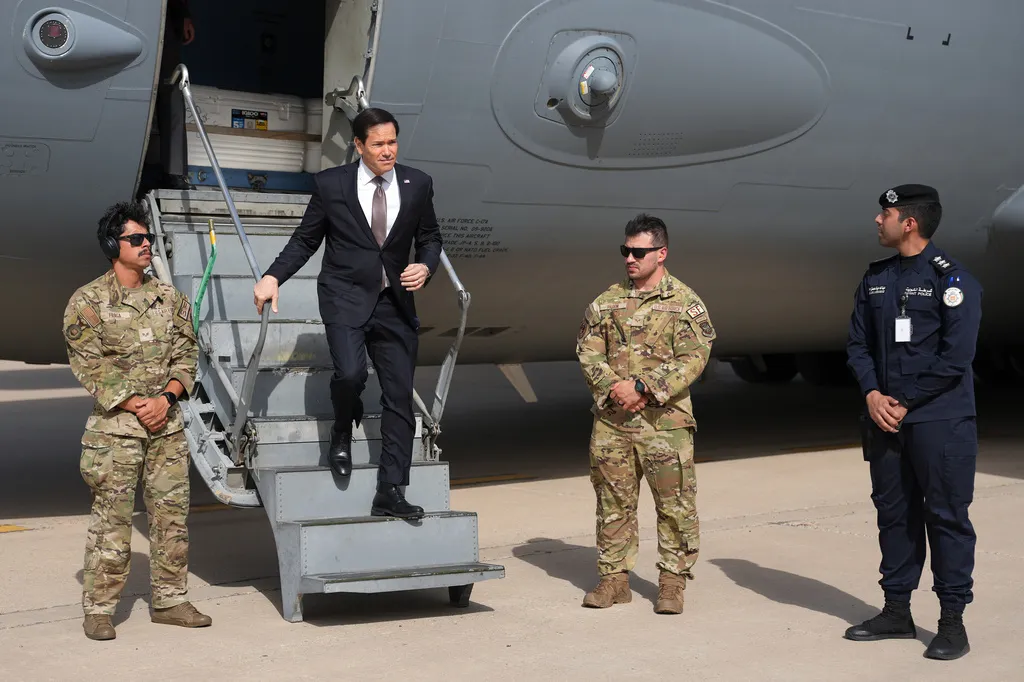
The U.S. military never fully exited Kuwait after the Gulf War. Instead, the two countries signed a defense cooperation agreement that has allowed the U.S. to station some 13,500 soldiers in the tiny country, according to the State Department.
The U.S. military operates out of several installations in Kuwait, including Camp Arifjan, Ali Al Salem Air Base, and Camp Buehring. Six U.S. Army Reserve soldiers died in a March strike at a tactical operations center when an Iranian drone evaded U.S. air defenses.
In another setback early in the war, a Kuwaiti jet mistakenly shot down three U.S. F-15E strike aircraft in March. CENTCOM chalked the incident up as an “apparent friendly fire incident,” and all six pilots ejected safely.
Kuwait’s economy, such as those of its neighbors, is reliant on energy exports. In recent weeks, Kuwaiti officials reported “severe damage” to the country’s oil and electricity infrastructure. Kuwait previously accused Iranian operatives of attempting to infiltrate an infrastructure development via a rented fishing boat in May. Iran has also targeted the Kuwait International Airport throughout the war.
In retaliation for repeated strikes on their territory, the Wall Street Journal reported earlier this week that Bahrain and Kuwait attacked drone and missile depots and other Iranian military sites early this month.
Bahrain
This Gulf archipelago has a lot to lose from the closure of the Strait of Hormuz. Bahrain’s largest company, Bapco Energies, declared a “force majeure” in March, a warning to customers that extraordinary circumstances could prevent it from meeting its contractual obligations.
Like countries across the region, Bahrain hosts a large U.S. military contingent. The U.S. Navy’s Fifth Fleet is headquartered at Naval Support Activity Bahrain in Manama. The base hosts roughly 9,000 soldiers and civilians, according to Department of War figures from before the war.
Bahrain and Kuwait engaged in joint strikes against Iran earlier this month, according to the Wall Street Journal. Bahrain has also floated diplomatic solutions to the conflict, including leading a United Nations resolution that would have called for opening the Strait of Hormuz. That resolution failed in the U.N.’s Security Council after Russia and China vetoed it.
Oman
Along with Iran, Oman controls one side of the Strait of Hormuz. Oman has historically maintained warmer ties to Iran than many of its Arab neighbors.
American military presence in the country is relatively new. The U.S. and Oman inked a deal in 2019 granting the U.S. Navy access to ports in Duqm and Salalah. Those facilities, located on the Arabian Sea, give the U.S. a footing in the Middle East that bypasses the Strait of Hormuz.
While Oman has tried to avoid coming to blows with Iran, it has not been spared from the war. Iranian drones and missiles have struck targets across the country. Ships transiting through the Strait of Hormuz near Omani waters have repeatedly been targeted by Iranian forces.
Oman has acted as a mediator between Washington and Tehran throughout the war. The country hosted a round of three ultimately unsuccessful talks leading up to the war. Oman this week proposed “voluntary” fees for ships transiting the Strait of Hormuz, though various solutions have been floated since February.
“They would like to control it; nobody’s going to control it,” Trump mused during a May Cabinet meeting. “It’s international waters. And Oman will behave just like everybody else, or we’ll have to blow ’em up. They understand that. They’ll be fine.”
UAE
Unlike Qatar, which has situated itself as a mediator in the war, the United Arab Emirates has historically taken a tougher stance toward Iran. Much to Iran’s frustration, the UAE normalized diplomatic relations with Israel in 2020.
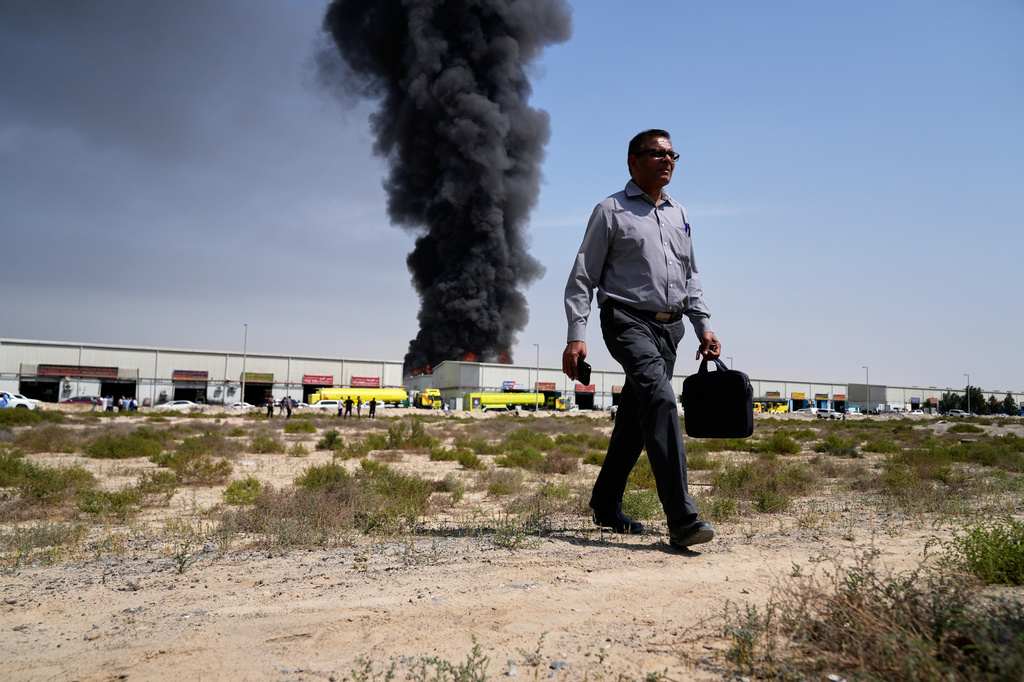
The UAE has intercepted hundreds of Iranian drones and missiles since February. Several have evaded air defenses and struck critical infrastructure, including Dubai International Airport and the Fujairah port. The UAE is home to al Dhafra airbase, which hosts personnel from the U.S., French, and Emirati militaries. That facility has been repeatedly attacked throughout the war.
The UAE has in recent years sought to diversify its economy away from its energy sector. Yet the war has disrupted Dubai’s booming tourism and transportation industries and has put a damper on the UAE’s energy production as tankers are unable to transit the Strait of Hormuz.
Like many of its Gulf neighbors, the UAE has engaged in secret, tit-for-tat strikes on Iran. The Wall Street Journal reported in May that the Emirati Air Force had been carrying out strikes in cooperation with the American and Israeli militaries, including at an Iranian oil refinery on Lavan Island. The war has brought the UAE and Israel closer together, with the Israelis having sent an Iron Dome missile defense system to the UAE in the war’s opening months.
Qatar
Qatar has positioned itself as a neutral third party in the Middle East. The Gulf nation is in a difficult position in maintaining both its diplomatic ties with Tehran and its security relationship with Washington.
That role has become more difficult as Iran has repeatedly struck Qatari territory since the war began. Qatar hosts Al Udeid Air Base, one of the most important U.S. military installations in the Middle East. That base, along with other American assets in Qatar, has repeatedly come under fire from across the Persian Gulf. The U.S. lost a valuable early-warning radar during one of those attacks.
The war has also spilled into Qatar’s energy sector. Iranian strikes affected facilities connected to Qatar’s major industrial zones, including Ras Laffan Industrial City and Mesaieed Industrial City. Those attacks forced QatarEnergy to declare a “force majeure” and halt some production of liquified natural gas. The company says that damage to its infrastructure could take years to repair, though Reuters reported in June that it could ramp production back up at its other facilities within a month.
Despite being targeted, Qatar has continued to call for de-escalation. The country has used its diplomatic back channels to both Iran and the U.S. to push for an end to the war. In a Tuesday statement condemning recent Iranian attacks on Jordan, the Qatari Foreign Ministry urged countries to refrain “from all actions that would expand the cycle of escalation” and return “to the path of dialogue and negotiations.”
Turkey
While Turkey is not at war with Iran, it has seen drone and missile incursions into its airspace. Nevertheless, the NATO member has gone to great lengths to avoid becoming a direct party to the war.
“Despite our repeated warnings, provocative steps continue to be taken against Turkey,” President Recep Tayyip Erdogan said in March. “No action should be taken that casts a shadow over our thousand-year-old neighborly and brotherly bond.”
NATO forces have repeatedly shot down missiles headed for Turkish territory. One Turkish soldier who was embedded with the Qatar-Turkey joint forces was also killed during a March helicopter crash.
The war has also threatened to undermine the tenuous peace process between Turkey and armed Kurdish groups. American and Israeli war planners had hoped for a Kurdish intervention in Iran, which has not yet manifested. Israeli media reported earlier this month that Erdogan had pressed Trump directly to prevent that possibility early in the war.
Azerbaijan
Azerbaijan borders Iran to its north and, as such, has avoided much of the shooting. Still, it has not managed to escape the war unscathed.
Early in the conflict, Iran launched drones at Azerbaijani territory on one instance in March. Those drones struck the Nakhchivan exclave, where they caused damage to Nakhchivan International Airport and impacted near a local school. The U.S. State Department called the strikes a “flagrant violation of Azerbaijan’s sovereignty and a needless escalation of Iran’s aggression.”
Also in March, Azerbaijani security forces said that they foiled several Iranian plots, including plans to attack a major pipeline, a local synagogue, and the Israeli embassy.
Azerbaijan maintains close security ties to Israel and Turkey, which puts it in an uncomfortable position with its southern neighbor. Yet Iran also contains a significant Azerbaijani minority, and the two countries maintain economic and infrastructure ties.
Syria
Syria is still reeling from a 14-year civil war, and the nation has mostly stayed out of the current war with Iran.
Iran’s strikes on the beleaguered country have mostly been aimed at the remaining U.S. military presence there. Earlier this month, Iran carried out attacks near the al Tanf U.S. military base in southeastern Syria. The strikes did not cause casualties or damage to the base, though they were the first such attacks during the current war.
“Unless Syria is subjected to direct attacks by any party, it will remain outside this conflict,” Syrian President Ahmed al Sharaa said at a March event in London. “14 years of war are enough for Syria, during which we have paid a very heavy price, and we are not prepared to go through a new experience.”
Trump has also pushed Syria to intervene in Lebanon against Hezbollah, something that the Syrian government has shown little appetite for. Hezbollah helped to prop up the Bashar al Assad regime before the current Syrian government toppled it in 2024.
“The Syrian authorities are not big fans of Hezbollah, but what we’ve encouraged Syria to do is to focus on its own internal challenges that it has in building a nation state,” U.S. Secretary of State Marco Rubio recently told reporters.
Iraq
Iraq has faced sectarian violence between Iran- and U.S.-backed militias since Saddam Hussein’s regime fell in 2003.
Shia militias in Iraq, which enjoy Iran’s backing, have lobbed hundreds of rockets and drones at U.S. forces across the region since February. Those attacks have targeted U.S. diplomatic and military installations across the country.
The U.S. military is in the process of downsizing its presence in Iraq, though it still maintains a contingent of military advisers and security personnel. One of those soldiers died in northern Iraq on July 18 during a controlled detonation of unexploded ordnance from an Iranian drone.
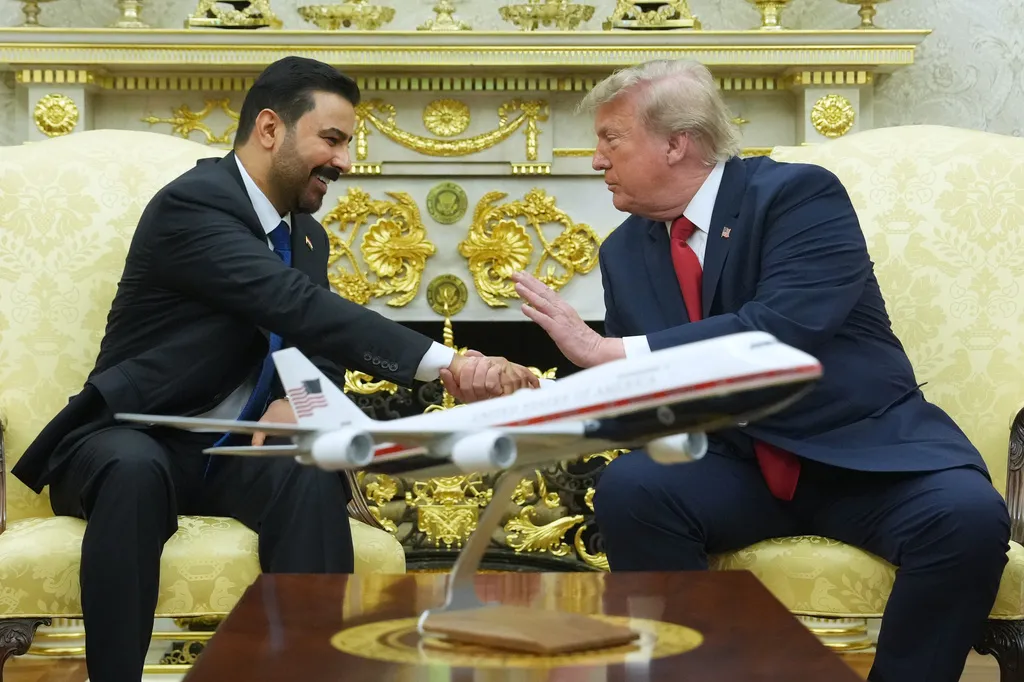
In a White House meeting with Iraqi Prime Minister Ali al Zaidi earlier this month, Trump said that “we don’t think we need the military there anymore.” American and Iraqi officials said at the time that the U.S. would leave Iraq by September, though it is unclear if hostilities with Iran will affect those plans.
Cyprus
Cyprus’s capital, Nicosia, is 1,000 miles from Tehran. Yet, despite the massive distances involved, the divided Mediterranean island has nevertheless found itself embroiled in the war with Iran.
The British Royal Air Force operates the RAF Akrotiri base on Cyprus’s southern tip. The base sits on British sovereign territory and is the largest British military base overseas. While the U.K. did not participate in the first waves of strikes against Iran, aircraft from the base have flown defensive missions across the Middle East.
Iranian drones targeted RAF Akrotiri early in the war. One drone struck a hangar at the base, while two more were intercepted en route. The drones, likely launched by Iran’s Hezbollah proxy in Lebanon, caused minimal damage and did not result in any casualties.
“When the situation is over in the Middle East we are going to have an open and frank discussion with the British government,” Cypriot President Nikos Christodoulides said after the strikes.
Lebanon
Lebanon has served as a proxy in the war between Israel and Iran for decades. It is home to thousands of heavily armed and well-trained Hezbollah fighters, though Israel has worked to beat back the Iranian proxy. Israel’s military presence in the country has become a persistent sticking point in negotiations between Washington and Tehran.
Iran has not directly struck Lebanon during the current war. On at least one occasion in March, however, fragments from an intercepted missile fell north of Beirut. It was unclear whether that missile was headed for Lebanon itself or another country in the region, such as Cyprus or Israel.
TIMELINE: ALL THE INCIDENTS WHERE US TROOPS HAVE BEEN KILLED DURING THE IRAN WAR
Lebanese President Joseph Aoun visited the Oval Office in July. Aoun has struck a conciliatory tone, urging all sides to leave Lebanese affairs up to the Lebanese people.
“It’s been a very badly treated place and country, and we’re going to have it properly treated and treated with the respect it deserves,” Trump told Aoun.