
A federal appeals court on Tuesday overturned a lower court’s ruling ordering the Trump administration to release Columbia University student Mohsen Mahdawi from immigration detention, finding the lower court lacked jurisdiction to decide his case.
The three-judge panel of the Manhattan-based 2nd U.S. Circuit Court of Appeals ruled Mahdawi’s claims should first have been resolved through immigration court proceedings, rather than in federal district court.
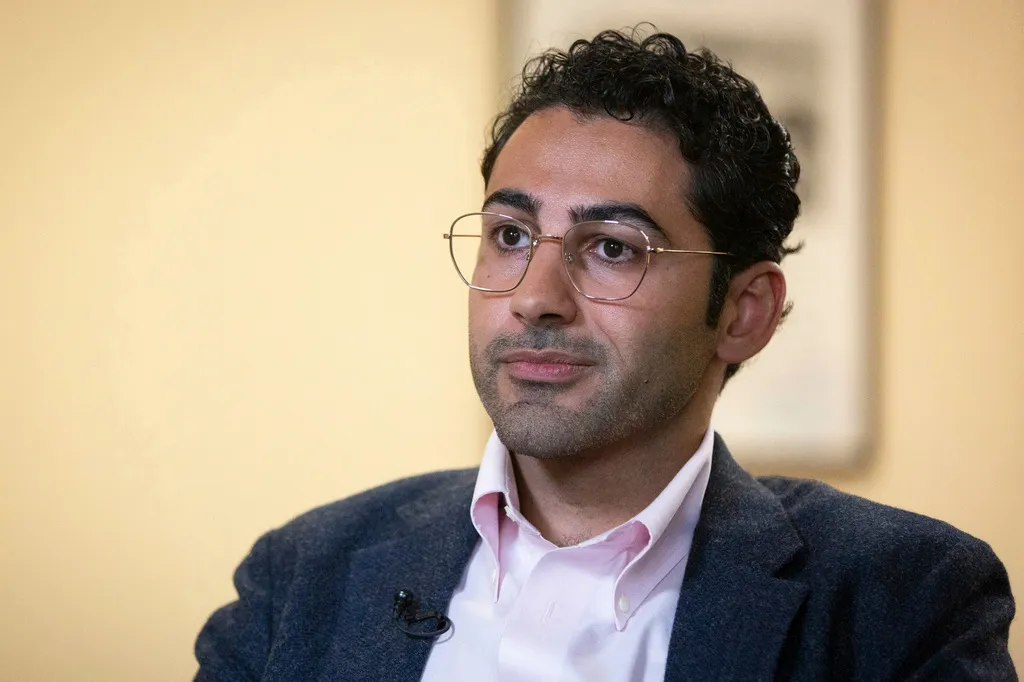
“The district court granted his motion for release pending review of this habeas petition on the basis that Mahdawi would likely succeed in showing that the government unlawfully targeted him based on First Amendment protected activity,” U.S. Circuit Judge Debra Livingston, a George W. Bush appointee, wrote for the panel in a 41-page opinion. “We conclude that the district court should not have reached this question because it did not have subject matter jurisdiction over the habeas petition.”
Mahdawi, 35, was arrested by Immigration and Customs Enforcement in Vermont in April last year when he arrived for an interview connected to his U.S. citizenship petition. The West Bank-born permanent resident had become a prominent figure in anti-Israel demonstrations at Columbia University in 2024.
U.S. District Judge Geoffrey Crawford, an appointee of former President Barack Obama, ordered Mahdawi released on bond two weeks after his arrest, concluding that he was not a flight risk and that noncitizens have First Amendment speech protections. The appeals court overturned that ruling on jurisdictional grounds but did not order Mahdawi to be taken back into custody.
The case is part of a broader legal fight over the Trump administration’s effort to remove noncitizens who participated in anti-Israel campus protests. The administration has argued that certain activists’ continued presence in the United States could harm U.S. foreign policy interests, while civil-liberties groups contend the policy punishes constitutionally protected speech.
Mahdawi has portrayed himself through his lawyers as a peaceful Buddhist opposed to violence. But his record has drawn scrutiny from groups that track anti-Israel activism. Canary Mission, an organization that compiles profiles of alleged antisemitic activists, has cited Mahdawi’s statements after Hamas’s Oct. 7, 2023, terrorist attack on Israel, including his assertion that “Hamas is the product of the Israeli occupation.”
Federal prosecutors also cited allegations involving Mahdawi’s 2015 visit to a Vermont gun store. According to court filings, the store owner told law enforcement that Mahdawi said he had substantial firearms experience and had built modified 9mm submachine guns “to kill Jews” while in Palestinian territory. The owner said Mahdawi allegedly made similar remarks to another gun enthusiast.
Mahdawi has not been charged with a crime.
Tuesday’s decision followed a similar ruling earlier this year involving Mahmoud Khalil, another Columbia-affiliated anti-Israel activist who was released from immigration detention after more than 100 days. The Philadelphia-based 3rd Circuit concluded in January that Khalil’s claims likewise belonged in the immigration system before reaching federal court.
Brett Schumate, the assistant attorney general for civil rights at the Justice Department, wrote on X that the decision was a “Big win for the rule of law: The Second Circuit makes clear that habeas can’t be used as an end‑run around Congress’s immigration removal-review scheme.”