
EXCLUSIVE — Jeff Clark’s battle to preserve his legal career has stretched across two presidential administrations, cost millions of dollars, and left the former Trump Justice Department official preparing for a possible trip to the Supreme Court.
Now, a lawsuit from President Donald Trump‘s DOJ offers Clark a potential avenue to end the disciplinary case before the D.C. Court of Appeals decides whether to disbar him.
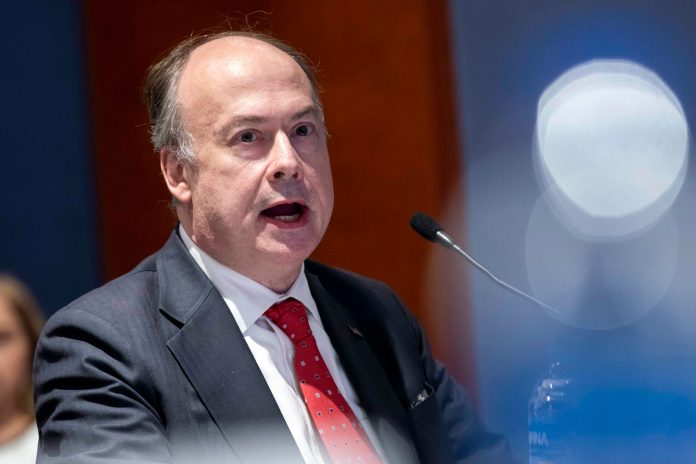
Washington, D.C., disciplinary authorities moved on July 10 to dismiss that lawsuit, arguing Clark is not being punished for expressing an unconventional legal opinion. They contend he knowingly pressed senior DOJ officials to send a five-page letter containing false claims about investigations of the 2020 election, and continued to push for the letter’s dispatch despite pushback from more senior officials.
Clark’s disbarment dispute stems from a draft letter he prepared in December 2020, which he maintained was at the behest of Trump at a time when he ordered the DOJ to investigate potential instances of fraud occurring in that election. His legal troubles remain unresolved nearly six years later.
“It’s truly like an endless process where the process is the punishment,” Clark told the Washington Examiner in April.
The unsent Georgia letter
Clark, then the Senate-confirmed head of the DOJ’s Environment and Natural Resources Division, proposed sending the letter to Georgia officials in the final days of December amid Trump’s challenges to his 2020 defeat.
The draft said the department had identified “significant concerns” about election irregularities that may have affected results in multiple states. It also suggested Georgia lawmakers could convene to consider questions surrounding the state’s presidential electors.
The letter was never sent and was only brought to light after the New York Times in January 2021 detailed it through interviews with four former DOJ officials who had information about the letter.
Clark characterized the letter as a preliminary proposal produced during privileged executive branch deliberations. He maintains that no one has disproved his constitutional position that state legislatures possess authority under Article 2 to address disputes involving presidential electors.
“No one’s laid a glove on the constitutional analysis in the letter,” Clark said, defending his conduct and the legal basis for drafting it.
Washington disciplinary officials argue the case concerns the letter’s factual assertions, not its constitutional analysis.
Acting Attorney General Jeffrey Rosen and Principal Associate Deputy Attorney General Richard Donoghue, the two highest-ranking DOJ officials at the time, rejected Clark’s proposal.
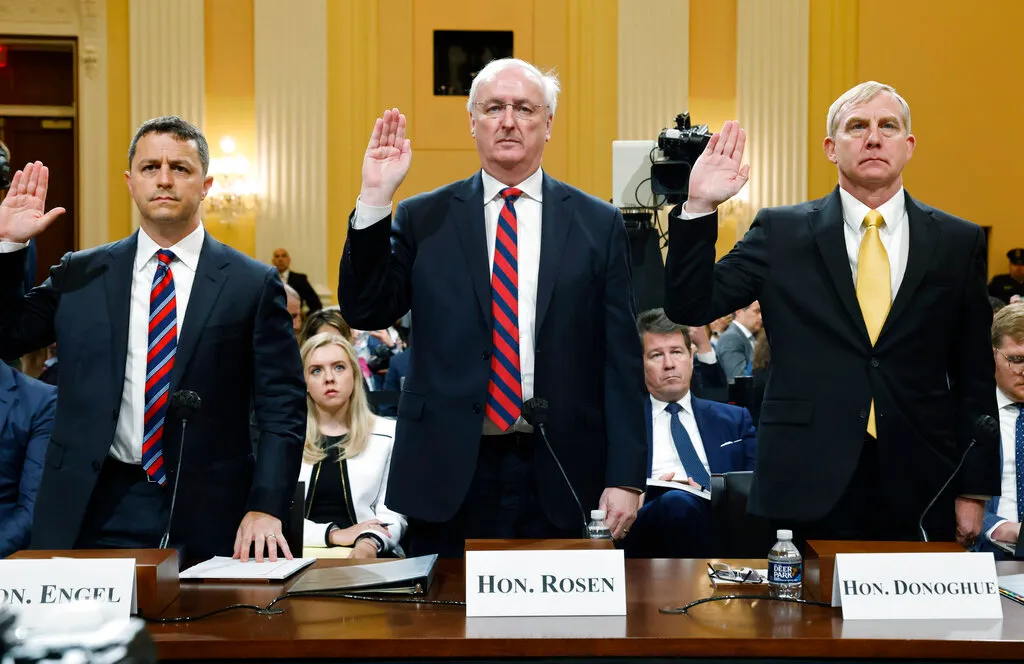
The disciplinary board found that Rosen and Donoghue, who were privy to the department’s election investigations, told Clark that the department had not uncovered evidence supporting the draft’s claims.
The board found that Clark continued advocating the letter after those warnings. Clark maintains that Rosen and Donoghue simply disagreed with his assessment.
In August 2024, the D.C. Bar’s Hearing Committee initially recommended suspending Clark for two years. The D.C. Board on Professional Responsibility went further in July 2025 and recommended full disbarment. Two members opposed that sanction and recommended a three-year suspension, according to the 104-page report.
The D.C. Court of Appeals has final authority over Clark’s license and has not imposed discipline.
“My license is still in good standing,” Clark said. “If there is any effort to really suspend or take my license, we’re going to the Supreme Court right away.”
Trump DOJ seeks to end the case
The Trump DOJ entered the fight on May 13 by suing D.C. disciplinary counsel Hamilton Fox III, senior assistant disciplinary counsel Jack Metzler, and the Washington institutions overseeing attorney discipline.
The complaint asks U.S. District Judge Richard Leon to declare the investigation, proceedings, findings, and recommended punishment against Clark unconstitutional and void. It also seeks an injunction prohibiting disciplinary officials from maintaining the case or pursuing other actions against Clark based on his work as a federal attorney.
A victory would force the disciplinary authorities to abandon their case before the D.C. Court of Appeals reaches a final decision.
The DOJ argues that the proceedings violate the supremacy clause by allowing local authorities to regulate a federal official’s performance of his duties. It also contends the case intrudes on the president’s Article 2 power to supervise the executive branch and chills government lawyers from offering candid advice.
Attorneys representing Washington disciplinary officials argue the board did not recommend disbarment over a “mere internal disagreement,” but because Clark allegedly continued advocating the letter after learning its factual claims were false.
They also invoked the McDade Amendment, which subjects DOJ attorneys to ethics rules where they practice. Requiring federal lawyers to act honestly is a generally applicable professional rule, they argued, not an effort to control executive branch policy.
Notably, the lawsuit between the Trump DOJ and the Washington institutions accused of weaponizing bar discipline is beginning to resemble a microcosm of Left-versus-Right political tensions boiled into a single case.
Representing those traditionally left-leaning disciplinary figures is former Biden administration Solicitor General Elizabeth Prelogar, now a partner at Cooley, who is listed as the lead counsel for the Board on Professional Responsibility.
A wider battle over ‘barfare’
Clark’s case represents part of a broader fight over what the Trump ally has described in his various posts on social media as a form of lawfare, or “barfare,” against conservative lawyers and government officials.
Washington disciplinary officials also opened an inquiry into current Trump pardon attorney Ed Martin after a retired judge filed a complaint against him over letters he sent to Georgetown University while serving as interim U.S. attorney for Washington.
The nature of Martin’s letters served as a warning to the school that the government could reconsider its relationship with the university over diversity, equity, and inclusion policies he argued may violate federal law.
Metzler withdrew from the Martin matter in May after his partisan social media posts attacking Trump and conservative Supreme Court justices resurfaced. The DOJ’s Clark complaint cites Martin’s case as evidence of an alleged pattern but has not formally added claims seeking relief for Martin.
Meanwhile, in California, the state Supreme Court ordered former Trump legal adviser John Eastman disbarred in April related to his advisement of Trump in 2020 over his strategy to contest its results. The State Bar Court found him culpable on 10 of 11 disciplinary charges, including allegations that he advanced false claims to courts and public officials.
John Shu, a constitutional lawyer who served in both Bush administrations, said the proceedings risk giving state bar disciplinary authorities influence over federal policy and deterring lawyers from representing Trump or working in the Trump administration.
“A local bar, whether it’s California or D.C. or whomever, should not have any policy control over the DOJ and should not discourage lawyers from government or public service, and this essentially does that,” Shu said.
Clark and the DOJ contrast those cases with former FBI lawyer Kevin Clinesmith, who pleaded guilty to altering a CIA email used to renew surveillance authority against former Trump campaign adviser Carter Page. Clinesmith received probation and a negotiated, retroactive one-year suspension from practicing law in Washington.
DOJ ACCUSES DC BAR AUTHORITY OF WEAPONIZING DISCIPLINE AGAINST FEDERAL LAWYERS
Clark was not convicted of a crime, nor was his letter ever sent. Yet disciplinary officials gave Clinesmith “a slap on the wrist” for a completed false statement, the Trump administration argued in court filings, while Clark faces the legal profession’s most grave punishment for an alleged attempted misrepresentation.
Leon, a judicial appointee of former President George W. Bush, must now decide whether Clark’s case represents a conventional prosecution of alleged dishonesty or an unconstitutional attempt to punish a federal lawyer for advice offered during internal executive branch deliberations.