
California Gov. Gavin Newsom’s office said Friday that it remains opposed to a proposed tax on California billionaires, even after the labor union backing the measure revised its plan following its qualification for the November ballot.
The new initiative, from Service Employees International Union–United Healthcare Workers West, would impose a one-time 2% tax on individuals with net worth above $1 billion. It has drawn strong opposition from a range of critics, including Newsom, who argued it would ultimately weaken California’s economy and reduce future revenue.
Newsom, who is expected to launch a 2028 presidential campaign after leaving office, has vowed to defeat the measure, signaling a willingness to spend his remaining political capital to block it. Gubernatorial candidates Steve Hilton, a Republican, and former Health and Human Services Secretary Xavier Becerra, a Democrat, have also opposed the proposal.
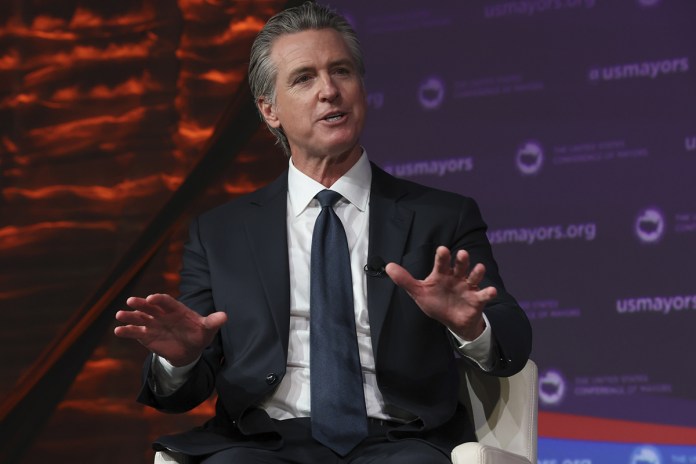
On Thursday, the union said it would abandon its original 5% rate if Newsom agreed to support a lower 2% levy instead. That revised approach would require approval from the state legislature, as a June 25 deadline remains for withdrawing the original measure from the ballot.
The governor rejected the overture.
“The Governor has been clear that he is strongly opposed to a California-only wealth tax,” Newsom spokeswoman Tara Gallegos told the Washington Examiner. “The Governor supports making the wealthiest Americans pay their fair share, but this poorly designed state-only measure will defund teachers, schools, clinics, and public safety. Changing the tax rate doesn’t change this measure’s fundamental flaws that harm working Californians.”
Newsom has opposed a state-level wealth tax since 2020.
The tax, which would apply to individuals residing in California as of Jan. 1, 2026, is designed to raise roughly $100 billion in revenue. Backers say the funds would primarily offset federal cuts to healthcare programs for low-income residents, with additional money directed toward food assistance and education.
In an open letter to Newsom, supporters argued a scaled-down alternative — a 2% one-time levy on accumulated wealth — would preserve essential services.
“A 2% one-time tax on that accumulated wealth is modest by any objective measure, especially if it means keeping emergency rooms open and saving patient lives,” they wrote. “It’s more than appropriate at a moment when every other Californian is being asked by Sacramento to sacrifice.”
The campaign is being led by SEIU-UHW, which argues California will need new revenue sources to offset reductions in Medicaid and other federal healthcare programs enacted under President Donald Trump’s domestic policy package last year. State analysts estimate the measure could generate tens of billions of dollars over time. However, the Legislative Analyst’s Office has warned it could also reduce annual income tax collections by hundreds of millions if some of California’s wealthiest residents leave the state.
Supporters say the tax is necessary to address widening wealth inequality and argue California’s economy is strong enough to retain most of its 216 billionaires. To address concerns about valuation and liquidity, the proposal would allow independent third-party appraisals, permit payments over five years with interest, and defer taxes on illiquid assets such as privately held startup shares.
Critics, particularly in the technology sector, argue the measure could force entrepreneurs and investors to sell assets to meet tax obligations, potentially disrupting businesses and discouraging investment.
“This flawed measure is the wrong approach for California’s small businesses and working families,” Roger Salazar, a spokesperson for Golden State Promise, a political committee opposing the tax, told the Associated Press.
State lawmakers passed budget bills this week that aim to raise revenue through other means, including extending a tax on healthcare providers.
Hilton called the proposal “something that just captures so perfectly the stupidity and the failure of 16 years of one-party rule,” arguing it is primarily an effort by organized labor to secure additional funding for its priorities.
CALIFORNIA BILLIONAIRE TAX QUALIFIES FOR BALLOT, SETTING UP COSTLY FIGHT
Concerns about California’s ability to retain wealthy residents have resurfaced. Several high-profile billionaires have relocated to lower-tax states such as Texas and Florida, fueling opponents’ fears that the state’s tax base could erode further.
“Billions of dollars of actual revenue have already left,” Hilton said. “It’s gone. It’s too late. Even if their stupid negotiation thing means that they don’t put this on the ballot, their pathetic, ridiculous inside-a-swamp game in Sacramento has already cost the state of California billions of dollars in revenue that we are not getting back.”