
Cancer rates, water quality, and pesticides are shaping up to be top-of-mind for voters in Iowa in the general election this fall as the gubernatorial candidates from both parties have made improving Iowans’ health the centerpiece of their campaigns.
Both Republican Zach Lahn and Democrat Rob Sand are appealing to swing voters who align with the Make America Healthy Again movement by campaigning on improving food quality and reducing chronic disease rates.
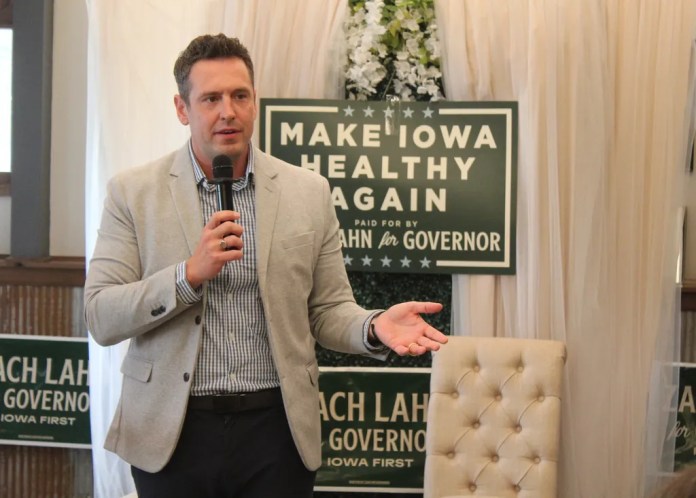
Lahn, a farmer and businessman, upset the apple cart earlier this month by winning his primary against Rep. Randy Feenstra (R-IA), becoming the first Republican this election season to beat a candidate endorsed by President Donald Trump.
Iowa political operatives from both sides of the aisle told the Washington Examiner that Lahn received a groundswell of support in the days leading up to the primary election in large part because of his clear antiestablishment messaging in relation to big agricultural corporations in the state.
Trump effectively rescinded his endorsement of Feenstra after his election loss, saying Lahn was the stronger candidate and the most in line with the Make America Great Again movement and “America First” agenda.
Lahn’s positions on health and agriculture policy earned him an endorsement from the group MAHA Action, a right-wing PAC born out of the 2024 election partnership between Trump and Robert F. Kennedy Jr., the environmental health activist turned Health and Human Services secretary.
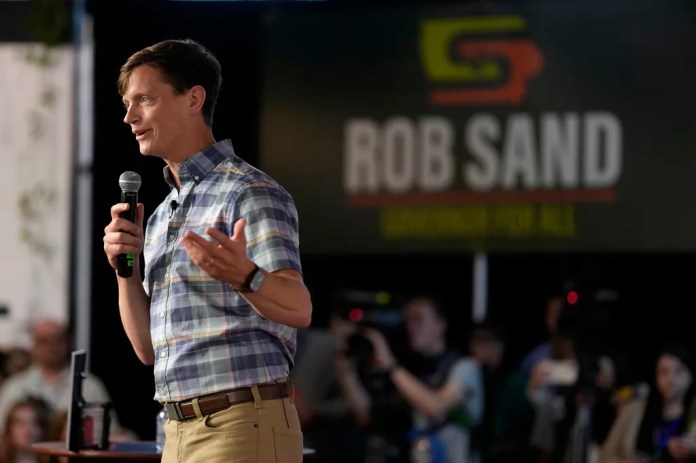
But Sand, the current state auditor, has also leaned into campaign messaging on making Iowa healthy again, even without embracing the MAHA label.
Both Sand and Lahn have promised to reverse Iowa’s position as the state with the second-highest incidence rate of all types of cancers. They each have also blamed the herbicide glyphosate, the chemical in RoundUp, for contributing to the cancer rate and have insisted that the manufacturer Bayer be held liable in court, a key issue for MAHA voters.
Jimmy Centers, a GOP strategist based in Des Moines, told the Washington Examiner that a variety of other issues are at play in the Iowa gubernatorial race, particularly affordability, but health policy is certainly on the ballot.
“More than any time I can remember, candidates are talking about how, if at all, our farming practices and our agricultural economy is impacting the state’s public health,” Centers said.
Iowa’s cancer and water quality problems
Public health problems are especially acute for Iowans heading into the general election this fall.
In March, the University of Iowa released its annual cancer report that found the Hawkeye State has the fastest-growing rate of cancer in the United States. The report projects an estimated 21,700 new cancer diagnoses in Iowa this year, 6,400 new cancer deaths, and nearly 192,000 cancer survivors currently living in the state.
Rates of breast cancer, prostate cancer, and melanoma have all been increasing in Iowa, according to the Iowa Cancer Registry, while other states and the national average continue to trend downward. Lung cancer rates in Iowa also remain higher than the national average, despite smoking rates in the state decreasing in recent years.
As with most public health concerns, Iowa’s cancer problem is multifactorial.
Likely due to , nearly 72% of homes in Iowa exceed the Environmental Protection Agency’s safe level of radon, a radioactive gas that is the No. 1 cause of lung cancer for nonsmokers.
Pollution from fertilizer and manure runoff from large agricultural businesses could also contribute to Iowa’s cancer and chronic disease burden. Iowa wastewater treatment plants have struggled for two years to keep nitrate levels in drinking water below EPA standards, which advocates say is largely due to lax regulations for waste management for the cattle industry.
Earlier in June, the Central Iowa Water Works, which supplies Des Moines and the surrounding areas, enacted a mandatory lawn-watering ban for the summer to keep water usage low enough for treatment facilities to continue to remove excess nitrate contamination. The company is also encouraging residents to limit outdoor water activities to reduce demand for treated water.
Kennedy attended an event at the end of May in Iowa with the current Gov. Kim Reynolds (R-IA) to celebrate her signing of a key piece of MAHA-oriented legislation as part of his nationwide Take Back Your Health tour in the lead-up to the midterm elections.
Water quality was not included in the bill. Instead, the legislation eliminated artificial food dyes from school lunches, mandated physical fitness exams for school children, and made the controversial, supposed COVID-19 treatment Ivermectin more accessible.
Sam Newton, communications director for the Democratic Governors Association, told the Washington Examiner that the Republicans’ dearth of policy on these key problems will hinder Lahn’s ability to build trust with voters.
“After a decade of one-party rule, Kim Reynolds and her allies like Zach Lahn own the state’s water problems and highest rate of cancer growth in the country,” Newton said.
Competing agendas to make Iowa healthy again
Both Lahn and Sand have agenda items that appeal to central themes of the MAHA movement.
Lahn’s messaging has mirrored that of Trump on health issues and other policies, such as prohibiting Chinese nationals from owning farmland and using tax credits to benefit Iowans rather than out-of-state corporations.
But he also says he intends to hold “monopolistic agriculture input companies” accountable, incentivize farmers to address the water contamination problem, and direct the University of Iowa to ramp up cancer research.
Kollin Crompton, communications director for the Republican Governors Association, told the Washington Examiner that Lahn “understands Iowans are not an afterthought.”
“His Iowa First platform tackles the cancer crisis from every angle: what farmers are exposed to, what families are drinking, and what is in their food,” Crompton said. “That is the MAHA mission. Republicans are taking action. Rob Sand and Democrats are all talk.”
Sand’s Healthier Iowa for All initiative, published after Lahn began making a name for himself as the MAHA candidate, presents a detailed outline of investing in regenerative agriculture programs to make farming more sustainable.
He, like Lahn, also insists that Bayer and other chemical companies must not escape legal liability if their products increase users’ risks of developing cancer.
Sand’s proposal differs from Lahn’s in that he intends to “increase funding for aggressive water quality monitoring and farmer-led water quality programs.” That includes implementing stricter regulations on how the cattle industry in Iowa handles manure.
The DGA’s Newton said Sand is the only one with the track record to implement plans to improve Iowa’s overall health, especially water quality.
“Rob Sand has a proven record of delivering change as state auditor and prosecutor, and he is the only independent voice who can be trusted to take on the status quo,” Newton said.
FOOD INDUSTRY HOPES TRANSPARENCY EFFORTS WILL APPEASE MAHA
Centers, the GOP strategist, said it is too early to tell which health message will appeal to voters more in the general election.
“We’re going to find out come November which candidate Iowans believe is best suited to tackle that challenge, and what proposed solutions they believe in are best for Iowans and our public health,” Centers said.