
Exactly twelve months ago, the Israel Defense Forces launched a surprise attack on the Islamic Republic of Iran designed to degrade the mullahs’ fearsome nuclear and ballistic missile programs. Israel called the mission Operation Rising Lion, and it was later joined by a strike package of seven American B-2 bombers, which leveled Iran’s hardened Fordow nuclear complex in an aerial assault that the United States labeled Operation Midnight Hammer.
The concerted campaign, which came to be known as the Twelve-Day War, marked the first outright conflict between the Jewish state and the Islamic Republic, and it significantly set back the ayatollahs’ long-gestating plan to wipe Israel off the map. It also provided a proof of concept for Operation Roaring Lion/Epic Fury, the joint U.S.-Israeli attack on Iran that began in late February and concluded, with a still-rocky ceasefire, some forty days later.
As we usher in the first anniversary of the initial war, it’s worth asking what its lasting effects have been. Three key questions encompass the military, strategic, and diplomatic fronts: How badly did Israel and the U.S. damage Tehran’s menacing nuclear capabilities and general warmaking capacity? How has the strategic equation changed in the Middle East? And how has the Jewish state’s standing in the world held up in the wake of the fighting?
The actual front
In strict military terms, there can be no question that Operations Rising and Roaring Lion (or Midnight Hammer and Epic Fury, if you prefer) have severely diminished Iran’s ability to develop a nuclear weapon, as well as its capacity to assemble and fire ballistic missiles.
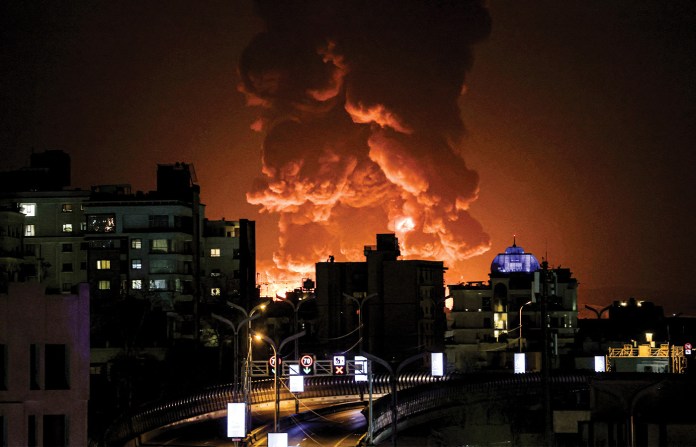
“Iran is no longer a nuclear threshold state as its status was prior to its war with Israel,” the Institute for National Security Studies at Tel Aviv University concluded in late June 2025, following the Twelve-Day War. “It would take Iran at least one to two years to regain threshold status, assuming a decision by Supreme Leader [Ali] Khamenei to pursue nuclear weapons.”
The organization found that the attacks destroyed around 15,000 centrifuges at the Natanz nuclear facility, including both first-generation and advanced models. At Fordow, built into a mountain, the six Massive Ordnance Penetrator bombs released by the American B-2s flying out of Whiteman Air Force Base in Missouri leveled the plant and reportedly entombed the nearly 900 pounds of uranium that the mullahs had enriched to 60%, a short technical step away from weapons-grade material. And Israeli ordnance rendered inoperable the Isfahan Nuclear Technology Center, where the Islamic Republic converted uranium compounds from yellowcake to UF6 gas and back to uranium metal, the fission core of a nuclear weapon.
In addition, both the Arak heavy water facility, which was intended to produce weapons-grade plutonium, and the Parchin complex, where Iranian engineers labored to weaponize the country’s nuclear materials, sustained heavy damage. And on top of that, in its opening moments, Rising Lion eliminated at least 10 top Iranian scientists in a stunning display of intelligence and operational virtuosity.
Other estimates of the setback to the Iranian nuclear program are more far-ranging than INSS’s. Last year, the Pentagon reckoned that the Twelve-Day War had delayed the mullahs’ nuclear dream by up to two years. Mark Dubowitz of the Foundation for the Defense of Democracies reported that the Israeli Atomic Commission believes the number is two-and-a-half years. And keep in mind that these estimates predate the most recent conflagration, where Israeli and American bombers further ravaged the Islamic Republic’s nuclear sites, likely increasing the lead time for its nuclear program’s rehabilitation.
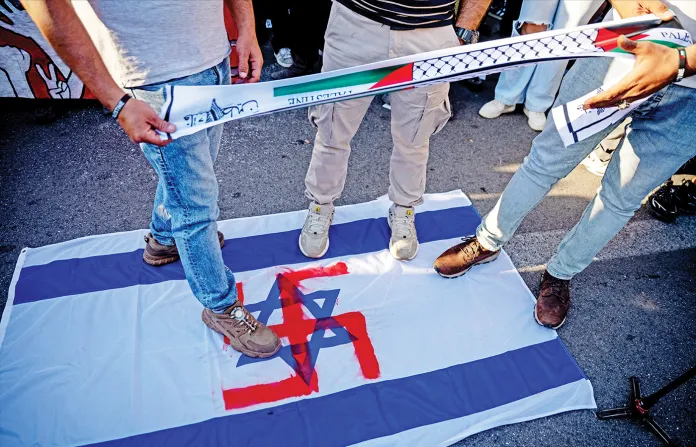
However, the 900 pounds of 60%-enriched uranium — what President Donald Trump refers to as the “nuclear dust” — reportedly remain buried under literal tons of rubble on Iranian soil. Former Israeli Defense Minister Yoav Gallant recently claimed that the U.S. and Israel could and should have retrieved it.
“The IDF and US military had the capability to physically extract the enriched uranium from Iran,” Gallant told Israel Army Radio. “The uranium enriched to high and medium levels represents 30 years of Iran’s nuclear efforts. If you bring it to you, you’ve set them 30 years back.”
Whether the long-promised deal that Trump has ardently sought for months involves the safe removal of this highly dangerous dust remains a critical unanswered question, as does the fate of Pickaxe Mountain, Iran’s even more rigorously fortified nuclear facility.
On the ballistic missile front, initial estimates indicate extraordinary losses for Tehran. The INSS assesses that the mullahs’ ability to produce missiles has declined from 2,500 per month at the outset of Roaring Lion/Epic Fury to 125 per month today. Interestingly, the 2,500-per-month figure reflects a marked increase from the conclusion of Rising Lion/Midnight Hammer, when the Islamic Republic was able to manufacture 1,500 missiles per month. In the eight months that intervened between the two operations, Iran rapidly rebuilt and even supercharged its missile capacity.
The most recent war saw determined efforts by Israeli and American air force pilots to hunt and destroy Iranian missile launchers, many of which are mobile and can be easily transported and concealed. In many ways, the campaign succeeded — the Islamic Republic’s missile firing rate declined by 90% from the early days of Epic Fury. But, according to INSS, “at the time of the ceasefire, Iran still retained 60% to 70% of its missile launch capabilities (missiles and launchers).” And even more troublingly, while a long-term hobbling of the mullahs’ missile program at first appeared on the agenda for the grand bargain between Washington and Tehran, it seems to have fallen off. Also largely unmentioned in the ongoing talks is the looming drone threat, with which Iran continues to menace its Gulf neighbors.
Thus, since June 2025, Israel and the U.S. have managed to dramatically defang Iran’s nuclear and ballistic missile threats, but those gains could prove fleeting if not locked into an ironclad agreement.
The strategic front
Taking a step back, how well have Rising and Roaring Lion advanced Israeli and American strategic interests in the Middle East? Here, success has been more uneven than in the actual, physical theater of war.
First, the joint attacks on the mullahs’ war machine have gravely, but not necessarily fatally, wounded Tehran’s network of proxy armies across the region. The most imposing of these, Hezbollah in Lebanon, came to its patron’s defense in February by firing rockets into Israel in violation of a late 2024 ceasefire. But that intervention proved unwise, as Israel responded with a ferocious counterattack and now controls vast swathes of southern Lebanon, including key strategic strongholds. Hezbollah’s precipitate decision to enter the war has served to further alienate it from the rest of the notoriously fractious Lebanese society and has sparked renewed efforts at a peace agreement between Israel and its northern neighbor, as discussed further below.
But Hezbollah has continued to fight on, however less effectively, as have other Iranian proxies, including Hamas, Yemen’s Houthis, and various pro-Tehran militias in Iraq. Israelis have also wearied of the Lebanon campaign, with repeated IDF reservist callups and Hezbollah’s lethal first-person-view and fiber-optic-directed explosive drone attacks straining the fabric of the citizen army. Like its ballistic missile program, curtailing the Islamic Republic’s ongoing support for Shia fighters in the Levant was initially on the list of American ceasefire demands, yet it’s now, ominously, fallen off.
Second, the various Israeli and American operations designed to undermine and even topple the mullahcracy, but while cracks have emerged within the regime, it has not yet succumbed. The Twelve-Day War arguably enabled and possibly inspired the popular uprising that convulsed Iran in December 2025 and January 2026, unrest so widespread that the Islamic Republic was able to quell it only by slaughtering tens of thousands of its own citizens. Epic Fury was designed, at least in part, to accelerate the process, beginning with a decapitation strike that eliminated supreme leader Ali Khamenei. American and Israeli officials then hoped that, by pummeling the Iranian Revolutionary Guard Corps and the reviled Basij militia, they would empower everyday Iranians to “throw off the yoke of tyranny.” The combined attacks have thrown the Guard into tumult, and Khamenei’s successor — his son Mojtaba — isn’t nearly as studied and patient as his unlamented father. But so far, the regime has managed to hold things together as far as we can tell. A Free Iran will hopefully materialize soon, but it hasn’t yet.
Finally, for its part, the ayatollahs have responded to the attacks by successfully exploiting a strategy, in an unsettlingly surprising manner, that has roiled economic markets: impeding maritime traffic in the Strait of Hormuz. While Trump has, at various moments, vowed to backstop insurance for ships transiting the strait, escort them outright, and implement Project Freedom, he has also abandoned all three of these efforts. Instead, the U.S. has countered Iran’s strategy with its own blockade of Iranian ships, especially its oil tankers. At this point, it’s unclear whose approach will bear more fruit and who will blink first.
The broader strategic picture appears beneficial to Israel and the U.S., but it’s likely too early to know for certain.
The diplomatic front
The aftermath of Rising and Roaring Lion has been mixed for Israel’s global reputation. On one hand, the military alliance between Jerusalem and Washington has never been stronger. As I noted in these pages in March, “the seamless cooperation between the two allies has exceeded expectations. U.S. Secretary of War Pete Hegseth complimented the Israelis warmly in the early days of the campaign, praising the IDF’s ‘unmatched skill and iron determination,’ lauding Israel as a ‘steadfast partner,’ proclaiming that it’s a ‘breath of fresh air’ to fight alongside the Israeli military, and stating that ‘we salute your courage and your contribution.’”

Israel has also bolstered its ties with Gulf allies, who’ve also come under blistering attack from Tehran — the United Arab Emirates alone has absorbed some 550 ballistic and cruise missiles and 2,200 drones. In response, as various outlets reported, the IDF supplied the United Arab Emirates not only with batteries of its Iron Dome interceptor missiles but also with its highly advanced Iron Beam laser interception system. According to the New York Times, Israel even dispatched soldiers to the Emirates to help deploy its systems — another first. As one Israeli official told the Times of Israel, the conflict “presents an opportunity to enhance ties. We believe in this market… The enhancement in cooperation will grow further, not only in military cooperation.” Also encouraging was the UAE’s withdrawal from the Organization of Petroleum Exporting Countries, a further indication of the country’s western turn.
In parallel, Israel has been inching closer to normalization with Saudi Arabia, another favored bombardment target of the mullahs and a long-desired peace partner of the Jewish state. As I detailed here in April, Israel and Lebanon continue to close in on a long-sought rapprochement. Trump even implored Qatar and other Muslim states traditionally hostile to Israel to join the Abraham Accords.
At the same time, some dark clouds loom on the horizon. Around the world, especially in Western Europe, Israel’s standing has plummeted, as leftist governments like those of Spain’s loathsome Prime Minister Pedro Sanchez call for boycotting the Jewish state and expelling it from various economic and cultural organizations. Antisemitism has swelled in the United Kingdom, France, Germany, and elsewhere, with maleficent actors deliberately blurring the lines between detesting Israel and assailing Jews.
In the U.S., the Democratic Party continues its slide toward outright hostility to the Jewish state. Recent polling found that three-quarters of Democrats oppose aid to Israel, while the party’s leading candidates scramble to outdo each other in denouncing and abjuring campaign funding from the America Israel Public Affairs Committee. Zohran Mamdani, the vehemently anti-Israel mayor of New York City — which is home to nearly a million Jews, the vast majority of whom support the Jewish state — pointedly refused to march in the Israel Day Parade last month, becoming the first Gotham chief executive to do so.
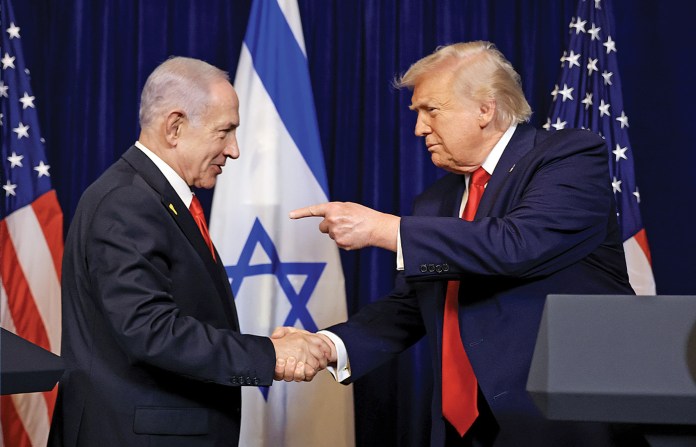
On the Republican side of the aisle, too, Israel’s standing has suffered as the war drags on. While an overwhelming proportion of MAGA enthusiasts supported Epic Fury, a nagging extremist fringe, populated by the likes of the execrable Tucker Carlson and the odious Candace Owens, seeks to drive a wedge between the U.S. and Israel. For his part, Trump seems to have grown tired of Israeli Prime Minister Benjamin Netanyahu, calling him “f***ing crazy” in a profanity-laced call earlier this month.
“I’m saving your ass,” the president told the prime minister. “Everybody hates you now. Everybody hates Israel because of this.” The impolitic exchange, which Trump later confirmed (taking care, nevertheless, to note that “I like Bibi a lot”), surely reflects the 47th president’s penchant for hyperbole, but it also reveals his ongoing frustration with the current status quo.
Looking ahead, Israelis are wary of who may succeed Trump. Vice President JD Vance has throughout his career expressed strong support for the Jewish state, but his continued closeness to malicious figures like Carlson is not encouraging. And in a recent Fox News interview, he seemed to place daylight between the U.S. and Israel, noting that the two countries “have a lot of shared interests, but we also have some situations where our interests diverge.” Specifically, he cited the potential diplomatic deal with Iran that Trump has chased for months, acknowledging that Israel “may not like that, but fundamentally, we think this is in the best interest of the United States of America.” At the same time, Secretary of State Marco Rubio, perceived by many as Vance’s chief rival for the Republican presidential nomination in 2028, has consistently reiterated his “ironclad” commitment to the security of the Jewish state.
How can Israel restore its reputation? For one thing, the country heads to elections in October, and current polling indicates Netanyahu’s ruling coalition is struggling to retain a majority. The country, and much of the world, has tired of the prime minister, who’s now held office for a total of more than 18 years. For another, when the fighting finally dies down, and in the wake of the hoped-for expansion of the Abraham Accords, the Jewish state’s standing should revert to the mean, at least somewhat. But in order to win back the widespread support it traditionally commanded, Israel’s supporters — Jewish and non-Jewish, in-country and out — have their work cut out for them.
The conflict between Iran and Israel is far from over. Indeed, it flared again this week, when the Islamic Republic violated the ceasefire by firing 24 missiles at the Jewish state, prompting a response by the IDF that targeted Iranian air defenses and plants manufacturing ballistic missile precursor materials. It’s perhaps fitting that, twelve months after the Twelve-Day War, its participants remain at loggerheads. While Israel and the U.S. have taken tremendous strides during that year to stamp out the mullahs’ malign efforts to destabilize the Middle East, much remains to be done.
Michael M. Rosen is an attorney and writer in Israel, a nonresident senior fellow at the American Enterprise Institute, and author of Like Silicon From Clay: What Ancient Jewish Wisdom Can Teach Us About AI.