
LVIV, UKRAINE — Andriy Zholob, the deputy mayor of Lviv for Veterans Affairs, understood there was, unmistakably, a mental health crisis brewing among Ukrainian veterans after one disquieting phone call.
Zholob recounted to the Washington Examiner the moment when a former comrade in arms called him to say his car had been towed away. The veteran, a former prisoner of war suffering tremendous mental anguish after returning from service, was politely asking Zholob if he was allowed to shoot the officer who had impounded his vehicle.
“I usually explain to civilians, you will not understand that,” the deputy mayor told the Washington Examiner. “But he accepts me as a commander and he called me. I said, ‘Please don’t [shoot], but you will be our patient zero.’”
Zholob, himself a former officer of the Ukrainian Medical Forces, is now taking a lead role in Lviv’s effort to address the deluge of veterans returning to the city with physical and psychological injuries that undercut their ability to reintegrate into society and drive many into the abyss.
He sat down with the Washington Examiner at a city council office while he was meeting with representatives of two American nonprofit groups hoping to allocate unused prosthetics from U.S. service members.
Lviv, located in Western Ukraine, is sometimes referred to as the “backyard of the war” — far enough from the constant bombardment of the East to provide a sense of safety. It is a major hub of refugees fleeing attacks in their home regions and Ukrainian soldiers rotating in for treatment after being injured on the battlefield.
Zholob is blunt about the struggles Ukrainian veterans face when they are relieved of their service. They often return home injured or missing limbs. They sometimes lose their relationships to their wives and families. They are paid poorly and usually don’t have much money to start over. Many sit at home and drink themselves to death, a historically common end to veterans of wars throughout time.
The deputy mayor freely recounts his experiences with veterans who are found shouting in public that the “government used me and betrayed me,” “no one needs me,” and the “city is doing nothing for veterans.”
These veterans return home with deep mental scars and disorders. A government official towing their car and yelling at them brings to mind the face of their enemies on the battlefield. An aggressive driver cutting them off in traffic activates a similar hostility and sense of self-defense.
Zholob is blunt about these uninspiring realities because he has lived through his own. He has talked openly about his own three-week stint in the “abyss,” staring at the ceiling without purpose after his military career ended.
When he began to receive offers to work with the government on veterans affairs, his friends warned him that he might become “one of the bandits in the city council.”
“Maybe it’s easier to break the system from the inside to make everything possible,” he told me, comparing his work as a military surgeon to his work as an official. “I was sewing limbs I could save and I was sewing parts of wounds. Now we are sewing parts of veteran society and civil society together.”
Lviv city officials are overseeing a variety of programs to help veterans jobs, bring them into community-oriented activities such as motorcycle clubs and workout groups, and generally integrate them into society.
“It’s a very complicated thing because veterans do not want to work,” Zholob told the Washington Examiner. “Just the feeling [that] ‘I did everything possible — Please give me money. Please give me more money. You do not give me enough money.’ And this is how it works.”
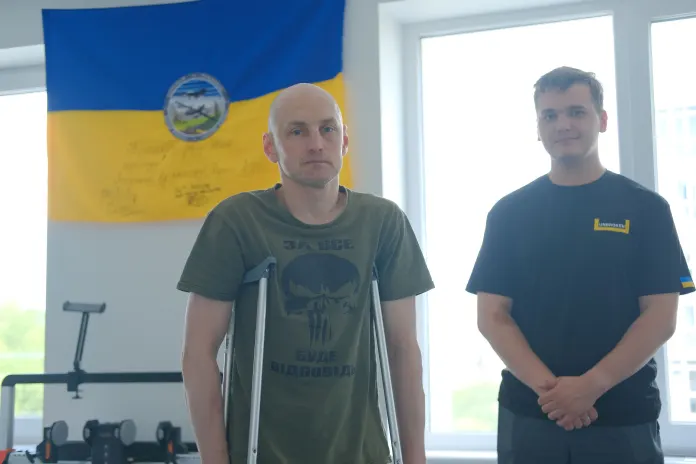
Remuneration for service in the Ukrainian military is pitiful. Many servicemen receive the equivalent of just a few hundred dollars a month, while combat deployment can push that figure above $2,000. Over the years, more lucrative contracts have been offered, but the bonuses given to new batches of soldiers are not retroactively given to those already enlisted.
The national government recently issued reforms to bump up pay across the board, but it has hardly made service more enticing. Many military-age men who are obligated to register for service dodge conscription at home or flee to foreign countries.
Pensions for veterans are no less robust, hence the country’s need to seek other avenues for ensuring its soldiers have a financial future after returning home.
An example of these initiatives is the Academy for Heroes, a nine-month training program that introduces veterans and family members to careers in information technology. After completing the course, these trainees put themselves forward for long-term careers in the sector.
Zholob added: “We have vacancies that give very big salaries, but you need to do something for that salary.”
How to build veterans back up
Before injured soldiers can begin trying to rebuild their lives, they are likely to spend a stint simply rebuilding their bodies.
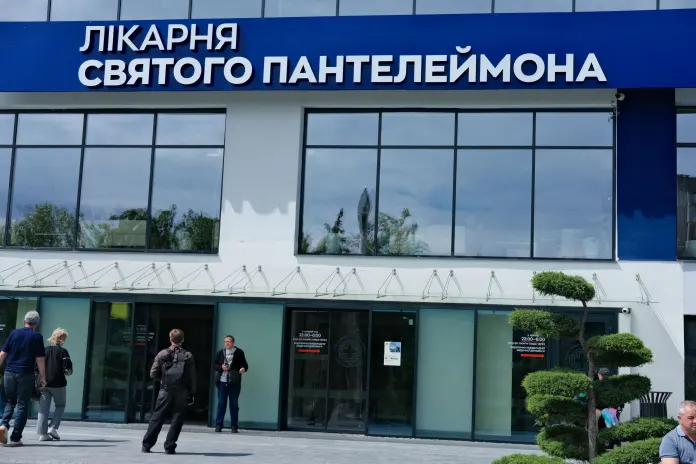
Dr. Oleh Bilianskyi is the director of the Unbroken Rehabilitation Center in Lviv, one of the largest medical facilities in the country. Following the full-scale invasion in 2022, the center, affiliated with St. Panteleimon Hospital, became one of Ukraine’s central hubs for wounded veterans seeking physical or neurological care.
Bilianskyi, who spoke softly and appeared visibly exhausted while talking with the Washington Examiner, said that drone warfare has ushered in a new and horrifying dynamic to injuries sustained in battle. Those soldiers who manage to escape a direct strike by a drone — perhaps suffering an indirect blast — often wind up in his staff’s care. They bear injuries, both physical and mental, that attest to the gruesome effectiveness of these attacks.
“The patients with an amputation, at the same time, can have a traumatic brain injury,” Bilianskyi told the Washington Examiner. “Most of them have disorders like this, and hearing and problems with their vision as a result.”
When the war erupted, the medical center was prepared for the “normal disorders” that come with combat, such as gunshot wounds and severe burns. They weren’t prepared for the surge of amputations and traumatic brain injuries required when remotely operated bombs are being piloted directly into soldiers’ bodies. The challenge from Day 1 was “trying to find new approaches for treatment” from outside sources.
“We invite a lot of doctors, physicians, physical therapists, psychologists from all over the world — invite them to work together with us,” Bilianskyi said. “In other cases, we visited their countries and visited their centers and the clinics. They come here, they work together with us for one week, two months, three months, three weeks.”
The global outpouring of material support to Ukraine in the first months of the invasion transformed the medical center into the world-class rehabilitation hub that it is today. That international support is inspiring, but observing the endless rotation of wounded soldiers into their departments quashes any sense of positivity about the medical miracles happening there.
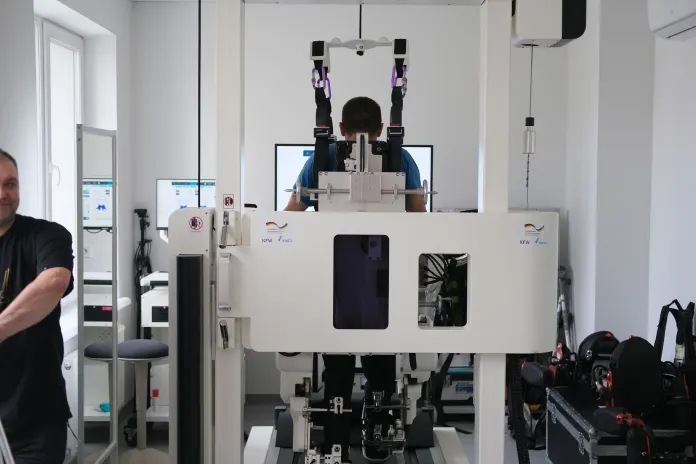
Soldiers with multiple amputations learn to operate their wheelchairs, while those who still have their legs learn to walk again on a computerized treadmill. A device the size of two refrigerators flashes lights for veterans recovering their motor skills to press like a game of whack-a-mole.
A small pile of knitted fabric sits next to a loom where mentally disturbed patients are able to weave in order to quiet their minds.
These treatments and programs are rolled out to meet the ever-changing and ever-growing demands of the injured, not unlike the constant churn of offensive technology on the front lines.
“We have tried to adapt from the first days of the war,” Bilianskyi said. “It was our challenge, and every day we have a new challenge.”
RUSSIA’S DRONE INVASION AND THE GRIM REALITIES OF REMOTE COMBAT: ‘IT’S GONNA KILL YOU’
While veterans might receive psychological treatment and medical support from places such as the unbroken center, that infrastructure does little for soldiers returning to society without a purpose.
“All the times I was in some kind of depression, I went into more and more work,” Zholob told the Washington Examiner. “Work on Saturday, work on Sunday — and it helped me. It really helped.”
Zholob worries, however, that the window for this support network will close one day when the war is over or the battle lines freeze. He is single-mindedly trying to cram through as much infrastructure and funding as he can now, as the plight of veterans is still fresh in the public’s mind.
“Society will start to forget about us. It’s normal. It’s OK,” he told the Washington Examiner, explaining that a normal society does everything it can to not think about war in times of peace. “So please take this possibility because one day we will lose it and that’s all.”