
EXCLUSIVE — Arrests and deportations of illegal immigrants have soared to all-time highs in President Donald Trump’s second term, but the administration has faced significant hurdles maintaining its momentum in recent months, according to White House border czar Tom Homan, prompting some concerns from Trump’s base that his administration is abandoning promised mass deportations.
Approximately 641,000 immigrants lacking permanent legal status have been arrested by Immigration and Customs Enforcement and federal partners in 16 months, while more than 800,000 have been removed from the United States, Homan explained in a lengthy interview with the Washington Examiner at the White House complex this week.
“Total of 800,000 [have been removed] out of the country,” Homan said. “If you take 60% of that, criminals, hundreds of thousands of public safety threats, have been removed from this country. Name another president who’s done that.”
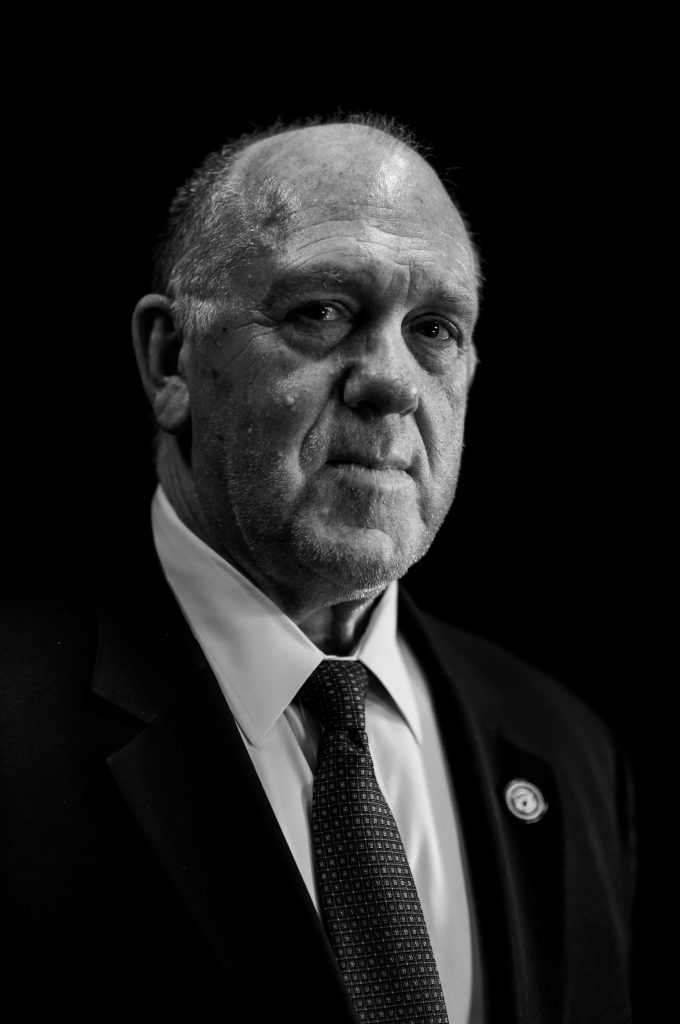
Democrats and some Republicans have criticized ICE for arresting immigrants lacking permanent legal status who have no criminal history in the U.S. On the other hand, many of Trump’s supporters are frustrated that more noncriminal immigrants have not been arrested, leaving Homan and the Department of Homeland Security in a difficult position.
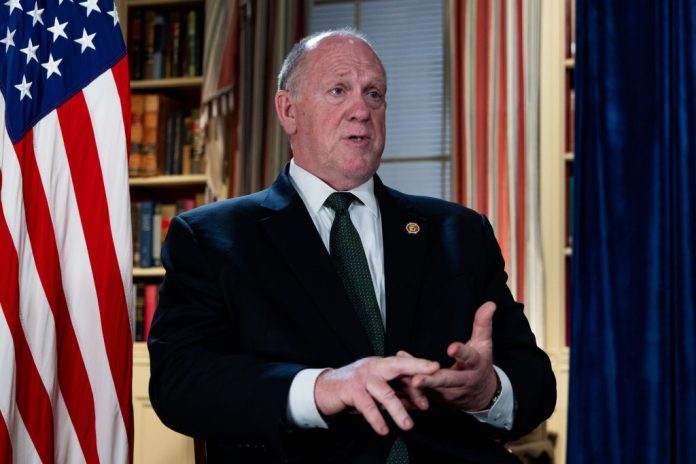
“I know there’s a lot of noise out there about, ‘You shouldn’t be just concentrating on criminals, you ought to be arresting everybody,’ but we are pursuing a broad range of arrests,” Homan said, dressed in a dark blue suit with a darker green tie, donning a five-o’clock shadow. “I don’t know why people don’t understand, just because you prioritize public safety threats doesn’t mean you arrest somebody else.”
Homan admitted the administration’s immigration enforcement operation has slowed recently. But he laid out a comprehensive plan to respond to those delays, as well as take back the narratives that the Department of Homeland Security is focused too intently on either criminals or noncriminals, and how the White House will soon unleash fury on those complicating the executive branch’s plans.
“There’s a lot of argument within the world that, ‘Are we keeping our promise?’” Homan said. “Numbers are slightly down, but there’s a plan. Get them back up and even higher.”
In his eight years since returning from retirement to lead ICE during Trump’s first term, he has taken on the role of a domestic diplomat as the lead negotiator with often hostile Democratic state and local officials on immigration matters. He spent the Biden administration years consulting and working in the gap between private and public sectors, gaining an understanding of the former before returning to government work.
Homan is now 64 years old and approaching retirement age — although he says he loves to work, even at the cost of living away from his family and putting in seven-day workweeks, all while being guarded by a mandatory security detail due to the death threats he frequently receives. Through conversations with the Washington Examiner since 2018, the third-generation officer has cited the same thing that keeps him going, whether as federal law enforcement under six administrations or in his current role: an ingrained duty to protect the public, especially women and children.
Where the numbers stand
Over the past year and a half, Homan and senior administration officials have worked to fulfill Trump’s 2024 campaign promise to “launch the largest deportation program of criminals in the history of America.”
In ordinary times, that would be a challenge in and of itself, but making matters more complicated was that Trump took office in the aftermath of the historic border crisis, a three-year period under former President Joe Biden in which more than 10 million people were arrested on charges of entering the U.S. illegally from Mexico — and more than half of whom were temporarily admitted into the country, while countless others snuck in without getting caught. An overwhelmed DHS and immigration courts were forced to release the majority of people into the U.S., where court cases take as long as a decade to be decided.
Under those extraordinary circumstances, Homan has led Trump’s team across the White House, DHS, ICE, Customs and Border Protection, Justice Department agencies, and State Department to apprehend and remove more people so far than during any previous 16-month period in history, including the second term of the Obama years, when then-acting ICE Director Homan was given the 2015 Presidential Rank Award for Distinguished Service for arresting a seismic 641,000 immigrants lacking permanent legal status during former President Barack Obama’s second term.
ICE arrests under Trump’s second term to date are already beyond the 500,000 arrests under all four years of the Biden administration, as well as the 548,000 in all of Trump’s first term, according to federal data.
Deportations by ICE and Border Patrol peaked at around 400,000 in a single year during the Obama administration, making Trump’s second term a new record already.
What’s the hold-up?
What started as a quiet, interagency effort to begin mass deportations in the first 100 days of Trump’s second term gave way to a chaotic and controversial enforcement blitz under the direction of a Border Patrol regional chief named Greg Bovino, who with the blessing of former DHS Secretary Kristi Noem and former special government employee Corey Lewandowski, led Border Patrol agents on flashy, aggressive expeditions city to city to flush out the “100 million” illegal immigrants who Bovino said were in the country.
Homan stated for the record that credible estimates of the illegal immigrant population in the U.S. range from 12 to 31 million. Rather than focus on how ICE and Border Patrol worked in the interior between last summer and January this year, the conversation with Homan focused on the fallout from that operation and his plans going forward.
For several months, Homan has been steering the ship back on course, as former Sen. Markwayne Mullin (R-OK) stepped in at the DHS. Homan admitted that the past several months have been extraordinarily challenging, facing hurdles that no administration has ever faced.
Over the past six months, the Trump administration has had its hands tied by the courts, sat through the longest-ever government shutdown of the DHS, and struggled to combat sanctuary cities that continue to prop up blockades to letting ICE make arrests.
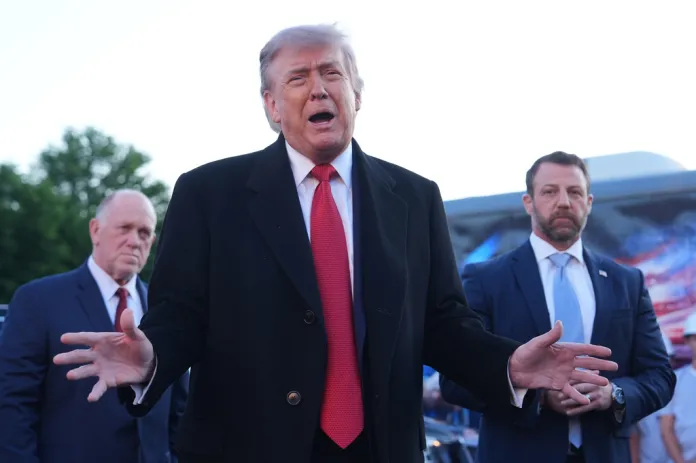
Although the 75-day DHS shutdown did not affect ICE and border personnel who continued to get paid while working, it did cut funding for contractors who work for the department, such as those behind the scenes who support immigration enforcement.
The DHS-involved fatal shootings of two activists in Minneapolis in January were also used by congressional Democrats as a reason to delay funding for immigration enforcement.
“The government shut down a lot because of Minneapolis,” Homan said. “Right, lawmakers got angry. I was up on Capitol Hill, my chief of staff, to a dozen different meetings with Democrats and Republicans, and everything they threw out was about Minneapolis, about, you know, masks, about identifiers, about body cameras, about warrantless arrests, about roving patrols.”
The Trump administration has also been hit with temporary restraining orders and stays issued by “these radical judges,” Homan said, adding that “we weren’t dealing with [this in the] beginning [of] the administration.”
“I’ve never seen so many activist judges, and again, which adds to the 12% decline in arrests,” he said.
District court judges across the country have tried to block the Trump administration’s deportation agenda through multiple avenues, although appeals courts and the Supreme Court have overturned some of those rulings as the cases work their way through the judiciary.
The Supreme Court, for example, has twice overruled a lower court judge who had paused Trump’s “third country” deportations, which involve sending illegal immigrants to countries other than their homelands. Appeals courts have split over the Trump administration’s policy of holding immigrants lacking permanent legal status in detention rather than releasing them while their deportation proceedings unfold, which will likely send the issue to the Supreme Court to decide. And some district court judges have tried unsuccessfully to place limits on the enforcement tactics immigration officers can use in the field, such as banning ICE from making arrests at immigration courthouses.
In sanctuary cities, or places where local policies forbid police from turning over jail inmates to ICE, federal police must instead go into communities to find an individual at the place he or she is believed to reside or work, sometimes even stopping seemingly random people while driving, but those traffic stops are not at all random.
Homan disclosed that he traveled to Albany earlier this spring to meet with Gov. Kathy Hochul (D-NY) and explained that not letting ICE into jails would result in more immigrants being arrested in communities and more collateral arrests of family members who live with criminal immigrants.
“I explained to her again, it’s safer for the community, safer for the officer, and safer for the alien to arrest him in the safety and security of jail,” Homan said. “I explained in Minneapolis, what could have been done by one agent, now we got 12, 13 people out there because [of] the security posture, and she clearly understood it.”

However, Hochul moved to end agreements to let ICE hold immigrants without permanent legal status temporarily in county jails, which Homan said would have further negative consequences on detainees and their families. ICE uses nearby jails for short-term detention when regional immigration detention facilities are at capacity.
“I don’t know how that helps the community because soon, as we arrest an illegal alien in the state of New York, we’re going to put them on a plane and move them out of state, away from their families, away from what they have there,” Homan said. “She said it was a threat. It’s not a threat. When I lose those 287(g) programs, I lose those jails, that means I’ve got to send more officers in the street to look for more people you released. And so there’ll be more agents there. That isn’t a threat, that’s a law enforcement response to a decision they made to make our job more dangerous and less efficient.”
A resolve to succeed
Homan shared that he is actively working on a plan to arrest more criminal immigrants across New York, but he withheld details to protect the “safety of our officers.”
He also intends to crack down on sanctuary cities, a threat that Trump administration officials and Republicans have made for years without significant follow-through. Homan said he met with acting Attorney General Todd Blanche last week and that the DOJ intends to file more lawsuits against these cities in the near future.
“I’ve been fighting sanctuary cities for the last 20 years,” Homan said. “I think we’ve got an attorney, acting attorney general, now that’s going to take it seriously. I just met him last weekend, I said, ‘Where are we at?’ And he sat down with me and told me different laws. We found different places, and more to come. So I’m hoping this administration, for once and for all, can find a court that will actually enforce the law, federal statute, that what [sanctuary cities are] doing is illegal.”
The border czar also said the Trump administration “absolutely” could be doing more with messaging to reach the public about its priorities and actions regarding the promised deportations. At present, the DHS does not release arrest or removal data on a regular basis, although it issues a daily email to the press on several high-profile arrests each day.
“I just had a meeting this morning. Secretary Mullin is committed to putting stats [out] on a more regular basis, which wasn’t being done prior,” Homan said. “There’s no reason we shouldn’t be sharing that with the American people, and I think Markwayne Mullin’s working on that, along with the White House.”
BORDER PATROL CHIEF MIKE BANKS HIT WITH PROSTITUTION ALLEGATIONS BY AGENTS
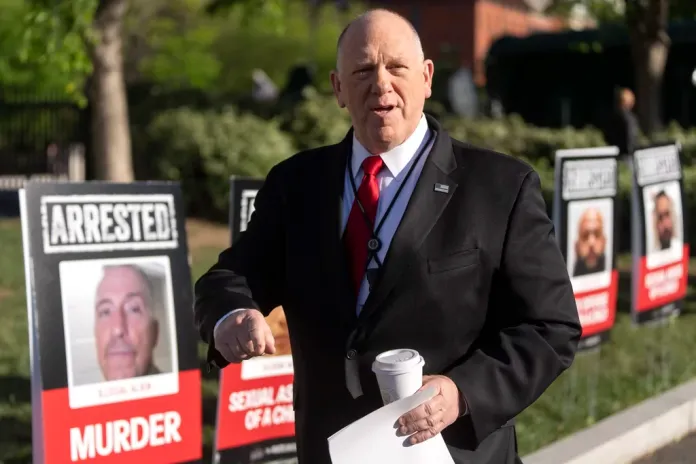
The public, he said, should not lose faith that the Trump administration is fully committed to deporting “millions” of immigrants without permanent legal status. At 800,000 removals in less than a year and a half, the Trump administration is easily on par to surpass 2 million deportations by the end of Trump’s term.
“We are after everyone, but again, you’ve got to prioritize those who are the biggest threats to our national security, public safety,” Homan said. “Am I happy with the numbers right now? No, I want more, too. Even though numbers are historic, I want more.”