
Rep. Steve Cohen (D-TN) said he ended his bid for reelection to Congress on Friday after Tennessee Republicans approved a new congressional map that dramatically reshapes his Memphis-based district.
The Tennessee Democrat has been in office for over 20 years, saying it was one of the most difficult decisions he had to make in a speech on Capitol Hill.
BY THE NUMBERS: HOW MANY SEATS HAS EACH PARTY GAINED IN REDISTRICTING?
The Tennessee Democrat, who has represented the 9th Congressional District for nearly two decades, said the decision was among the hardest of his political career.
The newly approved map splits Memphis among three districts, a move that dilutes Democratic voting power and could give Republicans control of all nine of Tennessee’s congressional seats.
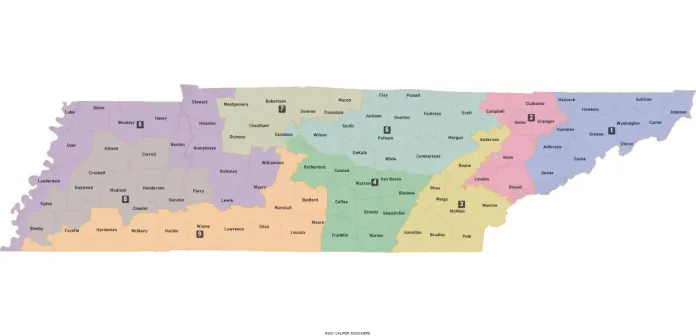
“I signed a paper … stating that I do request not to be on the ballot,” Cohen said during remarks on Capitol Hill. “The ninth district that they have under these new lines is nothing like the ninth district that I’ve represented.”
Cohen described the district he represented as a uniquely diverse coalition centered around Memphis, noting it has long been a majority-Black district that repeatedly elected him, a white Democrat, by overwhelming margins.
“It’s unique in America that an African American majority district has elected a white guy,” Cohen said. “It shows that those people vote and choose … the person they think represents them the best.”
The congressman reflected on what he said would be lost under the new district lines.
“That’s something special about Memphis, and we’re not going to have that,” Cohen said. “I feel bad for my constituents, because a lot of them come up to me regularly and say, ‘Please, we’re for you, and don’t quit.’”
While insisting “I’m not a quitter,” Cohen argued the districts were specifically designed to force him out of office.
“These districts were drawn to beat me, they were drawn to defeat me,” he said, recalling advice from a relative: “Never put your head in a lion’s mouth.”
Cohen said he briefly considered running in one of the newly drawn districts but ultimately concluded the sprawling boundaries lacked any shared interests or identity.
“There’s no commonality of interest between Williamson County and Orange Mound,” Cohen said, contrasting affluent suburban areas near Nashville with historically Black Memphis neighborhoods. “I can’t represent counties all the way to Williamson County that have nothing in common with Memphis.”
TENNESSEE PASSES NEW MAP AS DEMOCRATIC POLITICIANS PROTEST WITH AIRHORNS
“Memphis is my Jones. It’s Memphis,” Cohen said, pointing to projects he helped secure funding for, including the city’s baseball stadium and other local developments.
Cohen also pointed to federal infrastructure funding he helped secure for Memphis, including support for a new Mississippi River bridge project championed by local business leaders and Republican officials.
Cohen, who turns 77 later this month, had previously dismissed calls to step aside for younger Democrats, insisting he remained confident he could survive a primary challenge. Before the maps were redrawn, he was facing a competitive Democratic primary against Justin J. Pearson, who announced earlier this week he would continue his campaign in the newly configured District 9.
For the last several years, Cohen had served as Tennessee’s only Democratic member of Congress.