
Public opinion polls in the United Kingdom proved accurate, as results from the recent blitz of local elections see outside parties dominating their mainstream rivals.
The right-wing Reform U.K. woke up Friday to find itself the biggest winner of all in the 5,000 English council seat elections that went to a vote on Thursday. While final results are still outstanding, the national populist party seems to have scooped up more than 1,000 seats and taken control of eight councils across England.
“We’ve been so used to thinking of politics in terms of left and right. And yet what Reform are able to do is win in areas that have always been conservative — but equally we’re proving in a big way that we can win in areas that Labour have dominated, frankly, since the end of World War I,” he told a crowd of supporters in the London borough of Havering, which his party secured on Thursday.
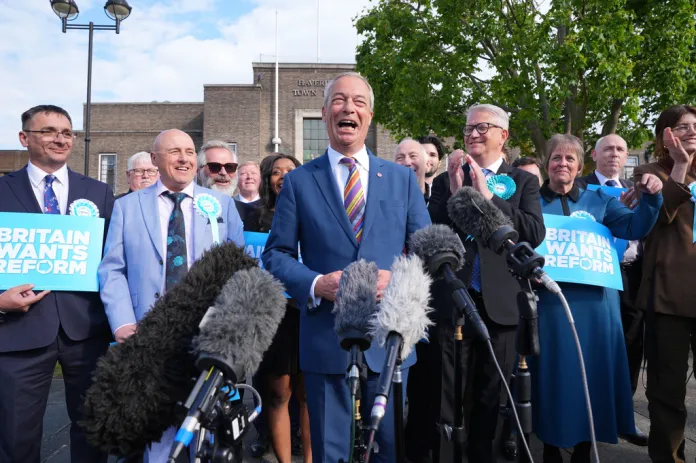
Farage boasted the nationwide surge as a “truly historic shift in British politics” that proves Reform U.K. is a “truly national party and here to stay.”
He added, “It’s a big, big day. Not just for our party but for a complete reshaping of British politics in every way.”
Green Party leader Zack Polanski, who could not be more antithetical to Farage’s politics if he tried, actually agreed with the Reform mastermind.
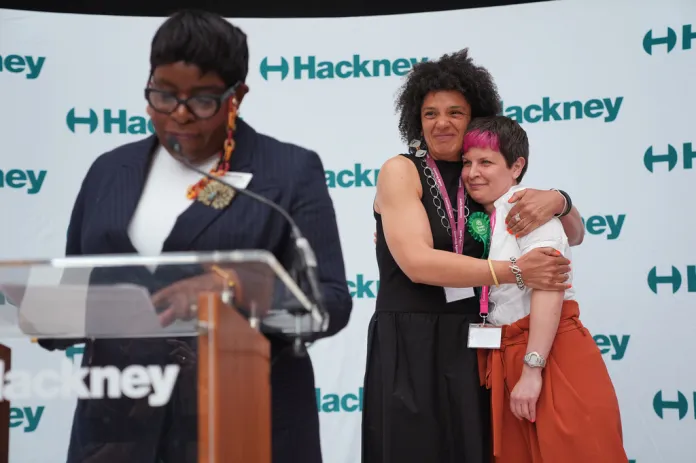
“It is very clear that the new politics is the Green party versus Reform,” Polanski said following his party’s first-ever victory in a mayoral election.
While the Greens did not enjoy the runaway success that Reform experienced on Thursday, the party took several scalps from Prime Minister Keir Starmer’s beleaguered Labour Party in councils across England.
“I said that the Green party were going to replace Labour. That’s exactly what we did in Gorton and Denton, it’s what we’ve done in Hackney, and we’re seeing that right across the country,” Polanski declared. “In fact, in almost all of our seats, right across the country, whether they’re target or non-target, the Green party vote share is rising.”
Labour was thrashed across the U.K. — perhaps most notably in Wales, where they lost control of the Welsh parliament and tumbled to a distant third-place in the legislature. Wales has always been considered a stronghold for Labour.
Plaid Cymru, a center-left party that advocates Welsh independence from the U.K., surged to become the largest party in the Senedd with 43 seats. Reform U.K. is now the official opposition with 34 seats.
Polanski, reflecting on these losses from Labour and the Tories, declared traditional two-party politics “dead and buried.”
Local elections in the U.K. are often seen as protest votes and a referendum on the national government, whose numbers in parliament are not affected. Then, when it gets to general election time, the traditional parties once again assert their dominance. While it is not uncommon for third parties to gain traction and immediately declare an end to politics as they have been, even academics are beginning to warn that Labour and the Tories have lost their monopoly on national elections.
Professor Jane Green from Oxford University’s Department of Politics and International Relations called the elections a “tipping point” at which “voters are rejecting the two traditional parties on a scale never seen before, and may not return to them in future.”
Green noted that “votes for challenger parties are usually higher in local elections” because British voters have a different mindset in the general, conceptualizing themselves as “voting for a government” instead of an individual candidate’s platform. Until now, Labour and the Tories have been widely viewed as the “only viable contenders” for forming such a government.
“One reason these local elections matter so much is that they could be another sign that the challengers are no longer challengers, and that voting for them in a general election would no longer be a wasted vote,” Green explained. “That is a game-changer for Labour and the Conservatives.”
STARMER REFUSES CALLS TO STEP DOWN DESPITE LABOR PARTY LOSSES
Starmer has dismissed growing calls for him to step down as prime minister as Labour backbenchers assert that his unpopularity is harming the party down-ticket.
Labour MP Connor Naismith from Crewe and Nantwich said that “Keir Starmer needs to set out a timetable for his departure” and called the results “existential for the Labour Party.” Labour MP Simon Opher in Stroud demanded Starmer arrange an “orderly transition” to new leadership to “stop the far right from entering Number 10.”
Starmer took responsibility for his party’s defeat, but said he is “not going to walk away from those challenges and plunge the country into chaos.”